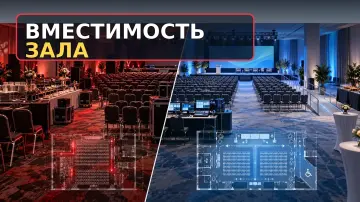
Family Day can be held as a festival, picnic, sports event, quest, or creative programme for employees and their loved ones. To make the family celebration comfortable for everyone, divide activities by age in advance, choose a safe venue, and plan food, rest, and a backup plan for bad weather.
What you can do on Family Day: programme ideas
In brief: Combine shared activities for the whole family with separate zones for children, teenagers, and adults. Don't overload the programme with contests: participants need time to socialise, eat, and freely choose entertainment.
A good family day programme is structured like a small festival. Guests can take part in the main event, move between venues, or relax without missing out on the celebration. This format is more convenient than a continuous stage programme, especially when there are little ones at the event.
Sports family celebration
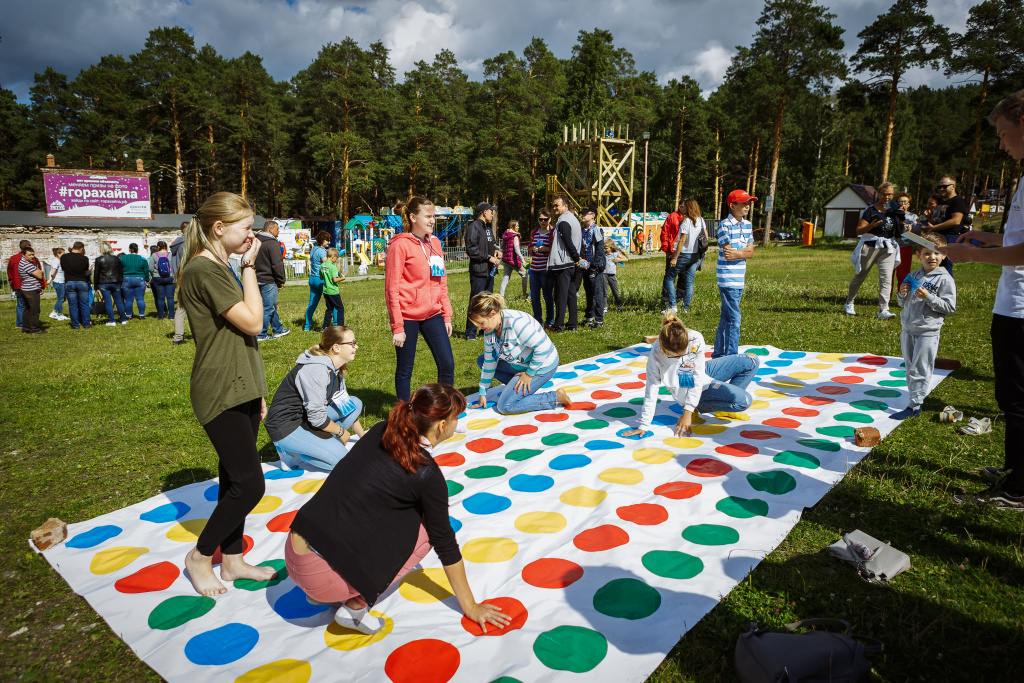
Gather families into teams and offer relay races, ring toss, mini-golf, an obstacle course, or fun disciplines. Tasks should account for different fitness levels: a team's result can depend not only on speed but also on accuracy, logic, and mutual assistance.
For a large event, you can develop family Olympic games with an opening ceremony, route sheets, and a general award ceremony. When choosing an active concept, it is useful to follow the requirements for organising sports events: you need marked zones, instructors, clear rules, and safe equipment.
Creative workshops
Painting T-shirts and tote bags, making badges, postcards, family crests, or simple decor items gives participants a shared result they can take home. It is important to select materials by age and provide several difficulty levels. Formats and equipment for a corporate workshop are best coordinated with the overall programme to avoid queues.
Quest and activity stations
A family quest can be built around treasure hunting, a city journey, a scientific expedition, or the company's history. At each point, participants solve a puzzle, complete a creative task, or go through a short challenge. For families with small children, the route is made compact, without complex navigation or long waits.
Talent show and family parade
Participants can prepare a song, dance, skit, costume, or story about a family hobby in advance. Participation should remain voluntary: not everyone is comfortable going on stage or publicly presenting their family. Instead of a contest with a strict ranking, you can hold a concert, costume parade, or exhibition of home projects.
Game zones
Complement the main programme with board games, building blocks, a dance floor, a photo zone, and a quiet area for reading or drawing. Teenagers can be offered a quiz, a team challenge, or a media studio where they will make a short report about the celebration.
How to Celebrate the Day of Family, Love and Fidelity
In short: The Day of Family, Love and Fidelity is celebrated on 8 July, but a corporate celebration does not have to take place strictly on that date. The programme can include family stories, joint creativity, a picnic and good-hearted initiatives without a preachy tone.
The holiday on 8 July often becomes an occasion for a corporate Family Day, a neighbourhood community gathering or an intimate in-house company event. It is best to build the concept around care, support and shared activities rather than formal speeches about family values.
One programme option is a festival of family traditions. Participants bring recipes, photographs, crafts or talk about a shared hobby. The organiser explains in advance that personal stories and photographs are published only with the participants' consent.
The culinary part can be arranged as a home-cooked food fair or a master class. For a corporate event it is safer to entrust the main catering to a professional team and use employees' recipes in an exhibition, cards or a stage presentation. This makes it easier to comply with storage requirements and take allergies into account.
Another idea for the Day of Family, Love and Fidelity is about caring for the environment. A clean-up of the area, planting plants or collecting useful items can be complemented by an eco-game, a workshop and a picnic. It is important to agree in advance on the location of the event, the equipment and the rules for children's participation.
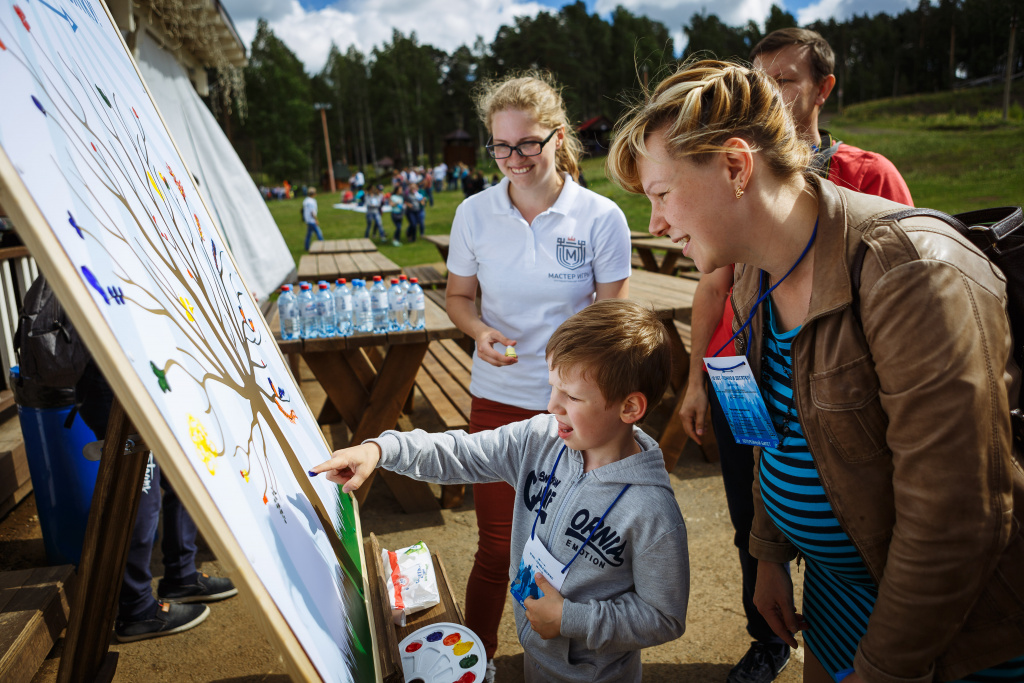
A joint creative project is a good way to round off the celebration: a large panel, the company's family tree, a recipe album or a time capsule of wishes. Such a finale brings participants together without compulsory competition or a long official part.
Which events for families with children to choose
In short: Activities are chosen not for an abstract children's audience, but for specific age groups. Little ones need short and clear activities, schoolchildren are interested in movement and story, and teenagers value independence and the absence of intrusive animation.
Before drawing up the programme, ask participants for the number and ages of children. Ranges are enough, without collecting unnecessary personal data. This information will help calculate the number of hosts, workshop materials, children's menu and equipment.
For preschoolers
Drawing, building blocks, simple ball games, a mini disco, a performance and tasks with large, safe props will work well. It is best to alternate activities with quiet rest. There should be a zone nearby where parents can help their child or step away from loud music for a while.
For younger schoolchildren
The programme can include a quest, relay races, science experiments, a creative lab and team games. Rules are explained briefly, and tasks are made varied enough for a child to show agility, imagination or observation skills.
For teenagers
Teenagers are more willing to join quizzes, sports tournaments, video shoots, dance formats, intellectual games and independent workshops. They should not be grouped with small children in all competitions. It is better to give them a separate area and the opportunity to choose their level of participation.
For adults and mixed teams
Parents are interested in activities where they are not spectators but full participants: cooking tasks, a family quiz, orienteering, a board game tournament. A shared task should distribute roles so that child and adult help each other.
The host links the zones into a single programme, announces important events and keeps an eye on the pace, but does not force guests to stay by the stage at all times. If needed, a specialist can be selected in the event hosts section, taking into account the format, audience age and venue size.
Where to hold a family celebration
In short: The venue is chosen after the format, guest list and main activities have been defined. Check not only capacity but also site safety, restrooms, stroller accessibility, catering, parking and the option to move the programme indoors.
A family celebration can be held in the office, a city park, a restaurant, a country hotel, a holiday resort or a purpose-built event venue. Each option has its limitations, so you first draft the programme and then look for a suitable space.
Office or company grounds
This option makes it easier for employees to get to know their parents' workplace and allows you to use corporate branding. Before approving the concept, check the access control regime, available rooms, sanitary areas, power supply and requirements for children's presence.
Park or open city space
Outdoors it is convenient to hold relay races, quests, a picnic and a parade. The organiser will need to coordinate the territory, provide protection from sun and rain, access to water and electricity, and rest areas. A backup scenario for bad weather is also important.
Country venue
The country format offers more space for sports, walks and several parallel zones. When choosing, consider travel time, transfer, parking, the surface of the territory, navigation and the ability to hold the programme indoors. For a preliminary search, you can look at venues in Moscow and venues in Saint Petersburg.
Restaurant, loft or banquet hall
An indoor venue is less dependent on the weather and is convenient for master classes, a concert, a quiz and a family dinner. Check whether the space can be divided into active, children's and quiet zones. Loud music should not disturb little ones and guests who want to talk.
Before booking, it is worth inspecting the venue together with a technical specialist or the organiser. On the plan, mark the entrances, stage, catering, activity points, first-aid kit, cloakroom, restrooms and guest movement routes.
How a company family day is organised
In short: Organising a family day starts with the goal, the guest list and the venue's conditions. After that come the concept, the programme, the zoning plan, the technical plan and communication with employees.
A corporate family day introduces employees' loved ones to the company and creates space for informal communication. It differs from a standard corporate party in its guest composition, safety requirements and the pace of the programme. Children's activities cannot simply be added to an adult scenario at the last moment.
Define the purpose of the event
A Family Day can be a standalone summer celebration, part of a company anniversary, an open day or a meeting of several departments. The purpose determines the host's tone, the content of the formal part and the amount of corporate branding.
Gather the data for planning
The organiser needs the expected guest composition, children's age groups, dietary restrictions, accessibility preferences and how guests will arrive. At this stage, the venue's and the company's restrictions are also recorded: access rules, permitted sound levels, equipment installation rules.
Develop the concept and the guest journey
It is not enough to draw up a list of entertainment. You need to imagine the whole day with the family through a participant's eyes: where they will be met, where to leave their belongings, how to find the right zone, when to eat and what to do between the main blocks. For Moscow, you can order Family Day organisation, and for Saint Petersburg there is a separate service for a family corporate celebration.
Prepare the communication
The invitation states the date, venue, dress code, age restrictions for activities, entry rules and how to get to the venue. If a talent show, exhibition or costume contest is planned, participation terms are sent in advance and an option to decline is provided.
Carry out technical preparation
Before the event begins, checks are made on sound, power supply, decoration fixings, contractor routes and the readiness of play zones. Those responsible receive each other's contact details and a clear procedure for bad weather, transport delays or technical failures.
What to consider when hosting a family day
In short: The main issues for a family event relate to safety, logistics, catering, accessibility and weather. An owner is appointed for each item, and the course of action is determined in advance in case the situation changes.
Child safety
The site is inspected before installation and after the equipment is set up. Hazardous technical areas are closed off from guests, cables are protected, and structures are securely fixed. Age and other necessary restrictions are set for activities, and instructors explain the rules before the start.
The organiser also designates a first-aid point and a way to contact those responsible. Parents are told which areas require their presence. An animator or host does not replace an accompanying adult unless the service format explicitly provides for supervision.
Logistics and navigation
Check the access road, parking, public transport stops and the route from the drop-off point to registration. An organised transfer may be required at an out-of-town venue. Signs are placed at the entrance and at junctions, and guests are sent the map in advance.
Catering and water
The menu is drawn up taking into account children's ages, allergies, special diets and the intensity of the programme. There must be enough drinking water at the venue, and meal times must not overlap with the main activities. For an off-site format, the options for event catering, storage conditions and cleaning are agreed in advance.
Accessibility and comfort
Check the passageways for prams and wheelchairs, the availability of seating, accessible restrooms and shade. Loud zones are placed further from the workshops and rest areas. For little ones, it is useful to provide a changing area and a quiet room.
Weather
An open-air event needs a working backup plan, not just a formal one. Decide in advance which activities move indoors, which are cancelled and how guests will be notified of changes. A marquee provides protection from precipitation and sun, but its capabilities depend on the structure and the conditions of the venue.
How to Build a Family Day Programme
In short: The programme is built around changes of pace, not a continuous string of contests. A general gathering, free zones, a few key events and a calm finale let families choose the rhythm that suits them.
At the start of the event, guests need time to register, get to know the venue and choose activities. So right after entry, it is best to open the play zones, workshops and photo point, and hold the official part once the main audience has gathered.
The centrepiece can be a family quest, a sports tournament, a concert or a parade. At the same time, an alternative is left for those who do not want to take part in a loud or physically active programme. This is especially important for families with small children and guests with health limitations.
After the active block, plan food and free socialising. Then you can hold a talent show, a quiz or a joint creative project. Keep the finale short: sum up, thank the participants, explain how to get the photos and remind guests about the transfer.
Sample programme logic
- Guest welcome, registration and getting to know the venue map.
- Opening of workshops, play and sports zones.
- A short general start without drawn-out performances.
- The main team activity or family quest.
- Food, rest and free programme.
- Concert, parade, quiz or presentation of family projects.
- General wrap-up and organised departure of guests.
The programme separately notes the times for technical checks, contractor changes and backup solutions. Guests do not see this part of the document, but it is exactly what helps the team work in a coordinated way.
Budget: what the cost depends on
In short: The cost of a family day depends on the number and makeup of guests, the venue, the programme, equipment, catering and logistics. It is easier to build the budget by functional blocks so you can see the mandatory costs and the options.
The first cost factor is the venue. The calculation is affected by the format of the space, rental time, access for setup, furniture, electricity, cleaning and additional zones. An open-air site may bring costs for marquees, temporary infrastructure and protecting equipment from the weather.
The second block relates to the programme. It includes developing the concept and scenario, the work of hosts, animators, instructors, craftspeople, artists and the technical team. Props, consumables and the number of parallel activities also affect the cost.
Sound, lighting, stage, screens and power supply are calculated separately. The equipment list is determined after inspecting the venue and approving the scenario. An intimate picnic and a festival with a concert programme require different technical solutions.
Catering depends on the serving format, menu, duration of the event, age composition and the venue's infrastructure. The budget may include furniture, textiles, tableware, service staff, water and cleaning of the catering area.
The logistics block includes delivery of equipment and materials, transport for the team and guest transfers where needed. It also covers decor, printed signage, registration, photographers and other items provided for by the concept.
How to manage the budget: first fix the mandatory items related to safety and comfort, then the main activities, and only after that the decorative or additional options. It is worth comparing options with the same package, otherwise a shorter budget may leave out important work.
Frequently asked questions
You can hold a family quest, a picnic, sports relays, creative workshops, a culinary festival or a talent show. For a corporate Family Day, it is best to combine a shared programme with free zones for different ages.
The holiday can be organised as a festival of family traditions, a picnic, a creative gathering or a good-hearted environmental initiative. It is appropriate to include family recipes, a joint art project and quiet activities for children in the programme.
First, define the goal, the participants and the children's ages, then choose the venue and concept. After that, prepare the scenario, zoning, catering, technical plan, safety rules and information for guests.
An office, park, restaurant, country hotel or event venue are all suitable for a family day. The choice depends on the programme, weather, transport, age composition and the ability to create separate active and quiet zones.
Short creative and play activities suit toddlers, quests and relays suit schoolchildren, and quizzes, tournaments and media projects suit teenagers. Some activities should be held in mixed family teams, and some should be split by age.
The budget includes the venue, programme, staff, equipment, catering, decor, logistics and cleaning. Backup solutions for an outdoor event and infrastructure for children are accounted for separately.
Contents
Was this article helpful?