A practical plan for a corporate conference: the goal, a one- or two-day programme, branches, venue, registration, transfers, the command centre and the budget.
A corporate conference of employees is a working meeting of the company at which people from different divisions and cities gain a shared context, discuss tasks and agree on next steps. Such an event has a business programme, complex logistics and a single production scenario. The entertainment part may be important, but it does not replace a working result.
At Aventura we start preparing a conference not by choosing a host or looking at venues. First we determine why the company needs to bring people together in person, who should be present and what participants will take away with them. After that we can design the programme and the participants' routes. The trip, the hybrid connection and the evening part form separate workstreams.
Leave a request and we'll discuss your task
We'll clarify the format of the event and suggest the next step.
How does a corporate congress differ from a conference and a corporate party?
A corporate employee congress combines a business meeting, internal communication and trip organisation. It is designed as a single journey from the shared agenda and work tracks through to service and recording decisions, so that the team is left with clear actions and working connections.
A conference is usually built around knowledge transfer, an industry agenda or expert presentations. A corporate event may be aimed at relaxation, team recognition and informal communication. A strategy session helps a small group make decisions. A town hall communicates news to a wide audience and gives people the chance to ask questions of management.
A congress uses elements of these formats but addresses a broader task. A single project brings together top managers, branch heads, specialists, internal experts and service teams. Participants travel from different cities.
They need to follow a single journey from invitation to returning home. That is why the congress programme does not exist separately from tickets, hotels, transfers, catering, registration and navigation.
The table summarises the key points of this section: Format, Main objective, Main participants. Use it as a quick guide when preparing your event.
| Format | Main objective | Main participants | Typical result | What cannot replace it |
|---|---|---|---|---|
| Corporate congress | synchronise the company and connect departments | employees from different functions and regions | decisions, contacts, plans and shared context | a concert without a working part |
| Conference | transfer knowledge and discuss the professional agenda | specialists, experts, partners | knowledge, discussions and new topics | lengthy internal reporting |
| Strategy session | choose a direction and agree on priorities | a small group of decision-makers | a list of decisions and commitments | a general meeting of hundreds of people |
| Town hall | explain changes and answer questions | a broad internal audience | a shared understanding of the news | a full multi-track programme |
| Corporate celebration | give the team relaxation, recognition and communication | employees and sometimes families | emotions, contact and recognition | discussing strategy between acts |
The difference affects the budget and the calendar. If the client calls the event a congress but plans only plenary presentations and a banquet, the objective needs to be checked. Perhaps a conference or a town hall for the company is enough. If the goal is to bring branches together, run work tracks and agree on actions, the logic of a congress fits better.
We also separate essential blocks from desirable ones. An essential block is needed for the result. A desirable block enhances the experience but can change if the budget is limited.
For example, an accessible route, clear sound and an airport transfer may be essential. Additional stage decoration may be desirable. This separation helps preserve the meaning of the project when the budget is revised.
Purpose of the congress and participant composition
Frame the congress objective as a change in how the company operates, and determine the participant composition after the goal. Role-based logic protects the programme from overload and helps each group understand the expected outcome and next step.
The phrase "unite the team" sets a direction but does not help build a scenario. We clarify what exactly should change. Branch managers can agree on common rules.
The sales team can adopt a new approach. Employees after a merger can get to know the new structure. Regional units can gain direct access to process owners.
It helps to write the goal in one sentence. It should include the audience, the action and the expected business outcome. For example: "Branch managers will agree on three common priorities and build implementation plans for the coming period." Another option: "Employees from the head office and the regions will understand the new service model and work through it using situations from their own work."
After that, we divide the audience by role in the programme. Not every participant needs to attend every block. Some people make decisions.
Others explain the context. Others test decisions in practice. Others ensure production and service.
Top managers set the direction, answer difficult questions and resolve contradictions. After the congress they need feedback from the regions and an agreed list of decisions.
Branch managers translate the overall agenda into a local plan. They need regional breakout sessions, exchange of practice, action owners and deadlines.
Functional specialists agree on processes between departments. Thematic tracks and mixed working groups are useful for them.
New employees get the context and meet colleagues from other functions. For them, an introductory route can be put together and the company's internal vocabulary explained.
Internal experts run workshops, review cases and collect questions for further work. The organising team ensures the overall route and keeps a decision log for the project.
Composition is best considered not only as a total number. The programme team needs roles, cities, experience and format of participation. The logistics specialist needs departure points, arrival dates and accommodation terms. On security matters we take into account the specifics of the venue and the scenario, rather than collecting participants' personal diagnoses.
We collect only the data needed for the stated purpose. Federal Law No. 152-FZ requires that personal data processing be tied to specific and pre-defined purposes. Therefore the registration form must not turn into a stockpile of "just in case" questions. Access to data is granted only to the roles that need it for their work.
If the group is large, we appoint function and region representatives before the programme. They help check the language of materials, travel times, employees' real questions and conflicting local calendars. Such a participant council does not replace the project owner. It gives the project team facts that the head office may not have.
How to put together a one- or two-day congress programme
A one-day congress suits a single main agenda and a limited number of tracks. Two days give you time to explain the direction, run hands-on sessions and lock in decisions; the choice depends on the number of tasks, the make-up of the audience and how much discussion time you need.
The programme is built from the outcome back to the format. First we define what the participant should understand, discuss, try out and sign off on. Then we choose the format: a keynote, a panel, a workshop, a case review, a working group or an informal block. If you start with a list of speakers, the day quickly turns into a queue of presentations.
In the first plenary block, management answers three questions. What has changed. Why it matters now.
What is required of participants after the congress. Detailed departmental reports are better moved into pre-event materials, thematic tracks or an internal knowledge base. The main stage is there to set the shared frame.
The table summarises the key points of this section: Timing and stage, One-day programme, Two-day programme. Use it as a quick reference when preparing your event.
| Timing and stage | One-day programme | Two-day programme | Outcome of the stage |
|---|---|---|---|
| Before opening | registration, breakfast, wayfinding | registration, scheduled check-in, introductions | participants are ready to start and know the route |
| Plenary opening | context, goal, key changes | day 1: context and questions to management | a shared frame and vocabulary |
| First working part | one main thematic block | day 1: company topics and exchange of practice | understanding of the shared task |
| Parallel work | a limited number of tracks | day 1: functional and regional tracks | questions and proposals from the groups |
| Pulling together the results | brief conclusions and next step | day 1: interim conclusions without a final report | a list of topics for day two |
| Evening | networking or team recognition | evening of day 1: recovery, networking, recognition | new connections without draining energy before the next day |
| Hands-on work | possible only in a compact form | day 2: workshops, case reviews, project groups | tested solutions and actions |
| Finale | commitments and deadlines | day 2: presentation of plans, commitments and deadlines | owners, dates and a follow-up process |
A one-day programme cannot be compressed indefinitely. Time for moving between rooms, questions, meals and technical changeovers is part of the run of show. If two blocks sit next to each other in the table, that does not mean one ends and the next starts instantly.
The speaker needs to leave the stage. The host needs to close the thought. Participants need to move or switch focus.
In a two-day format, it is important to distinguish the purpose of each day. Day one creates the shared context and opens up questions. Day two turns them into decisions and hands-on work.
Repeating the same plenary talks on both days tires the audience. The evening between the days should not leave participants unable to work in the morning.
For each block we create a card. It contains the task, the participants, the content owner, the format, the duration, the materials, the equipment and the completion criterion. The completion criterion is especially important.
A presentation can end on time without answering the main question. A working group can discuss a great deal without appointing an owner for the decision.
We agree in advance which materials participants receive before the congress. Executive biographies, reference reports, process descriptions and long presentations can be reviewed beforehand. Face-to-face time is better used for questions, discussing contradictions, networking and joint work.
Leave a request and we'll discuss your task
We'll clarify the event format and suggest the next step.
Branches, regions and parallel tracks
The branch programme connects the company's overall agenda with the local context. The common framework is kept for everyone, while the content of working groups is adapted to the decisions, professional language and level of detail of a specific role, function or region.
The same presentation for all regions looks fair, but it often does not help people work. Branches differ in markets, teams, time zones, process maturity and access to resources. The common framework should remain unified. The way it is applied may vary.
We use three levels of the programme:
The table summarises the key points of this section: Track type, When it is needed, Who takes part. Use it as a quick reference when preparing the event.
| Track type | When it is needed | Who takes part | What result we record |
|---|---|---|---|
| General plenary | a single framework is needed for the whole company | all participants | common priorities and management's answers |
| Functional | the process differs by profession | sales, production, HR, IT and other functions | working rules and a list of cross-functional issues |
| Role-based | one function needs different actions by level of responsibility | managers, line employees, experts | actions and criteria for each role |
| Regional | decisions need to be adapted to local conditions | participants from one region or cluster | a regional plan, risks and requests to the centre |
| Project-based | a specific end-to-end task needs to be resolved | a mixed team from several functions | a decision, owner, deadline and next step |
| Open consultation | participants need short answers from experts | any participant by appointment or in a live queue | a resolved question or a route for further work |
- The general level explains the direction, decisions and boundaries.
- The functional or role-based level helps work through professional tasks.
- The regional or project-based level translates general decisions into a local plan.
The number of tracks is limited by the capacity of the venue and the team. Each new hall requires a moderator, sound, a screen, navigation, timekeeping and collection of outcomes. If a track cannot be properly staffed, it is better to have fewer parallel sessions and choose the audience more precisely.
Participants should understand their route before they arrive. In the app, email or personal account we show the mandatory blocks, available options and the rules for changing tracks. Free choice is useful when the halls have spare capacity and the topics suit a broad audience. Pre-registration is needed for limited-capacity sessions, workshops and groups with a restricted number of places.
Branches can be involved in preparation by collecting questions and local situations. Instead of general wishes, we ask for specific cases. Where the process does not work.
Which decision from the centre is unclear. What experience the branch is ready to show colleagues. This way the regional voice enters the programme before the speakers take the stage.
For a distributed company, the logic of a federal series of corporate events is useful. Sometimes one large congress does not replace consistent work in the regions. In that case, the central meeting sets the framework, and local events help implement the decisions.
How to choose a venue, rooms and seating?
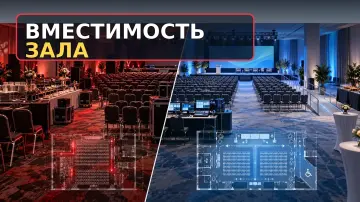
A venue is chosen based on the programme, the streams and logistics, not just the capacity of the main hall. A workable layout emerges after checking parallel rooms, the foyer, catering, accessibility, rigging, communications and the participant's full journey.
The first filter is geography. Participants need to understand how to get there from the airport or railway station. A long transfer after a flight affects the start time and how people feel.
For a residential off-site event, the distance between the hotel and the business venue matters. If they are separate sites, an additional transport loop appears.
The second filter is configuration. We overlay the draft programme onto the floor plan. The main hall must accommodate more than just chairs.
It also needs a stage, screens, cameras, a control room, aisles, places for participants with different needs and a service reserve. After that, the working capacity may differ from the venue's advertised figure.
The table summarises the key points of this section: Area, What to check, Suitable configuration. Use it as a quick reference when preparing your event.
| Area | What to check | Suitable configuration | Common mistake |
|---|---|---|---|
| Main hall | sightlines, sound, stage, aisles, exits, control room | theatre for a shared context; tables for collaborative work | calculating capacity before placing equipment |
| Breakout rooms | soundproofing, screens, furniture, transitions | classroom, cabaret, circles or work islands | putting loud sessions behind a single partition |
| Foyer | registration, cloakroom, coffee, queues and signage | several service points spread apart | gathering all queues at the entrance to the main hall |
| Meeting rooms | privacy and time-based booking | small enclosed rooms | using a thoroughfare for sensitive conversations |
| Command centre | status overview, communications, documents and reserve | a separate room near the key areas | placing the command centre where the team gets in guests' way |
| Catering | throughput, seating, diets and clearing | several lines or staggered meal service | releasing all participants to a single line at once |
| Evening area | sound, stage, service, returning to rooms | a separate hall or a quick reconfiguration | not factoring in the time and cost of changing the configuration |
Seating is chosen based on what the participant will do. Theatre suits a short plenary block. Classroom helps people take notes but takes up more space.
Cabaret and islands are convenient for discussion. A circle without tables suits facilitating a small group. One seating layout rarely works for the whole day.
We check the participant's journey from transport to the last room. The route must have clear entrances, a cloakroom, registration, restrooms, catering, rest areas and an exit. The accessible route is checked separately. A ramp at the main door does not mean a person can get into a breakout room or the evening area.
The venue plan is agreed with the site's technical and operations teams. Aisles, exits and access to fire protection equipment must not be blocked by equipment. The applicable requirements are set by the site owners and the responsible specialists. The organiser must receive the venue's rules, the evacuation plan, the communication procedure and rigging restrictions before final design.
If the main purpose of the off-site event is a working agenda, it is useful to treat it as a business event. This keeps venue selection from drifting towards a beautiful banquet without suitable rooms and infrastructure.
How do you organise registration and participant data?
The form and personal account manage not only entry but also a person's journey from invitation to return. The participant profile links the programme, accommodation, transfers, catering and accessibility with up-to-date statuses, action owners and messages.
First we describe the participant journey:
- Receive and open the invitation.
- Confirm participation and fill in the required data.
- Choose a route, receive the ticket and accommodation details.
- Check in at the venue.
- Receive materials after the event and complete the trip.
Each status has an owner and a next message.
A single profile reduces the number of discrepancies. If an employee changes their flight, the information must reach the logistics manager and the meeting coordinator. If a person declines the trip, the room, transfer and track place need to be released. Forwarding separate spreadsheets between departments quickly creates different versions of the truth.
The table brings together the key points of this section: Stage, What data is needed, Who uses it. Use it as a quick reference when preparing an event.
| Stage | What data is needed | Who uses it | Checkpoint |
|---|---|---|---|
| Invitation | name, work contact, department, city | communications team | invitation delivered and understood |
| Confirmation | participation, dates, attendance format | list owner and registration | participant confirmed or declined |
| Travel | route, arrival and departure times, official details for booking | logistics manager and authorised partner | ticket booked and checked by the participant |
| Accommodation | dates, room category, sharing if required | accommodation service | room assigned and confirmed |
| Programme | role, mandatory sessions, selected tracks | programme team | participant journey assembled |
| Services | catering, accessibility, emergency contact to the extent necessary | limited circle of responsible staff | participation conditions confirmed |
| Entry | code or document per event rules, access status | registration desk and security | badge issued and attendance recorded |
| After the event | materials, decisions, feedback | communications owner | participant received the required outcome |
The form is divided into clear steps. It is easier for an employee to first confirm participation, then fill in travel details and choose a programme. If all fields open on a single screen, a person may postpone their response. For mandatory fields, we explain why they are needed.
Consent to personal data processing must be specific, substantive, informed, conscious and unambiguous. From 1 September 2025 it is completed separately from other information and documents that a person confirms or signs. The set of documents and the legal basis for processing are determined by the client together with lawyers.
We do not replace legal review with a form template. In the project we separately record the data operator and the purposes of processing. Access, retention periods, transfer to partners and deletion are checked as a separate perimeter.
Photos and video require separate attention. Participants are informed in advance where filming takes place and how the materials are planned to be used. If a company wants to publish large portraits of employees in advertising or open channels, the question of consent cannot be hidden in a general organisational letter. The rules for using an image are checked taking into account Article 152.1 of the Civil Code of the Russian Federation, the exceptions provided for in it and the specific publication scenario.
Before opening registration, we test the entire journey. We fill in the form from a phone and a computer. We check emails, errors, data changes, declines, repeat entry and how support works.
A separate test is carried out by a participant who does not know the internal logic of the project. Their questions often reveal unclear wording better than a technical checklist.
Accommodation, tickets and transfers
Event logistics are organised around arrival and departure waves, so a participant list alone is not enough. A single dispatch overview shows each person's route and accommodation, and for every wave it assigns transport, a coordinator, a meeting point and a backup plan.
The first decision concerns the travel policy. The company determines who books tickets, which classes and fares are permitted, whether routes can be changed, who approves exceptions and how participants report changes. These rules are sent out before requests are collected. Otherwise the logistics manager receives dozens of individual expectations that cannot be quickly reconciled.
Tickets are best booked after participation is confirmed and the employee has verified their details. Name, date and document must be checked before payment. For complex routes, a deadline is set after which a change may affect the cost or the ability to attend.
We do not promise a fixed price. We show the consequences of a late decision.
The hotel list contains dates, room category, special requirements to the necessary extent, payment status and the contact of the person responsible. Participants receive the address, check-in time, early check-in rules, the procedure for paying for additional services and a support phone number. If the event is held at the hotel, the route from the room to the halls still needs to be checked. A large venue may require internal wayfinding.
Transfers are calculated by actual waves. One bus for everyone looks economical only on paper. Participants may arrive at different terminals and stations.
A flight may be delayed. Some people arrive on their own. We group arrivals by location, time and acceptable waiting time.
For each wave we record the transport, coordinator, meeting point and backup action. Capacity and luggage are checked separately. The coordinator sees flight numbers, actual status and departure time. The decision to wait is made by the command centre, not by the driver alone.
A similar scheme works for the return journey. Departure is often more complicated than arrival. Participants leave after the finale, collect their luggage, say goodbye and change their plans.
A transfer cannot be scheduled right at the end of the stage programme. Time is needed to leave the hall and board. The exact time depends on the venue, the city and the traffic situation.
For a large project we set up a logistics command centre. It cross-checks flights, the hotel, transfers and requests. A separate help desk operates at the venue.
A person whose ticket has changed should not hold up the main registration. They are directed to a staff member who has the authority and access to the necessary data.
When choosing transport, you can discuss logistics and transfers in advance. Along with the number of people, provide a complete map of movements. Then a proposal can be compared by routes, operating hours, vehicle types, luggage, parking and backup.
How do you include remote participants in a hybrid congress?
A hybrid congress is designed as two connected tracks: a camera in the main hall does not by itself create equal participation. The remote audience needs its own navigation, moderation, support and a clear way to influence the programme, so the online track is built together with the in-person one.
First we decide who needs remote access and what level of participation the organisation of a hybrid event must support. These may be employees who cannot travel, overseas divisions, on-duty teams or participants in specific open blocks. Not every track needs to be streamed. Sometimes a high-quality recording and a separate online session after the congress are more useful than a weak live broadcast from a small room.
For each hybrid block we set the level of participation:
- Watching the broadcast.
- Questions and polls.
- Work in remote groups.
- Joint work between the hall and online.
The higher the level, the more moderators, equipment, rehearsals and time are needed.
A remote participant must hear more than just the stage. A question from the hall is repeated into the microphone. Materials are shared as separate files, not only via screen sharing.
The chat is moderated by a specific person. Questions from online reach the host by a clear rule. The W3C also recommends giving access to materials in advance, testing sound and video, providing subtitles and explaining how group rooms work.
Separate roles are needed on site. The director is responsible for the overall broadcast. The technical specialist controls the platform and communication channels.
The online moderator works with the remote audience. The content coordinator makes sure speakers know the questions and the format's constraints. One person should not simultaneously switch cameras, answer in the chat and make decisions about the programme.
The rehearsal takes place with a real remote connection. We check the sound from the hall, the presentation, videos, subtitles, latency, questions, re-entry after a disconnection and the backup communication channel. Testing only within the local network does not show the experience of a person in a branch office.
A failure scenario is also needed. If the main connection is lost, the team must understand whether the recording is preserved, whether the backup channel starts, whether the interactive part is moved and what message participants receive. Not every technical failure requires stopping the stage. The decision depends on the importance of the remote audience for a specific block.
For a distributed team, you can additionally use the approaches from the article on an offline meeting of a remote team. The remote audience needs a comparable opportunity to understand the material and take the required action. Simply repeating the picture from the hall does not provide this.
Evening programme that keeps the purpose of the meeting intact
After the business part, participants need networking and recovery, not a second mandatory working day. The format of the evening is chosen based on its purpose, the state of the people, the next day's programme and the company culture, so that the morning work does not suffer.
The goal of the evening depends on the composition. New employees need easy ways to get acquainted. Heads of branches may value a quiet conversation without a stage.
A large company may need team recognition and awards. Participants after a difficult journey need a choice between the general programme and rest.
We start with the mode of participation. The mandatory evening block should be short and justified. The free part can offer several scenarios.
Conversation at the tables. A quiet music programme. Game zones.
A walk around the grounds. Small themed meetings. A person should be able to leave without public pressure.
Awards are tied to clear criteria and the story behind the result. A long list of nominations reduces attention. It is better to determine in advance whom and for what the company recognises, how names and job titles are verified, who presents the awards and where people wait to go on stage. The director's script specifies the music, screen, lighting, photographer and the awardee's route.
The alcohol policy, age restrictions and rules of conduct are determined by the client and the venue in advance. The service team must know to whom to pass on a difficult situation. Transport after the evening is also part of the script. If people are staying at another property, a return schedule and a clear last departure are needed.
For a two-day meeting, we protect the morning of the second day. We do not schedule a late finale before early workshops. We do not make participation in all activities mandatory.
We do not move important decisions to the banquet. An informal setting helps people get acquainted, but does not ensure that agreements are properly recorded.
If branches are celebrating an important company anniversary, the evening can be linked to the shared history. At the same time, local teams can take part in preparing content. Examples of approaches to a unified concept and regional execution are available in the material about a company anniversary in the branches.
The evening programme does not have to be expensive to work. Its value is influenced by the guest composition, quality of service, ease of communication, pace and alignment with the company culture. Elaborate decor will not fix cramped seating, a queue for dinner or sound that is too loud.
Command centre, stage direction and on-site safety
A single command centre runs the congress, keeping the programme, people, venue, technical equipment, transport and safety within one status system. The stage director runs the stage, the project manager makes cross-functional decisions, and all roles work from a single operations pack and escalation procedure.
Before the event we issue an operations pack. Its core consists of contacts, the venue plan, the team schedule and the stage director's script. Separate appendices cover logistics, setup, access, risks and contingency plans.
Documents have a version and an owner. Messenger chats do not replace the current pack.
The command centre needs a short decision chain. A coordinator spots a problem and reports it to the function lead. The lead assesses the impact and proposes an action.
If an issue affects the programme, safety, money or reputation, the decision is escalated to the project manager and the client's representative. The team has deputies in case a key person is unavailable.
The table summarises the key points of this section: Role, Area of responsibility, What they control in the moment. Use it as a quick reference when preparing your event.
| Role | Area of responsibility | What they control in the moment | Who they escalate critical issues to |
|---|---|---|---|
| Project manager | the entire congress and decisions across functions | overall status, priorities, changes | the client's representative according to the agreed procedure |
| Stage director | the stage and the sequence of the programme | entrances, timing, content, liaison with the host | the project manager |
| Technical lead | sound, lighting, video, network and backup | system readiness and troubleshooting | the stage director and the project manager |
| Venue coordinator | halls, services, access and operations | rooms, cleaning, catering, passageways | the project manager and the venue's responsible officer |
| Registration lead | entry and participant profile | queues, statuses, disputed cases | the command centre and security service according to the rules |
| Logistics coordinator | tickets, hotel and transport | arrivals, departures, route changes | the project manager |
| Safety officer | risk register and liaison with the venue | incidents, routes, procedural readiness | the project manager and the venue's services |
| Track coordinator | parallel halls and group outcomes | speakers, moderators, timing, materials | the programme producer or stage director |
The team's morning briefing takes place before participants arrive. We review the schedule, communication channels, post locations, backup, medical assistance, evacuation actions and the wording for guests. A short repeat before the evening part is needed if zones, team composition or the venue's operating mode change.
Safety is designed together with the venue owner and specialist professionals. Applicable Russian fire safety regulations, venue documents and the conditions of the specific event take priority over generic advice. The organiser must not independently invent permitted capacity or change evacuation routes because of decor.
We check the entrance, movement inside the venue and the exit. The registration queue must not block a passageway. Catering must not narrow the path into the hall.
Technical cables are protected and laid according to the agreed plan. Doors, exits and fire protection equipment remain accessible. HSE recommends considering safety at all phases of the event, including setup and dismantling, and holding a debrief after the event.
We make the risk register a working tool. For each risk we specify the signal, the pre-event measure, the action in the moment, the responsible person and the reporting channel. Risks may include transport delays, an absent speaker, a communication failure, hall overcrowding, worsening weather, a medical situation or the loss of important material.
The register does not guarantee that problems will not occur. It shortens the time needed to agree on actions.
The response plan must be proportionate to the scale and scenario. Not every employee needs the full document running to dozens of pages. Each role needs clear instructions:
- Who raises the alarm and calls for help.
- Who informs participants about actions.
- Who clears the routes and meets the emergency services.
- Who records the time and the decisions taken.
We also protect the team from overload. A long setup, a night shift and a full day of the congress require shift rotation and breaks. A tired coordinator notices changes more slowly and makes more communication errors. Staff scheduling affects safety and service quality.
Decisions, brief and project budget
The final screen closes the stage, and the handover of decisions concludes the congress, so the brief and budget are built around this outcome. The estimate is put together on the same scope of work, assumptions and decision points, so the company understands the costs and the team knows what should remain after dismantling.
Decision capture is designed before the congress. For each track we appoint a person who collects conclusions using a single template. The template includes the question, decision, owner, deadline, dependency and next contact. A photo of the flipchart can supplement the record, but does not replace it.
At the end of the working block, the facilitator checks the wording out loud. Participants must have the same understanding of what has been decided and what remains open. If the group has only formulated a proposal, it cannot be recorded as an approved decision. Status matters.
After the congress we compile several types of outputs:
- A brief message for all participants.
- A list of decisions for managers.
- Plans by function and region.
- Presentation materials with agreed access.
- Organisational observations and improvements for the next project.
It is best to hold the team debrief close to the event, while the facts are still fresh. We separate observation from interpretation. First we record what happened.
Then we analyse the cause. After that we assign a corrective action. HSE recommends holding a final debrief, especially after significant incidents or changes to procedures. At Aventura we record the outcome using a working template: observation, recommendation, action, owner and deadline.
The brief for the first estimate should not be huge. First we need the goal, participant composition, cities and dates. Then we clarify the mandatory programme, travel, venue and hybrid format.
We record the decision deadline and budget guidance separately. If some data is unknown, we note the assumptions.
The table summarises the key points of this section: Budget block, What it includes, What affects the cost most. Use it as a quick reference when preparing your event.
| Budget block | What it includes | What affects the cost most | What to check in the proposal |
|---|---|---|---|
| Programme and content | concept, script, facilitation, work with speakers, materials | number of tracks, depth of preparation, volume of editorial work | limits of revisions and content owners |
| Venue and catering | rental, halls, foyers, furniture, service, catering | city, dates, duration, configuration and menu | installation hours, set-up, minimum orders |
| Technical production | stage, sound, light, video, network, recording, broadcast | hall sizes, number of streams, hybrid and backup | equipment list, staff and working hours |
| Logistics | tickets, hotel, transfers, coordination | geography, booking deadlines and changes | rates, cancellations, baggage, parking and waiting |
| Registration and communication | forms, emails, profiles, badges, support | complexity of routes and integrations | data processing, testing and support |
| On-site team | producers, coordinators, stage direction, registration, navigation | number of zones, shifts and duration | roles, hours, meals, accommodation and replacements |
| Evening programme | script, host, artists, awards ceremony, decoration | format, profile of the programme participants and technical equipment | household and technical requirements, rights and logistics |
| Contingency | backup solutions and unforeseen changes | project risk and timing of decisions | who can use the contingency and how it is approved |
Budgets are compared on the same scope. In one proposal, technical equipment may be included in the rental. In another, it is priced separately.
One hotel may include breakfast and a meeting room. Another adds service fees, early opening and mandatory meals. Comparing only the final lines is misleading.
We present options rather than promising a single price before the project is clarified. The basic option delivers the mandatory outcome. The extended option adds elements that enhance the experience or reach. We separately note decisions that can be made later, and the dates after which the choice narrows.
For the first conversation, prepare a short package:
- Describe why the company is bringing people together in person.
- Name the cities, functions and approximate participant composition.
- Indicate the proposed dates and number of days.
- Separate the mandatory programme from desirable elements.
- Describe the requirements for tickets, hotel and transfers.
- Indicate who needs remote access.
- List known restrictions on venue, security and data.
- Name the deadline for the first decision and the budget range, if defined.
After the kick-off meeting we turn the inputs into a project map. It shows the stages, owners, dependencies, decisions and dates. This document helps the client get the congress approved within the company, and helps us calculate a comparable estimate and not lose important terms between contractors.
Frequently asked questions
A corporate employee meeting combines a business meeting, internal communication and travel arrangements. It is designed as a single journey from the shared agenda and work tracks to service and documented decisions, so that the team is left with clear actions and working connections.
Frame the purpose of the meeting as a change in how the company works, and determine the participant mix after the purpose. Role-based logic protects the programme from overload and helps each group understand the expected outcome and the next step.
A one-day meeting suits a single main agenda and a limited number of tracks. Two days give time to explain the direction, run practical sessions and lock in decisions; the choice depends on the number of tasks, the audience mix and the time needed for discussion.
A branch programme connects the company's shared agenda with the local context. The shared framework is kept for everyone, while the content of the working groups is adapted to the decisions, professional language and level of detail of a specific role, function or region.
The venue is chosen based on the programme, the flows and logistics, not just the capacity of the main hall. A workable plan emerges once parallel rooms, the foyer, catering, accessibility, rigging, communications and the participant's full journey have been checked.
The form and personal account manage not only entry but also the person's journey from invitation to return. The participant profile links the programme, accommodation, transfers, catering and accessibility with up-to-date statuses, action owners and messages.
Leave a request — let's discuss your task
We'll clarify the event format and suggest the next step.
Sources
- Federal Law No. 152-FZ, Article 5: principles of personal data processing
- Federal Law No. 152-FZ, Article 9: consent to personal data processing
- Fire Safety Regulations of the Russian Federation, Decree No. 1479
- Article 152.1 of the Civil Code of the Russian Federation: protection of a citizen's image
- W3C WAI: accessibility of remote and hybrid meetings
- Health and Safety Executive: managing an event
- Health and Safety Executive: planning for incidents and emergencies
- World Health Organization: risk assessment for mass gatherings
Contents
Was this article helpful?