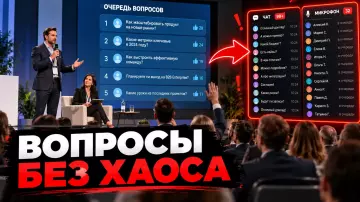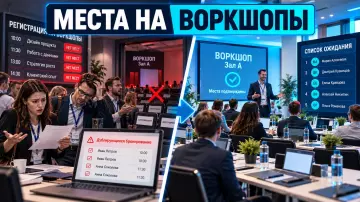
A practical framework for a pre-tender conference: a single briefing, supplier questions, themed sessions, a site visit and a results pack for procurement.
In our experience, problems with a future procurement often become visible too late. After the documents are published, suppliers ask the same questions, the timelines look unrealistic, and the market interprets some requirements differently from the client. A pre-tender supplier conference helps test these points before the formal start and issue a single confirmed version of the brief.
At Aventura, we treat this format as a business event with a strict limit on authority. Procurement and the business define the task, the rules and the subsequent procedure. We are responsible for the programme and for working with participants. Separately, we handle the venue, the technical side, moderation and the release of materials. The conference does not select a winner and does not promise participants any advantage.
English-language guidance calls this work preliminary market engagement. In this article we look at the event mechanics for a corporate client. The client checks the format of a specific procurement against its own rules, its procurement department and its lawyers.
If you are planning a meeting with the market before procurement, submit a request via our standard form. On the first call we will define the goal, the audiences, the line-up of sessions and the pack of materials to follow the conference.
What is a pre-tender supplier conference?
A pre-tender supplier conference is a structured dialogue with the market before the procurement model and requirements are finalised. The buyer explains the upcoming need, the constraints and the topics for feedback. Suppliers ask questions and point out where the terms could reduce competition, complicate calculations or make delivery unrealistic. The findings feed back into procurement preparation.
The format is not just a company presentation. In our working approach, the conference has research questions, a single version of the brief, information disclosure rules, a question log and a clear decision path after the event. If the meeting ends with applause and a business card exchange but the requirements and risks remain unchanged, the procurement task has not been solved.
The table summarises the key points of this section: Format, Main objective, What remains afterwards. Use it as a quick guide when preparing the event.
| Format | Main objective | What remains afterwards |
|---|---|---|
| pre-tender conference | verify that the market understands the task before procurement | shared questions and answers, conclusions, open questions and decisions on requirements |
| supplier day | introduce the market to the company, categories and experts | contacts, thematic meetings and further communication channels |
| proposal defence | compare proposals that have already been prepared | evaluations, clarifications and a decision under the procedure rules |
| supplier onboarding | align the selected counterparty after the decision | access, documents, processes, contacts and milestones |
The detailed programme of a standard supplier day is better treated as a neighbouring format. For a pre-tender conference, we remove solution presentations, awards and open partner networking. The focus stays on the buyer's upcoming task and equally accessible clarifications.
Setting the boundaries before procurement begins
The boundary is simple: we run the event as a way to gather information and explain the need, not as a stage for evaluating proposals or allocating future contracts. In the rules of procedure we state that participation in itself is not a condition of admission. Speakers do not promise an individual supplier a criterion, deadline or special condition that is not in the common confirmed version.
The UK guidance on pre-market engagement explicitly separates preparing a procurement from creating an unfair advantage. The rules of a specific contracting authority may differ. In our event framework we therefore use the same core information, an official channel for questions, written records of decisions, and we define the speakers' authority in advance.
We start with a boundaries passport:
- We record the purpose of the conference and the questions the contracting authority wants to test with the market.
- We determine what information is already confirmed and can be published.
- We flag topics that cannot be discussed in the general session or in a one-to-one conversation.
- We appoint those responsible for the official response and for the procurement decision.
- We record that participation does not promise admission, a contract or an advantage.
- We determine how a clarification that matters to everyone will move from a private meeting into the general questions and answers section.
If the company is already ready to receive and compare proposals, the task shifts towards a formal procedure. In that case a separate piece on the tender for organising an event is more useful than expanding a pre-tender conference into covert lobbying for suppliers.
What to prepare before inviting the market?
Before sending out invitations, we ask the client to describe the need, the initial assumptions and the questions for the market. A finished technical specification is not required. What is needed is a version that lets suppliers understand the context, the desired outcome, the constraints and how much feedback is welcome. The team also decides in advance which materials will be available to all participants.
We assemble a package of introductory materials from practical blocks:
The table summarises the key points of this section: Block, What to include. Use it as a quick reference when preparing your event.
| Block | What to include |
|---|---|
| context | business objective, users or object, expected outcome |
| preliminary scope | functions, categories, geography, interfaces and constraints |
| assumptions | timelines, sequence of stages, resources and dependencies that are still being verified |
| questions for the market | feasibility, barriers to entry, lot composition, data for calculation, key risks |
| participation rules | format for questions, confidentiality, recording of the meeting, procedure for publishing answers |
| next step | when to expect general answers, additional materials and information on the further procedure |
Research questions should lead to a decision. In our experience, the wording "tell us about your company's capabilities" often produces promotional answers. It is better to ask what source data is needed for a calculation, which dependencies affect the timeline, where a requirement narrows the market, and which parts of the task it makes sense to separate or combine.
Before inviting anyone, we also check the participant journey: the registration form, confirmation, access to materials, the way to submit a question and the rules for visiting the site. A comprehensive business event organisation is a good fit for such a conference, where the programme, participant management and production are all built around a single business objective.
A single information framework
All participants must receive the same confirmed baseline. It includes the source materials package, the client's presentation, answers that matter to everyone, approved materials from the site visit, and post-conference updates. Under our rules, a speaker's verbal comment does not automatically become a new condition. The responsible person first verifies it, and then the team issues an updated shared version.
The framework needs one official source. This can be a closed page, a section of the procurement system, or an agreed mailing. The link and the update rules are the same for registered participants and for companies that will receive the materials later via the route set by the client.
The working question log contains:
- the question ID and topic;
- the original wording without the promotional part;
- the channel of receipt: before the event, main hall, breakout room, site visit, or one-on-one meeting;
- status: accepted, pending verification, published, merged with another question, or rejected with a reason;
- the person responsible for the answer;
- the confidentiality level;
- the version and publication date of the shared answer.
New Zealand's guidance on meeting with suppliers recommends recording questions and answers and providing the same answers to all participants. At an event, this means a dedicated questions secretary, rather than asking the moderator to simultaneously run the discussion, check the wording, and update the final document.
How to build a conference programme
We build the programme from the overall objective to the specific constraints and back to a shared version of the outcomes. First, all participants receive the same context. Then small groups work through categories, technical interfaces or site conditions. At the end, the team explains the procedure for written questions, the deadline for publishing shared answers and the official channel to follow.
Working sequence:
- Registration and access to the current materials pack.
- Opening: goal, boundaries, speaker roles and rules for capturing questions.
- Plenary session on the need, the expected result and the initial constraints.
- Answers to shared questions collected in advance.
- Breakout rooms by category, site or task block.
- A site visit or context demonstration, if the market cannot understand the conditions without it.
- Controlled one-to-one conversations on topics that cannot be properly covered in the main hall.
- Closing: what has been confirmed, what is being verified and when the shared version of the materials will be released.
Breaks and transitions matter more here than stage effects. If participants run late moving from the plenary session to the breakout rooms, questions and answers start to live separate lives. When organising conferences, we link the timing and the participant journey in advance. We then check the rooms, sound, recording and the work of the secretaries.
Breakout rooms and shared answers
A breakout room is there to examine one part of the future task in depth. It has a lead from the client, a moderator, a secretary, a list of research questions and the boundaries of the discussion. The room does not turn into a series of supplier presentations. In our scheme, its output is recurring constraints, open questions and proposals that the procurement team will review after the event.
We use a single status vocabulary across all rooms. For example: "needs a shared answer", "check technical constraint", "clarify source data", "consider changing the structure of the task", "leave unchanged". This vocabulary helps consolidate the notes without subjective assessments of companies and their representatives.
On our projects, after the sessions the secretaries pass the materials to a single coordination desk. The desk merges duplicates, separates questions that matter to everyone from confidential details and assigns owners for the answers. Publication happens only after verification. A quick verbal answer is useful for the pace of the meeting, but the official questions and answers section must contain a confirmed wording.
We publish other working breakdowns of programmes and business tracks in our Telegram channel. There you can save the article for your team and come back to it when preparing the questions procedure.
How to run site visits and one-on-one meetings
International guidelines allow site visits and one-on-one meetings within their regimes. In the project we use them only after checking the client's rules and only when they help the market understand the terms or convey sensitive feedback. Both formats require the same baseline route and written records. If one group saw an additional area or received a new explanation that matters to everyone, the material must be reviewed and disclosed to the others through the established channel.
For a site visit we prepare:
- Groups and entry times so that participants see comparable conditions.
- The route, stopping points, escorts and access rules.
- The rules for photos, video, measurements and use of devices.
- The script of explanations at each point.
- A way to ask a question so that the answer goes into the shared log.
- A contingency plan in case an area is unavailable, or because of weather or a production restriction.
One-on-one meetings get the same baseline framework: topic, opening questions, duration, participants from the client side, confidentiality rules and a neutral record. They are not negotiations about winning a future procurement. The scheduling mechanics can be supplemented by our breakdown of pre-scheduled B2B meetings, while preserving the procurement boundary.
Team roles and control of commitments
The procurement team is responsible for the rules of the subsequent procedure. The business owner explains the need and makes decisions on its substance. Technical specialists set out the constraints and check questions in their area. Lawyers and compliance specialists help define the boundaries, and at Aventura we turn these decisions into a workable programme and a single production plan.
Minimum role map:
The table summarises the key points of this section: Role, Responsibility. Use it as a quick reference when preparing the event.
| Role | Responsibility |
|---|---|
| business owner | the goal, expected outcome and priorities of the task |
| procurement owner | rules for engaging with the market and passing the results into the procedure |
| technical experts | baseline conditions, constraints and verification of answers |
| lawyers and compliance specialists | permissible wording, confidentiality and conflicts of interest |
| programme manager | the logic of the plenary session and the breakout rooms |
| moderators | keeping to the topic, the time and the question rules |
| secretaries | the question log, decisions and versions of materials |
| technical team | sound, screens, recording, communications and backup |
| coordinators | registration, routes, access and one-on-one slots |
Before the event, speakers go through a content rehearsal. We check more than slides and microphones. The team works through an awkward question, an unconfirmed figure, a request to disclose a future criterion, an attempt to obtain a commitment, and a situation where two experts give different answers. Everyone knows who can confirm the wording and how to move a question into the official channel.
What should remain after the conference?
Under our working framework, a single package remains after the conference, which the procurement team uses in its further work. A recording of the broadcast and a set of presentations do not replace decisions. What is needed is consolidated questions and answers, a register of open questions, market conclusions, a change log and a clear list of assumptions that still require verification.
The practical package includes:
- the approved presentation and the current version of the materials package;
- a list of the formats used and the supplier groups that received invitations;
- a consolidated questions and answers log;
- summarised conclusions from the thematic rooms and individual meetings;
- open questions with owners and deadlines;
- a register of conflicts of interest and the measures taken, if required by the client's rules;
- a log of decisions on the initial requirements;
- a map of risks and constraints that the procurement team must verify;
- an explanation of the next official step for the market.
Materials for suppliers and the client's internal package differ. The external version contains confirmed non-confidential answers. The internal one retains the rationale for decisions, roles and questions for further verification. This approach helps reduce the risk that a useful conclusion remains in a speaker's personal notes.
Handing over the results to procurement
In our framework, the handover of results concludes the event. The procurement team receives not a transcript but structured decisions: what the market confirmed, where opinions diverged, which requirements need to be re-checked and which risks have emerged. Each change is linked to an owner and a rationale. If a market proposal is not accepted, the reason also remains in the log.
We suggest holding a separate working meeting after the consolidated questions and answers are issued. At it, business, procurement and technical owners go through five questions:
- What in the initial task did the market understand in the same way?
- Which data proved insufficient for calculating or assessing feasibility?
- Which conditions could unjustifiably narrow the pool of participants?
- Which changes require additional internal verification?
- What and when will the client communicate to the market through the official channel?
After that, the procurement team updates its documents and decides whether an additional written request, a second consultation or a move to the procedure is needed. International guidelines link early engagement with clarifying strategy, requirements, risks and schedule. The specific set of documents and approval rules remain with the client.
Frequently Asked Questions
A pre-tender supplier conference is an organised dialogue with the market before the procurement model and requirements are finalised. The client explains the future need, the constraints and the topics for feedback. Suppliers ask questions and point out where the terms could reduce competition, complicate calculations or make delivery unrealistic. The results feed back into procurement preparation.
The boundary is simple: we run the event as information gathering and an explanation of the need, not as a stage for evaluating proposals or allocating future contracts. In the rules of procedure we state that participation in itself is not a condition for admission. Speakers do not promise an individual supplier a criterion, deadline or special condition that is not in the common confirmed version.
Before sending out invitations, we ask the client to describe the need, the initial assumptions and the questions for the market. A finished technical specification is not required. What is needed is a version that lets the supplier understand the context, the desired outcome, the constraints and the depth of feedback that is acceptable. The team also decides in advance which materials will be available to all participants.
All participants must receive the same confirmed basis. It includes the initial information pack, the client's presentation, answers that matter to everyone, approved site-visit materials and updates after the conference. Under our rules of procedure, a speaker's verbal comment does not automatically become a new condition. The responsible person checks it first, and then the team issues an updated common version.
We build the programme from the overall objective to the specific constraints and back to a common version of the conclusions. First, all participants receive the same context. Then small groups work through categories, technical interfaces or site conditions. At the end, the team explains the procedure for written questions, the deadline for publishing common answers and the further official channel.
A thematic room is for an in-depth discussion of one part of the future task. It has a client lead, a moderator, a secretary, a list of research questions and the boundaries of the discussion. The room does not turn into a series of supplier presentations. In our scheme, its outcome is recurring constraints, open questions and proposals that the procurement team will review after the event.
If you need to hold a pre-tender conference as a managed business event, submit a request via the form. We will prepare the programme, registration, venue, moderation, technical side and a pack of materials to hand over to the client.
Sources
- UK Cabinet Office: Guidance - Preliminary Market Engagement
- UK Government Commercial Function: The Sourcing Playbook
- Acquisition.gov: VAAR 873.106: Exchanges with industry before receipt of proposals
- New Zealand Government Procurement: Holding a supplier briefing
- EBRD: Early Market Engagement
Contents
Was this article helpful?