Board games for the office help break the ice among employees, build interaction skills and run a corporate event without complex venue setup. For a small team, a few tables and easy-to-understand games are enough, while for a large event it is better to prepare a tournament, a free-play game library or separate game zones with hosts.
Why do you need board games for the office and the team?
In short: A board game creates a safe situation in which colleagues negotiate, assign roles and make decisions together. The format is suitable for getting acquainted, team building and the informal part of a corporate event.
A good corporate game does not force employees to demonstrate agility, go on stage or tell personal stories. Participants receive a clear task, act within the rules and gradually get involved in communication. That is why the board game format often suits even those who are wary of active competitions.
A game session shows familiar patterns of behaviour. One employee quickly gathers information, another proposes a strategy, a third keeps track of time, a fourth reconciles those who are arguing. It is important not to turn these observations into a public assessment of staff. The facilitator's task is to support interaction, not to rank the best and the worst.
Board games for the office can serve several purposes:
- introducing employees from different departments;
- helping new colleagues join the team;
- developing the skill of discussion and joint choice;
- switching participants over after the business programme;
- creating a calm alternative to dancing and active competitions;
- bringing together people of different ages and physical abilities.
One game box is not enough for full-fledged team building. You need to define the goal, put together suitable team line-ups and hold a short discussion after the round. When games need to be tied together by a common legend and built into the programme, it is better to plan in advance the scenario of corporate team building in Moscow or a similar event in another city.
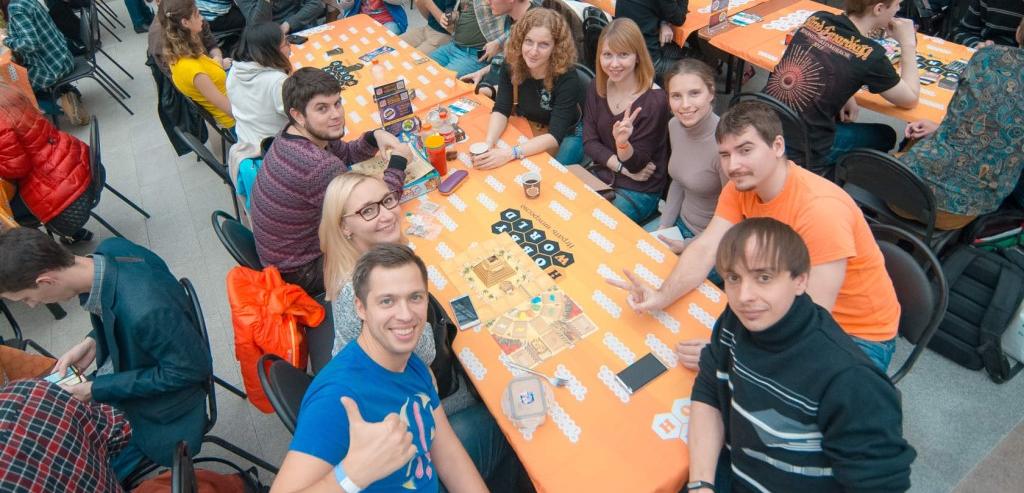
There are also limitations. Complex rules are tiring, a long game keeps only the most enthusiastic at the table, and harsh personal rivalry can increase tension. The more diverse the team, the shorter the first round should be and the easier it should be to move to another table.
Which team board games should you choose for your group?
In short: Choose a game based on your goal, the number of participants and the acceptable level of competition. For getting to know each other, association-based tasks work well; for teamwork, cooperative games; for a tournament, short rounds with equal conditions for everyone.
You shouldn't start by picking game titles. First decide what participants should do: get acquainted, explain ideas, find a shared solution, plan resources or compete. The same game can appeal to an established team and fall flat at a meeting of employees who barely know each other.
Games for getting acquainted
Association tasks, short stories and finding things in common work well. They give people a reason to start talking but don't require revealing personal information. It's best to avoid questions about income, relationships, health, political views and other sensitive topics.
Cooperative board games
In a cooperative format, participants play against the game's conditions rather than against each other. The team allocates actions, discusses risks and reaches a result together. Such games are useful for a new team and for groups where direct competition could cause unnecessary tension.
Communication games
Charades, Elias, Activity and similar mechanics are built on explaining words through speech, drawing or gestures. They get people talking quickly, but the facilitator needs to make sure the tasks are clear to all participants and don't put anyone in an awkward position.
Logic and strategy games
Puzzles, chess, resource-management games and sequencing tasks appeal to participants who prefer a calm, intellectual format. For a corporate programme, it's better to choose versions with short rounds or to limit turn time.
Dexterity games
Block towers, table football, balance games and throwing games work well as open stations. The rules are explained quickly, and spectators enjoy watching a match. An extended game zone can include table football if the venue has enough space for players and waiting guests.
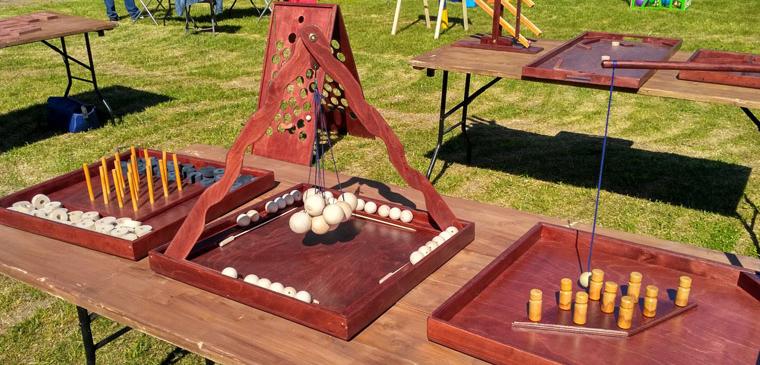
For a single programme, it's useful to combine several mechanics. While one team solves a logic task, another plays an explanation game, and a third takes on a short dexterity challenge. After the round, participants rotate between tables, so no one is stuck with a game that didn't suit them.
How to run a board game tournament in the office?
In short: An office tournament needs consistent rules, a round schedule, a host, and a clear system for moving between tables. It's best to test the games in advance with people who weren't involved in the preparation.
A simple tournament can be held right in a meeting room, cafeteria, or free area of the office. First, assess the number of tables, aisle width, noise level, and the ability to divide participants into groups. Phone calls and ongoing work in the next room will quickly disrupt the game's rhythm, so it's better to separate work areas.
Basic preparation order:
- Define the goal and duration of the game portion.
- Choose games with comparable complexity and round lengths.
- Check the contents of the boxes and print brief reference sheets.
- Form teams and create a rotation schedule.
- Assign a host or instructor for each complex table.
- Plan scorekeeping and rules for resolving disputes.
- Run a test round before the event.
The host shouldn't deliver a long lecture on the rules. First, explain the goal of the game and available actions, then demonstrate one example turn. Other nuances can be revealed as the game progresses. This approach is especially useful when several tables are running simultaneously in the same room.
Don't divide employees solely by department. Mixed teams generate more new connections, but managers and subordinates should be distributed with regard to relationships within the team. If a supervisor's presence prevents participants from freely debating and proposing solutions, it's better to change the lineups between rounds.
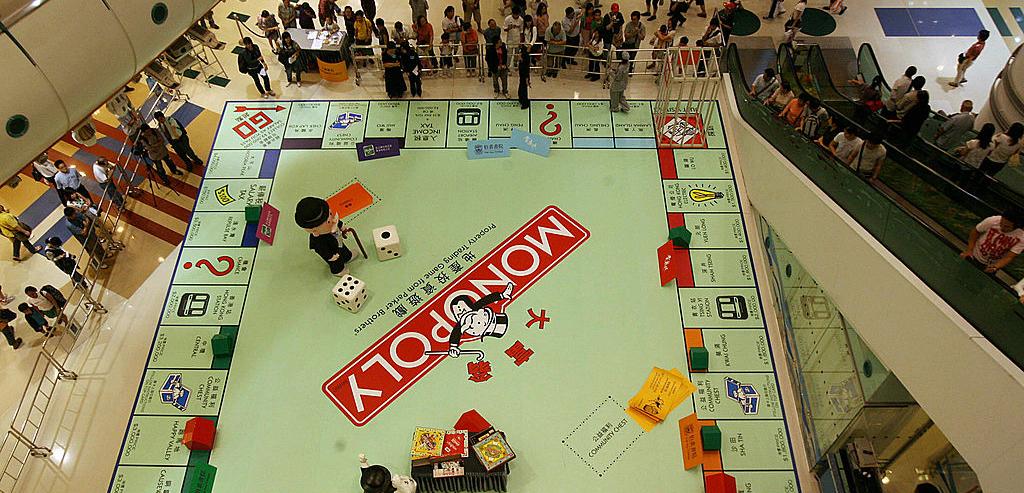
The scoring system depends on the goal. For a friendly game night, marks for completing stations are enough. In a tournament, you can count round wins, completed tasks, and team bonuses. Don't base the final result solely on speed: a slow team sometimes makes more considered decisions and distributes participation better.
A large program will require a coordinator who keeps track of time, replaces equipment, and assists instructors. When preparing a team-building corporate event in St. Petersburg, the game portion can be combined with a business block, buffet, or evening program.
What are worker placement board games?
In short: Worker placement is a game mechanic in which a participant places tokens on available actions and receives resources or other opportunities. It develops planning skills, but is not intended for directly assessing employees.
The phrase "worker placement board games" refers not to HR work, but to a common mechanic in strategy games. The player receives several conditional workers in the form of tokens. On their turn, they send them to action spaces: to get a resource, build an object, fulfil an order, or unlock a new opportunity.
Usually the same action cannot be repeated endlessly. A space may be taken by an opponent, so you have to weigh priorities and change your plan. This mechanic trains consistency in decision-making, working with constraints, and the ability to notice other participants' actions.
For a corporate board game library, simplified versions with clear iconography and a short game cycle are suitable. A heavy strategy with a large number of exceptions will require a long explanation and will not interest the whole team. If participants are encountering the mechanic for the first time, the facilitator can run a demonstration round without scoring.
Competitive worker placement board games are best played in small groups. To preserve the team character, two people can play one side: one monitors resources, the second assesses the board, and they make decisions together. At the same time, a more experienced player must not be allowed to fully control their partner's moves.
After the game, it is useful to discuss not the winner but the process. Which actions did the team consider priorities, how did they react to a shortage of resources, who suggested alternatives? Such a discussion links the game to work situations without superficial conclusions about people's professional qualities.
How to develop a corporate board game?
In short: A corporate board game can teach your product, introduce the company structure, or model a workflow. Development starts with the objective and the mechanics, and the branded design is added after the game prototype has been tested.
Branding an existing game and developing your own mechanics solve different problems. In the first case, you change the design of individual elements: cards, the board, tokens, the box or the reference sheet. In the second, you create the rules, player roles, balance and content of the tasks for a specific audience.
A corporate game can serve several purposes:
- introducing products and internal terminology;
- discussing customer situations and objections;
- teaching the sequence of a workflow;
- communicating values through specific decisions rather than slogans;
- preparing for changes in structure or interdepartmental interaction;
- informally introducing new employees to the company.
It is too early to start with the logo and the design of the board. First, you formulate the desired action of the participant: to explain, choose, agree, allocate a resource, find a mistake or make a joint decision. Then you assemble a simple prototype from paper cards and check whether players understand the goal without hints from the author.
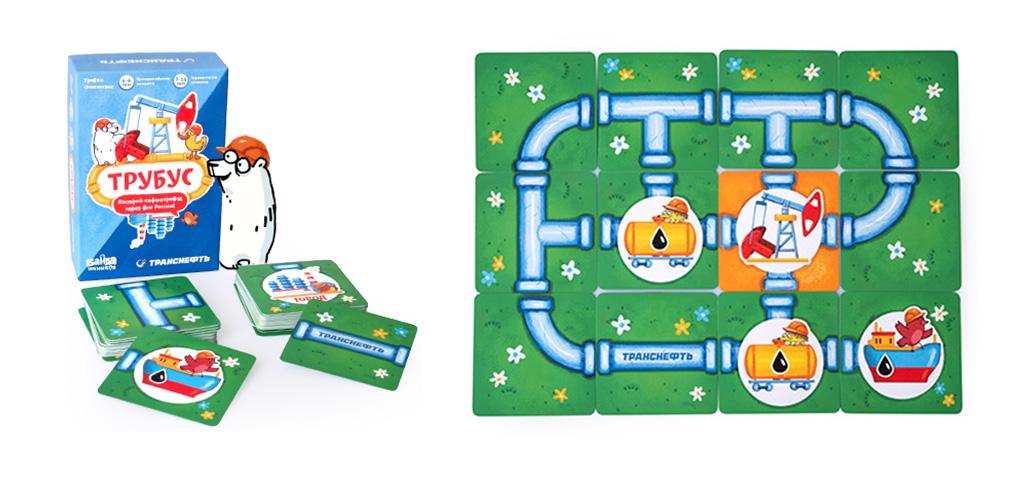
In the tasks, it is better to use recognizable work situations, but not to reproduce real conflicts with job titles and details. The game should give the right to make mistakes. If every wrong answer is perceived as a knowledge test, participants will start guessing management's expectations instead of discussing freely.
Balance requires special attention. Questions should not be obvious to only one department, and professional terminology should not exclude newcomers. For a mixed team, you can provide roles with different types of information so that the result depends on sharing data.
The final layout is prepared after testing and revisions to the rules. The kit also includes a short instruction, a facilitator's guide, a list of components and the procedure for setting up the table. If the game is intended for repeated use, materials are chosen with frequent assembly, transportation and storage in mind.
How to set up game zones with large board games
In short: Giant chess, towers, floor boards and team puzzles work as standalone interactive zones. They need clear walkways, sturdy props, an instructor and an easy-to-follow queue.
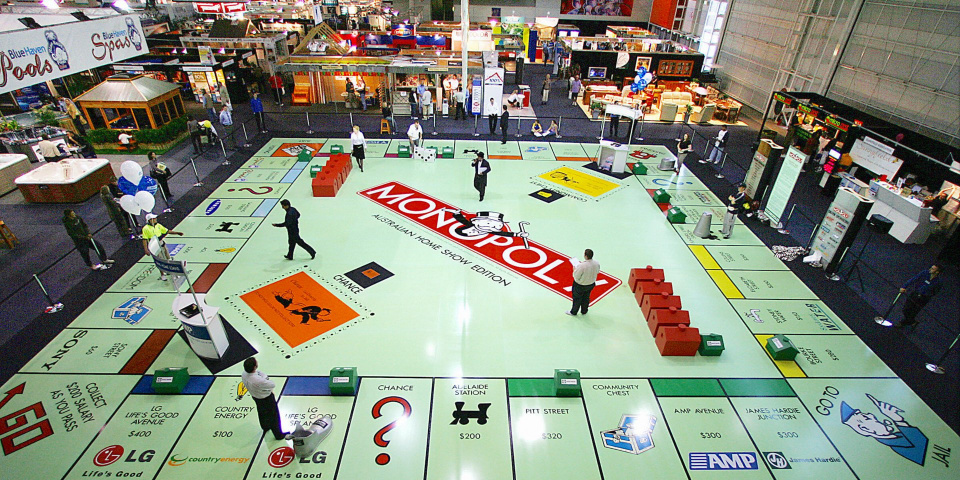
Large versions of board games are visible from afar and don't require the whole group to take part. A guest can play a quick round, cheer on colleagues or simply watch. That makes these zones handy at a corporate party, an opening, an exhibition and during breaks in a business programme.
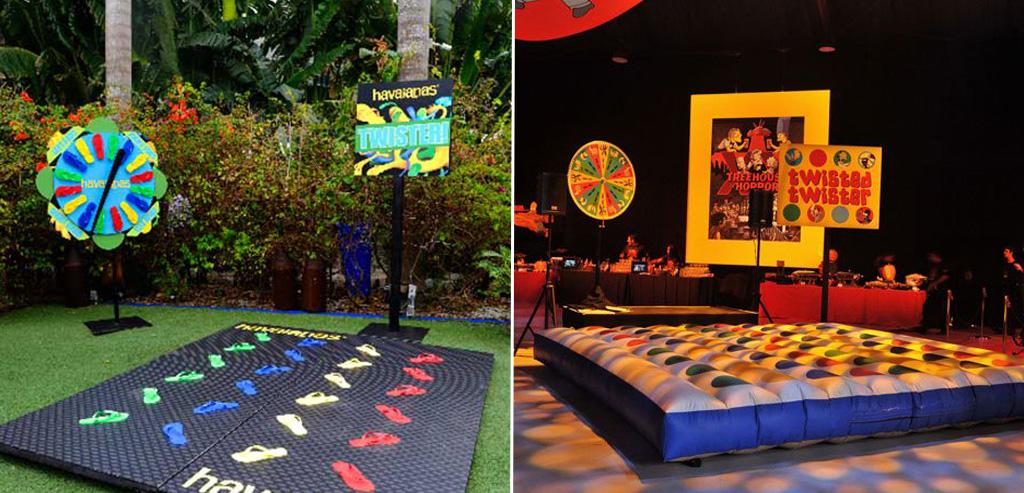
Familiar mechanics can be scaled up: chess, Connect Four, a tower of blocks, noughts and crosses, balancing games, floor mazes. Enlarging the pieces doesn't in itself make a game a team activity. To encourage collaboration, add roles, limits on talking, a shared pool of moves or a task that can't be solved alone.
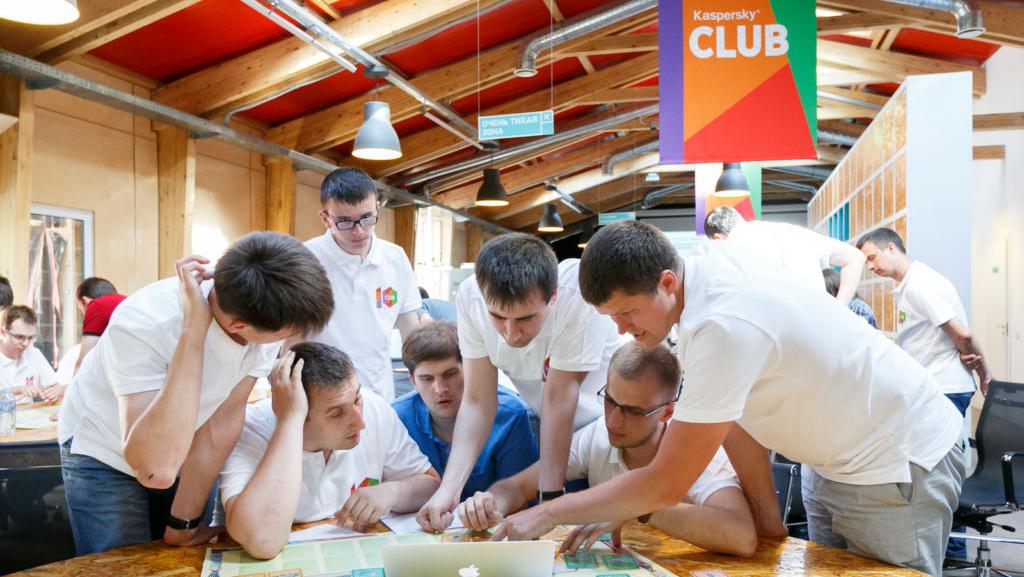
Game stations are not placed in a narrow walkway, next to stairs, the stage or the food service line. There should be spare space around the board for moving players and spectators. Props are checked for stability, the absence of sharp edges and suitability for the venue's flooring.
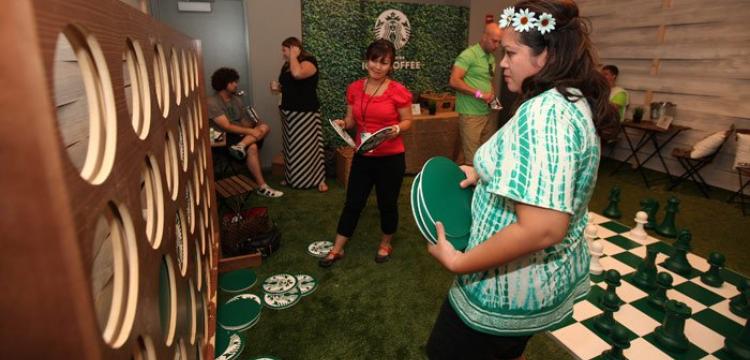
A noisy party needs large signage and rules that can be understood without a long spoken explanation. An instructor invites guests, demonstrates the first move, keeps an eye on the queue and returns components to their place. If the zone runs on a self-service basis, a clear visual guide should be placed nearby.
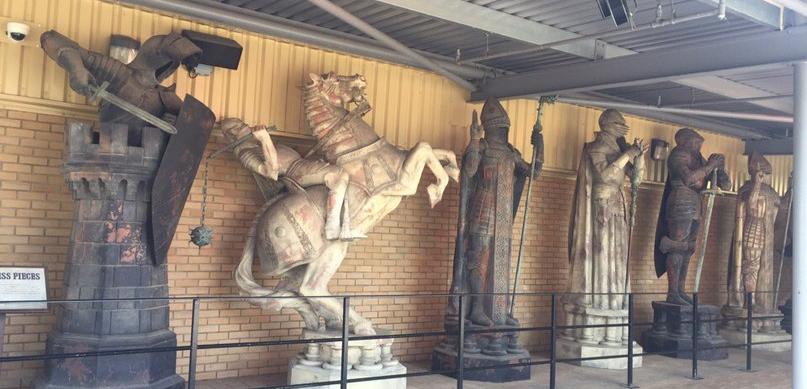
The size of the room determines the number of stations. For an intimate event, you can choose a loft in Moscow or a loft in St Petersburg, where the game area is easy to separate from the buffet. When viewing a venue, consider not only the total area but also columns, furniture, power sockets, staff walkways and where boxes will be stored.
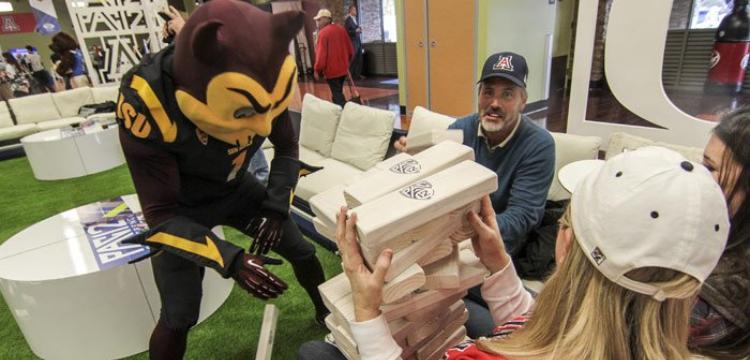
A large game can become part of the décor, but the decoration must not make the game board hard to read. Brand colours, team names and themed elements are added after the organisers have tested the mechanics and layout at full scale.
How do you get employees involved in corporate board games?
In short: Participation should be voluntary, and getting into a game should be easy. The host offers a choice of several formats, puts together small teams and helps newcomers get started without a public test of their knowledge.
The phrase "now everyone plays" usually triggers resistance. Employees have different interests, experience and attitudes to competition. Instead of forcing people, it is better to open several tables and explain how they differ: a calm strategy game, a team puzzle, a word game or a short dexterity contest.
The first round should be more accessible than the ones that follow. A participant quickly understands the goal, makes a trial move and gets a result. After that, you can offer a more complex station. If you start with a long set of instructions, some guests will leave before the start.
What helps engagement:
- an announcement with a clear description of the format that does not require any knowledge of board games;
- visible game tables that are easy to walk up to;
- short demonstration games;
- changing team line-ups between rounds;
- tasks of different types and difficulty levels;
- breaks, free seats for observers and the option to leave the game;
- a host who explains things calmly and does not mock mistakes.
It is important for the host to notice how attention is distributed within a team. If one person is responsible for everyone, you can introduce taking turns, personal information cards or a rule that a new participant announces the decision. This is done gently, without reprimanding anyone in front of the whole group.
At a large corporate event, the game part can be linked to the overall programme. The host announces the rounds, directs the flow of guests and sums up the results, but does not turn every game into a stage competition. For this format, you can find a specialist in the event hosts section.
The final discussion should be short and specific. Instead of asking "what did you learn about teamwork?", it is better to ask which decision was the hardest, when you had to change the plan and what helped you reach an agreement. Such answers provide material for conversation and do not sound like a training report.
Are board games suitable for online team building?
In short: Online you can run quizzes, negotiation games, detective storylines, puzzles and shared-board tasks. You need a clear platform, a technical check and separate rooms for teams.
In a remote format, games where participants discuss information and make a joint decision work best. Complex simulators with lots of buttons can distract from communication. If logging in requires registration or installing software, instructions are sent in advance.
An online game scenario usually includes a general gathering, an explanation of the task, teams working in separate rooms and returning to sum up. Each group must have a clear way to call the coordinator. Materials are revealed step by step so that participants don't get confused by cards and links.
When choosing a mechanic, take into account differences in connection quality and devices. Tasks that are convenient to complete only on a large screen will put smartphone users at a disadvantage. A video camera can help communication, but its use should not be turned into an in-game punishment.
For distributed teams, online team building can be built as a series of short board-game mechanics: a joint investigation, resource management, associations and a final team task. Pauses are needed between blocks, otherwise participants quickly get tired of the screen.
A hybrid, where some employees are in the room and some join remotely, requires special attention. Online participants need a team representative in the room or a digital board accessible to everyone on equal terms. Simply pointing a camera at a physical table is not enough: remote players will see the components worse and take part in the discussion less often.
Budget: what determines the cost
In short: The cost depends on the number of participants, the format of the games, the venue, the number of hosts, the props and the complexity of the decoration. A ready-made office game library usually requires fewer resources than a tournament with several stations or the development of a custom corporate game.
The budget is drawn up after the objective and format have been defined. Buying a few boxes for a meeting room, an off-site game library and a branded game with its own mechanics involve different scopes of work. Comparing them solely by the number of participants is incorrect.
The cost is affected by:
- the number of guests and simultaneously running game tables;
- purchase, rental or production of props;
- the number of hosts, instructors and coordinators;
- development of the scenario, tournament bracket and scoring system;
- branding of the playing field, cards, chips and packaging;
- testing of original mechanics and preparation of instructions;
- rental of the venue, furniture and technical equipment;
- delivery, assembly, dismantling and storage of large props;
- photo and video shooting, awards, catering and an additional programme;
- an online platform and technical support for remote participants.
Clear priorities help optimise the budget. If the main objective is for departments to get to know each other, there is no need to produce elaborate decorations. It is better to invest in a few suitable mechanics, the preparation of hosts and convenient team rotation.
For an office format, existing tables and neutral boxed games can be used. For an evening corporate party, the decoration of the zones, lighting, background music and the work of a single host are more important. Developing a game from scratch is justified when it will be tied to training, a product or internal processes, rather than being needed for just one short round.
Before the calculation, the organiser needs the brief: the city, date, number of participants, team composition, objective, available premises and desired duration of the programme. After that, it is possible to determine the number of stations, the composition of the project team and the list of additional services without items that do not affect the result.
Frequently asked questions
Association and communication games work well for getting acquainted, cooperative tasks for team bonding, and short competitive rounds for a tournament. Consider the participants' experience, the complexity of the rules, the length of a round and the noise level.
It is better to split a large group into small teams and set up several parallel stations. Games involving explanation, logic, joint planning and dexterity work well, with participants rotating between stations afterwards.
Define the goal, set up several game tables, appoint facilitators and draw up a rotation plan. Before the event, check the rules and the game components, and after the rounds discuss how the teams made their decisions.
These are ready-made or custom-designed games built into a corporate party, training or team-building programme. They can help employees get to know each other, simulate work situations, develop communication or simply offer a relaxed format for socialising.
Choose games with short rounds, identical starting conditions and transparent scoring. For a new team, it is better to avoid mechanics built on harsh player elimination and public personal assessments.
It is a strategy game in which a player places worker tokens on available actions and receives resources or opportunities. The mechanic is about planning moves and is not used to evaluate real employees.
Yes, if participants solve tasks in teams, share information and choose a strategy together. The programme can include puzzles, detective storylines, quizzes and board games with a shared result.
Contents
Was this article helpful?