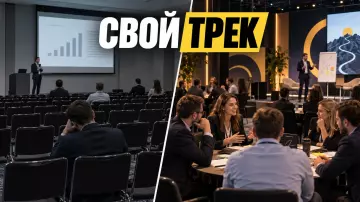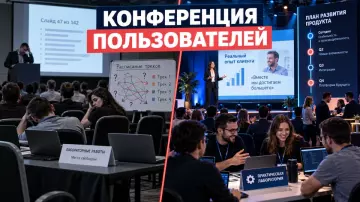
A dealer conference can conveniently be organized as a single route: the general agenda, partner meetings, and next steps do not remain separate parts of the program. A practical preparation framework for the network and marketing lead.
A dealer conference is needed by the network for a shared conversation about plans, the product, and the rules of work. But the value of an event is often created not on stage, but in targeted meetings between partners, managers, and experts. Therefore, it is better to build the program as a route: a general agenda, substantive conversations, documenting agreements, and the next step after returning to the regions.
Why does a dealer conference need one working goal?
In short: it's easier to discuss a dealer conference with the team when one main post-event action is chosen in advance. This could be agreeing on launch terms, booking a one-on-one meeting, gathering product questions, or confirming a plan for working with a region. A single goal helps filter out program blocks that take up time but don't bring partners closer to the conversation they need.
The phrase 'strengthen relationships with dealers' is too broad for a scenario. It is useful to break it down into observable actions: which decisions partners need to hear, whom they need to talk to, and who will continue communication after the conference. Then the network manager, marketing, and the producer discuss one subject instead of arguing about the length of presentations.
For each part of the program, assign an owner of the result. If a plenary session explains new rules, it should have a person responsible for questions from the audience and materials after the presentation. If negotiations are on the schedule, determine in advance who confirms the slot and what counts as the outcome of the conversation.
Whom to invite and how to divide guest roles?
In short: the guest list should be assembled by roles in the partner network, not just by a list of companies. An owner, commercial director, sales manager, and product specialist have different questions about the same agenda. Roles help choose the depth of content, the meeting format, and the person on the organizer's side who can continue the conversation.
Divide participants into at least three groups: partners who need to hear the overall strategy; people for whom working terms and product details matter; internal experts ready to answer questions. One guest can fall into several groups, but the team must understand which conversation is a priority for them.
The table summarizes the key points of the section: Guest role, What they need at the conference, What the team should prepare. Use it as a quick guide when preparing the event.
| Guest role | What they need at the conference | What the team should prepare |
|---|---|---|
| Head of partner company | Understand the overall framework and plans | A short strategic session and time for a personal meeting |
| Commercial director | Align sales tasks and regional conditions | A working conversation with the head of the division |
| Product specialist | See changes and ask specific questions | A demo, materials, and an expert nearby |
| Internal team | Maintain a unified answer for the network | Question cards, schedule, and escalation procedure |
It is useful to check the guest list with those who communicate with partners every day. They know where a personal meeting is needed and where a general block is sufficient. This approach is similar to preparing a client B2B event: first, roles and the next business step are determined, then the guest journey is built.
How to build a program without a long string of presentations?
In short: a dealer conference program holds attention when the general context gives way to specific discussion and time for questions. The plenary part is needed to align the network, but it shouldn't take up the whole day. After each important message, participants need a clear path: to an expert, a demo, a small group, or a scheduled meeting.
The workflow is as follows:
- Opening with the day's goal and navigation rules.
- General session with key changes for the network.
- Short thematic blocks on product, sales, or service.
- Meetings, demos, and small groups according to a clear pre-defined schedule.
- Final recap of topics, owners, and the deadline for the next contact.
Don't include in your presentations everything the team knows about the product. In the main hall, it's better to keep only the decisions that matter to everyone. Details get their own place in the program, where guests can ask questions and get answers without queuing at the stage.
A dealer conference is part of a broader effort around partner experience. If you need to bring the format, venue, registration, technical support, and coordination together into one budget, Aventura organizes business and client events with the network's objectives in mind.
In Aventura's Telegram channel, the team breaks down the organization of business and client events: from the first task to the day of the event.
How do you fit partner meetings into the schedule?
Important: meetings don’t just appear during a long break. They need slots, owners, a quiet area, and a clear way to book them. When negotiations are included in the program in advance, a partner doesn’t have to look for the right person among the guests, and the internal team can more easily prepare a response and retain the context of the conversation.
First, determine which meetings absolutely must take place. This could be a conversation with key partners, a consultation on a new product, or a short review of a regional situation. Then distribute them across tables, meeting rooms, or designated areas so that the route to the meeting doesn’t cross the noisy part of the program.
Each slot should have three fields: participants, topic, and next step. A calendar without a topic turns the meeting room into a queue, and a booking without an owner stays in someone else’s phone. The same principle is useful at an exhibition: in the article about an exhibition stand as a funnel, it explains why a contact is valuable only together with the reason for the conversation and the person responsible for following up.
When are a general session, small groups, and an evening part needed?
In short: a general hall is suitable for a single agenda, small groups for questions that can’t be resolved with a microphone, and the evening part for informal networking without a mandatory program. The format is chosen based on the content of the conversation and the composition of guests. One block doesn’t have to solve all the conference’s tasks at once.
A general session helps present strategy, show changes, and establish a common language. Small groups are needed when partners work with different products, regions, or terms. The evening part can support networking, but it’s better to build it around a comfortable rhythm of communication rather than an endless stage program.
The table summarizes the key points of the section: Task, Suitable format, What to check in advance. Use it as a quick guide when preparing the event.
| Task | Suitable format | What to check in advance |
|---|---|---|
| Communicate a single network-wide decision | General session | Stage visibility, sound, questions from the audience |
| Discuss a regional or product topic | Small group | Participant composition, expert, time for questions |
| Agree on the next contact | Negotiation slot | List of participants, owner, place to book |
| Introduce people from different companies | Evening part | Seating, navigation, balance of networking and program |
The venue must support this architecture. Before signing the contract, check whether the general hall, small groups, negotiations, and catering can be separated so that participants don’t have to choose between an important session and a scheduled meeting. The principles of the initial brief and role allocation can be taken from the article about the brief for a corporate forum.
What roles does the team need on the day of the conference?
Important: on the day of a dealer conference, roles are assigned by touchpoints along the guest journey: registration, stage, meetings, navigation, and real-time decisions. Job titles alone don't help much. It's more useful to establish in advance who is responsible for a specific outcome, who backs them up, and how the team communicates changes.
The project manager keeps the big picture and makes decisions together with the client's representative. The guest coordinator oversees registration, signage, and questions along the way. The program producer is responsible for transitions between the stage, demonstrations, and meetings. The technical lead checks the readiness of the venue, sound, lighting, and content.
Before the start, take a short walk-through of the guest journey. The team should see the path from the entrance to the right meeting, not just check the presentation on screen. For large formats, such a walk-through helps spot the intersection between timing, queues, and navigation earlier.
How to prepare registration, the route, and guest data?
In brief: registration starts with the invitation and ends with the transfer of the necessary information to the person who will continue working with the partner. The guest should understand where the venue is, how long the day will take, and how to find their meeting. The team should collect only the data that is needed for organizing and is agreed upon with company rules.
On the registration form, don't ask for everything that might come in handy someday. First, determine the required fields: name, company, role, contact method via an agreed channel, and need for a meeting or availability. It's better to agree on the procedure for processing personal data and the set of fields with the responsible people within the company before launching invitations.
Check the route through the guest's eyes: email, entrance, registration desk, cloakroom, hall, meeting area, catering, and exit. Each section needs clear signage and a person who can help. Questions about the venue's rules, evacuation, and fire safety require checking against current regulations and the specific venue's conditions, not just the working scenario.
What to coordinate a week before the event?
Important: a week before the dealer conference, the team checks not the idea, but the connections between people, the venue, and the schedule. At this point, it is useful to confirm the guest list, meeting slots, route, setup, contact persons and contingency plans. The earlier a gap is detected, the fewer changes you will have to explain to partners on the day of the event.
Hold a joint call with the client, the venue and key contractors. Clarify the access time for setup, the registration procedure, the list of equipment, seating, transition scenario, catering and contacts of people who make decisions on site. Separately check how the team will report a canceled meeting, a guest's delay or a change in the program.
There is no need to promise a universal buffer of time or budget. It depends on the city, the venue, the program, the contract and participant logistics. It is much more useful to agree on the procedure: who reports a change, who chooses an option, and where the final decision is recorded.
How to hand over agreements after the conference?
In short: after the dealer conference, the partner should receive a continuation of exactly the conversation that took place at the venue. To do this, the team collects questions, scheduled meetings, promised materials and owners of further actions in one working list. A general mailing can complement this process, but does not replace personal follow-up on the substantive agreement.
On the next business day, hold a short meeting of the internal team. Cross-check the notes from the negotiation areas, questions from the audience and speakers' commitments. Then assign owners and deadlines so that the partner does not receive different answers from several departments.
If you are preparing a dealer conference and need to link the program, venue, team and guest route with the network's objective, look at Aventura's portfolio and request a quote. At the start, it is enough to describe the audience, cities, timelines and the conversations that should take place.
Frequently asked questions
The phrase “strengthen relationships with dealers” is too broad for a scenario. It is useful to break it down into observable actions: which decisions partners should hear, whom they need to talk to and who will continue communication after the conference. Then the network head, marketing and the producer discuss one subject rather than argue about the length of the presentations.
Divide participants into at least three groups: partners who need to hear the overall strategy; people for whom working conditions and product details matter; internal experts ready to answer questions. One guest may fall into several groups, but the team must understand which conversation is a priority for them.
The working order looks like this:
First, determine which meetings must take place. This could be a conversation with key partners, a consultation on a new product or a short review of a regional situation. Then distribute them among tables, meeting rooms or designated areas so that the route to the meeting does not intersect with the noisy part of the program.
A general session helps present the strategy, show changes and establish a common language. Small groups are needed when partners work with different products, regions or conditions. The evening part can support networking, but it is better to build it around a comfortable pace of communication rather than an endless stage program.
The project manager keeps the overall picture and makes decisions together with the client’s representative. The guest coordinator oversees registration, signage and questions along the way. The program producer is responsible for transitions between the stage, demonstrations and meetings. The technical manager checks the readiness of the venue, sound, light and content.
Sources
- Cvent: Event Planning Guide
- Cvent: Event Planning Checklist
- RAMU: Recommendations on Conducting Tenders
- EMERCOM of Russia: documents and fire safety regulations
- REMA Moscow: Tender Recommendations
Contents
Was this article helpful?