Team spirit is built where employees understand the common goal, trust their colleagues, and can openly discuss work issues. To strengthen it, you need not one-off entertainment but a combination of clear rules, joint learning, traditions, mentoring, and team building with a specific purpose.
What is team spirit at work and how does it manifest?
In short: Team spirit is the willingness of employees to act together, take responsibility for the common result, and support colleagues. It cannot be replaced by corporate symbols or a single holiday.
Team spirit manifests not in matching T-shirts and friendly photos but in daily work. Employees understand what result the team is working toward, do not hide important information, agree on roles, and help each other in difficult situations.
At the same time, a strong team does not have to be conflict-free. Disagreements are inevitable, especially when participants assess deadlines, risks, and ways to solve a task differently. What matters more is whether colleagues can discuss the problem without getting personal and reach a workable solution.
Signs of strong team spirit
- common goals are clear to employees and linked to their tasks;
- roles and areas of responsibility do not have to be clarified at the last moment;
- participants can ask questions and admit mistakes without fear of public humiliation;
- important information does not stay within individual departments;
- team achievements are noticed alongside individual results;
- new employees integrate into communication and work processes faster;
- conflicts are discussed, not hushed up.
Weak team spirit is often noticeable by the opposite signs: departments blame each other, initiative is seen as a threat, employees avoid shared responsibility, and any informal activities cause irritation. In such a situation, you first need to find out the causes of tension. A corporate holiday by itself will not eliminate them.
How to boost team spirit: 10 ways
In short: Boosting team spirit starts with work processes and regular communication. Team building amplifies results when the team already has a clear goal and support from management.
Not all methods require a separate event. Some solutions can be built into everyday work and then complemented by a joint programme outside the office.
- Joint learning. Choose programmes where employees don't just listen to a lecturer but also solve tasks in small groups. It helps to mix departments that rarely interact directly.
- Volunteer initiatives. A shared social cause brings people together if participation remains voluntary and the focus is chosen with the team's input. This could be an environmental campaign, helping a shelter or preparing a useful project for the local community.
- A mentoring system. A mentor helps a newcomer understand not only the guidelines but also the unwritten rules of interaction. It's important to introduce the employee to colleagues, explain who to approach on various matters and regularly discuss how the onboarding is going.
- Open communication. Create formats where people can suggest ideas, ask awkward questions and give feedback. It's important for a manager not just to listen to employees but also to explain which suggestions were accepted and why.
- A corporate digest. Short news items help departments understand what colleagues are working on. The digest can include project results, team changes, training announcements and thank-yous to participants.
- An informal general chat. Separate it from work channels and agree on the rules in advance. Such a chat is suitable for congratulations, recommendations, photos from events and discussing shared interests.
- Psychological team building. A workshop on feedback, communication or conflict resolution gives employees a common language for discussing difficult situations. It should be run by a competent specialist, and participation in personal exercises should not be compulsory.
- Useful merchandise. A thermos, umbrella, power bank or clothing for an off-site event can emphasise belonging to the company. But merch works as a supplement, not as a substitute for respect and proper work organisation.
- Team traditions. Board games, shared breakfasts, sports meetups or cinema trips create opportunities for regular communication. It's better to offer several options and choose the one that genuinely supports the team.
- Regular team building. The format is chosen to suit the team's composition and the current task: getting acquainted, developing communication, allocating roles or restoring contact between departments.
For a large event, you can combine a team programme with a turnkey corporate party in Moscow or order team building organisation in St Petersburg. In both cases, the goal of the team-building part should be formulated before the scenario is developed.
What is psychological team building and who needs it?
In short: Psychological team building helps a team practise communication, feedback and conflict behaviour. It is not group therapy, nor a public airing of employees' personal problems.
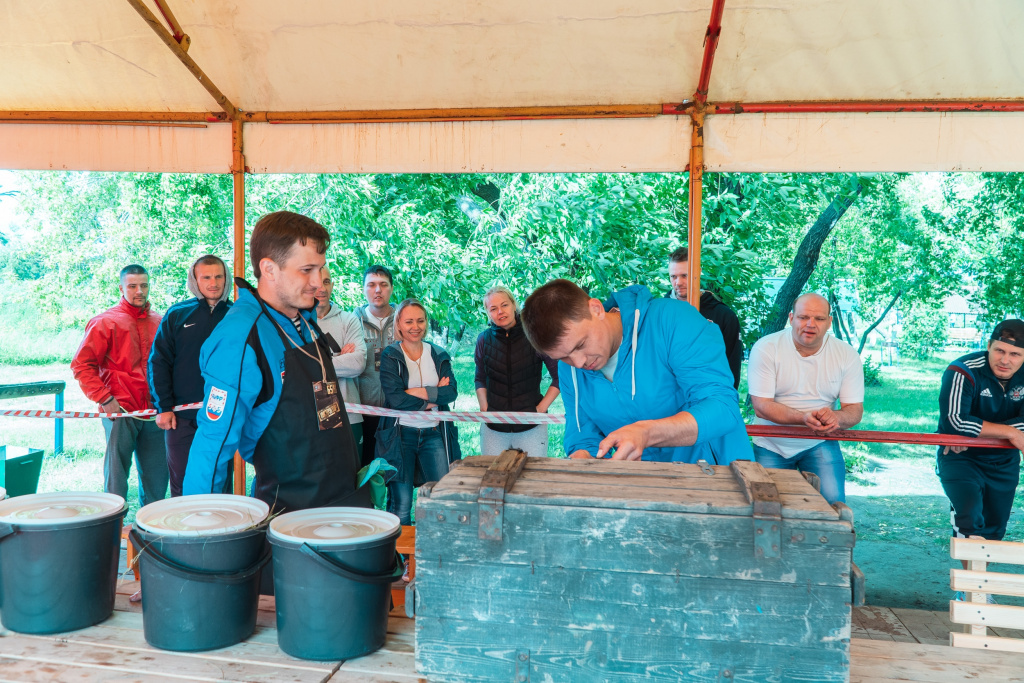
Psychological team building is built around models of interaction. Participants complete exercises, discuss solutions and notice how they distribute initiative, react to constraints, listen to colleagues and reach agreements under uncertainty.
This format is appropriate after departments are merged, when a new manager arrives, before a challenging joint project or when communication breakdowns keep recurring. It also helps teams that work remotely and rarely see the other person's reaction outside of messaging.
What goals you can set
- learn to give specific feedback without blame;
- discuss the ground rules for work communication;
- see habitual roles and decision-making styles;
- practise active listening and clarifying questions;
- work through typical conflict situations using neutral examples;
- form agreements the team can use after the session.
The risky scenario begins where organisers promise to eliminate all conflicts in a single session or invite participants to reveal personal feelings in front of colleagues. Employees must be able to opt out of an exercise, and the facilitator should understand the boundaries of the topic and the composition of the group in advance.
The programme needs practical outcomes: meeting rules, a procedure for handing over tasks, a feedback format or a list of actions for the manager. Without this, a useful discussion is quickly forgotten.
How does team building strengthen corporate and team spirit?
In short: Team building creates a situation in which employees have to exchange information, allocate roles and take responsibility for a shared result. The effect depends on the scenario, the facilitator's behaviour and the follow-up discussion.
In everyday work, roles are often fixed by job titles. At a team-building event, an employee can show qualities that previously went unnoticed: calmly coordinating a group, finding an unconventional solution, supporting participants or accurately gathering scattered information.
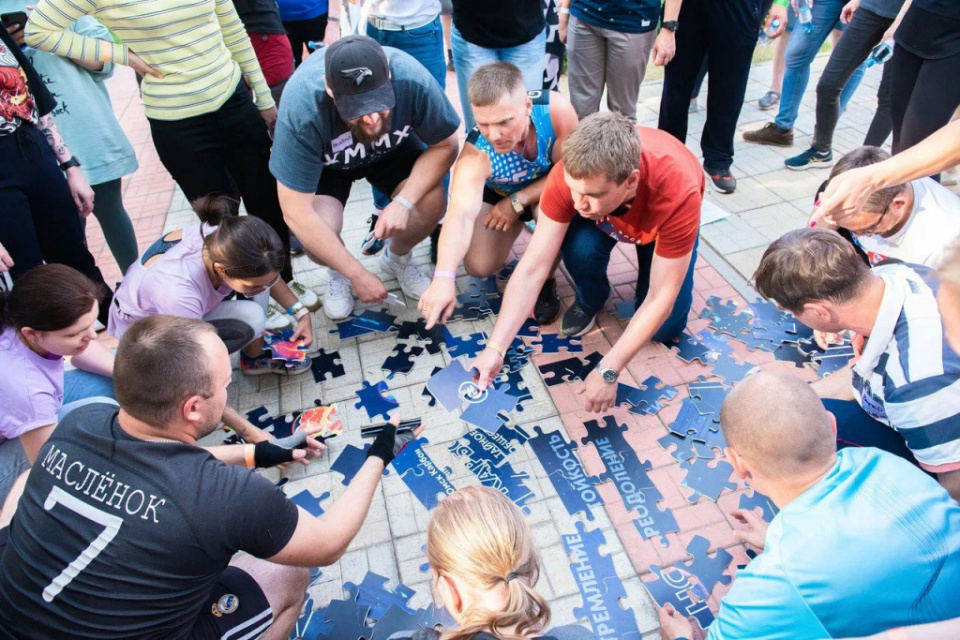
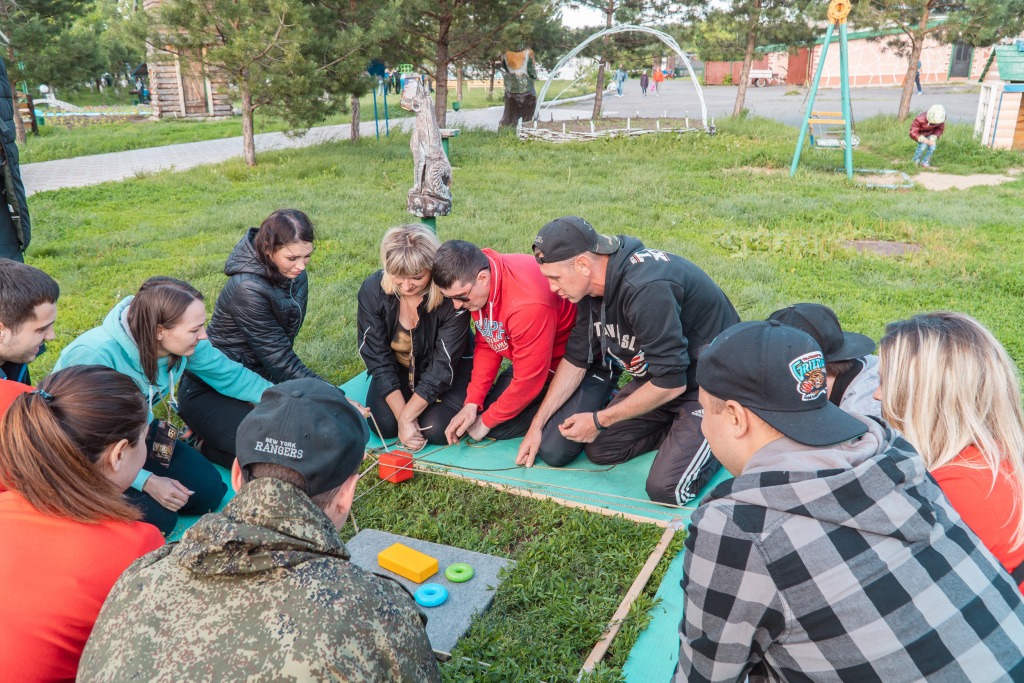
A shared task gives colleagues a safe reason to communicate outside their usual processes. People from different departments get to know each other, see each other's working style and gain a shared experience they can refer back to after the event.
What exactly a team programme trains
- Trust. Participants learn to ask for help and to hand part of a task over to colleagues.
- Communication. To get a result, they have to formulate messages precisely and check whether they have been understood correctly.
- Role allocation. The team determines who plans, who executes, who keeps track of time and who gathers the result.
- Decision-making. The constraints of the scenario force participants to compare options and reach agreement.
- Support. The overall result depends not only on the most active participants, so it is important to involve the whole group.
After the task, it is useful to hold a short debrief. The facilitator asks questions about what helped the team, where misunderstandings arose and which techniques can be carried over into work. Without reflection, participants will remember the game but may not connect it to real processes.
Team building should not turn into a covert staff assessment. If employees suspect they are being observed for the sake of HR decisions, caution and competition will appear instead of trust.
Which team building format should you choose?
In short: The format is chosen based on the goal, the makeup of the participants, the season, physical limitations and the available venue. Not every team needs extreme team building.
It's best to start the selection not with a spectacular mechanic, but with the question of which behaviour the team needs to practise. One format develops coordination, another helps people get to know each other, and a third provides active release after an intense project.
Sports team building
Relay races, tournaments and team games require distributing energy, following the rules and quickly changing tactics. When preparing sports team building, it's important to include tasks of varying intensity so that participation doesn't depend solely on physical fitness.
Intellectual format
Quizzes, trivia, detective games and challenges inspired by TV shows suit groups with different levels of physical fitness. The mechanics are best designed so that the answers require discussion rather than being determined by one particularly erudite player.
Engineering team building
Participants create a structure, an art object, a vehicle or parts of a shared mechanism. For example, when building a "Goldberg machine", individual groups are responsible for their own sections, but the result depends on the precision of all the connections. The format is good at showing the quality of planning and information sharing.
An active outdoor programme
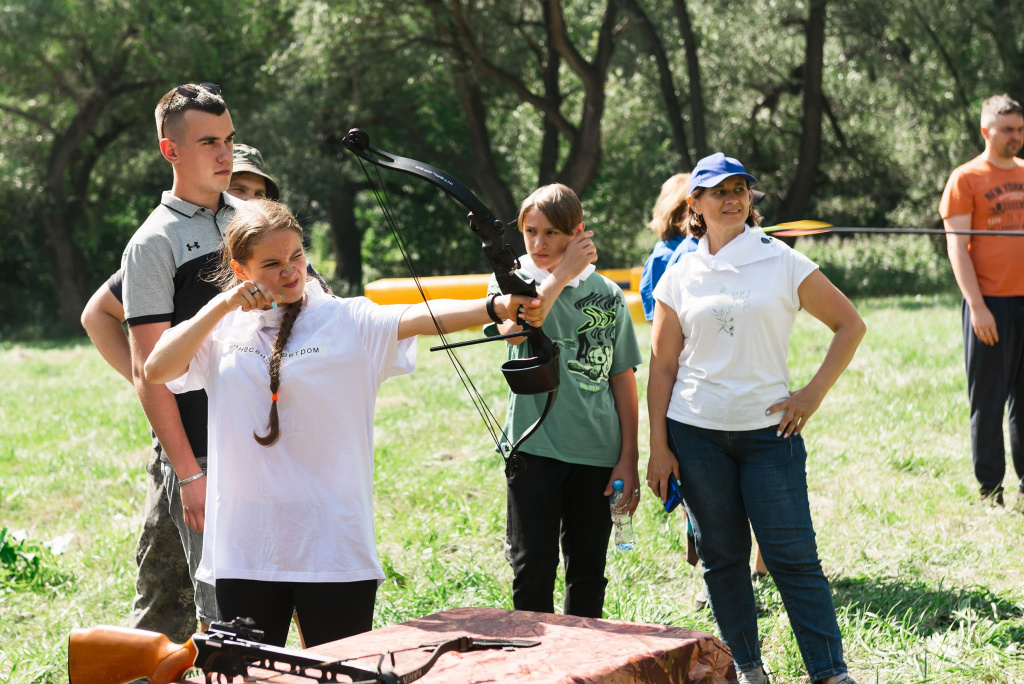
A quest, a tourist gathering and a ropes course let you combine movement with team tasks. For the programme you can choose a country venue in Moscow or consider country venues in St Petersburg. Besides the scenario, you need to check the routes, sanitary areas, catering and a bad-weather contingency plan.
Extreme team building
Rafting, a challenging high-rope route, an ATV trip and other high-intensity activities require especially careful preparation. You need to take into account the participants' health, the briefing, the equipment, the contractor's qualifications, the weather conditions and the option to choose a calmer role.
An extreme format must not be used as a mandatory test of courage. Declining a dangerous or psychologically uncomfortable task should not affect how a manager and colleagues treat the person.
Online format
For a distributed team, you can organise online team building with game rooms, a shared task and a moderated discussion. The simpler the technical entry and the shorter the wait between stages, the easier it is to hold participants' attention.
How do you organise team building that strengthens the team?
In short: Organisation starts with the goal and an analysis of who is taking part, then the format, venue, scenario and contractors are chosen. Safety, logistics, catering and a contingency plan are prepared separately.
The phrase "bring the team together" is too broad to build a programme on. It is better to clarify what is happening in the team now and what change should be noticeable after the event.
- Gather the inputs. Record who is taking part, their departments, age and physical limitations, working format, past experience and how employees feel about the event.
- Define the objective. It could be getting to know each other after headcount growth, improving interaction between departments, launching a project, practising role allocation or reconnecting after an intense period.
- Choose the mechanics. Match the objective to the format, duration and level of exertion. There is no point scheduling a ropes course just because it is associated with team building.
- Find a venue. Check capacity, accessibility, the availability of indoor rooms or outdoor areas, power supply, sanitary facilities and noise restrictions. For a city event you can look at Moscow venues or St Petersburg venues.
- Develop a scenario plan. It should cover guest arrival, briefing, splitting into teams, game blocks, breaks, catering, the wrap-up and departure.
- Allocate responsibility. Appoint a coordinator, zone hosts, technical specialists and people responsible for the venue, transfers and catering.
- Prepare the participants. In the invitation, state the programme, dress code, level of exertion, participation rules, and the time and place to meet. Do not hide physically demanding or high-altitude tasks for the sake of a surprise.
- Plan the finish. After the activity the team needs rest, a wrap-up and a clear transition to the informal part.
It is best to agree the date taking the work calendar and employees' opinions into account. A mandatory off-site event on a personal day off can cause resistance before the programme even begins. It is also undesirable to schedule active team building straight after a demanding reporting period with no time to recover.
If an employee of the company is appointed as the person responsible, free them from some of their usual tasks and define their authority. Otherwise, during the event they will be simultaneously handling organisational issues, taking part in the tasks and answering work messages.
What mistakes hinder the strengthening of corporate spirit?
In short: Coercion, excessive competition and a programme that does not match the composition of the team can increase tension. Participants need clear rules, a choice of an acceptable role and respectful debriefing.
Even a high-quality venue and expensive props will not save a programme if employees do not understand its purpose or feel unsafe. Most problems can be prevented at the briefing stage.
Mandatory participation in uncomfortable tasks
Heights, water, confined spaces, public speaking and physical contact do not suit everyone. The organiser should offer an alternative role in advance: coordinator, analyst, timekeeper, team photographer or a participant in another stage.
Relying only on competition
When the entire scenario is built on tough confrontation, strong players take the initiative and the rest stop influencing the result. It is more useful to alternate competitive stages with a shared final task where every group's contribution is essential.
Public comparison of employees
The results of the game must not be used to announce the best and worst employees. What should be discussed is the team's actions: how information was passed on, how decisions were made and how mistakes were handled.
Random division into teams
A random draw is not always useful. Sometimes it is important to mix departments, and sometimes to keep working groups together so that they can practise real processes. Teams are determined based on the task, the relationships between participants and possible imbalance.
No follow-up
Boosting team spirit does not end after the group photo. The manager should return to the agreements at the next work meeting, choose a few applicable rules and check whether they help the team.
The result can be assessed without complex research. Ask participants how clear the goal was, what helped interaction and what should be changed. In addition, the manager can observe whether employees have started exchanging information faster and turning to each other for help.
Budget: what determines the cost of team building?
In short: The cost depends on the number of participants, the format, the venue, technical equipment, logistics and the composition of the organising team. An exact budget is drawn up after the brief and the main parameters of the event have been agreed.
The same format name does not mean the same budget. A quiz in the office and a large team game outside the city require different numbers of staff, equipment and set-up time.
Main budget lines
- Venue. This takes into account the type of location, capacity, rental duration, additional rooms and set-up conditions.
- Programme development. The cost is affected by the complexity of the mechanics, tailoring the tasks to the company, the number of game zones and whether props need to be created.
- Project team. Depending on the format, this may include a coordinator, host, instructors, moderators, technical specialists and medical support.
- Equipment. Sound, lighting, screens, radio communication, sports equipment and power supply are selected to suit the scenario and the conditions of the venue.
- Logistics. The budget includes delivery of props, participant transfers, loading, set-up and removal of equipment.
- Catering. The format depends on the duration of the programme, the time of year, the workload and the capabilities of the venue.
- Safety. Active programmes may require gear, instructors, barriers, additional control zones and a contingency for changes in the weather.
- Decor and content. Branding, awards, photo and video shooting are added according to the brief, not automatically.
To compare options, ask for the scope of work and the number of specialists involved to be included in the budget. Separately clarify what the venue provides, which costs may change after the scenario is approved and whether a backup plan is in place.
It is better to cut the budget through optional decor, complex props or the number of parallel zones. Saving on safety, instructors, technical reliability and basic participant comfort creates an unjustified risk.
Frequently asked questions
Start with shared goals, clear allocation of responsibilities and open feedback. Complement workplace changes with mentoring, joint learning, team traditions and team building chosen for a specific task.
It is a team programme with exercises on communication, feedback, trust and conflict resolution. It should not turn into group therapy or force employees to discuss personal topics.
Participants receive a shared task, allocate roles, exchange information and share responsibility for the result. The effect is reinforced by a debrief during which the team links the game experience to workplace situations.
The choice depends on the goal, the composition of participants, physical fitness, the season and the venue. Intellectual and creative tasks are good for getting acquainted, while engineering games, quests and programmes with role allocation are good for coordination.
It suits teams whose members consciously agree to increased physical or emotional strain. Professional instructors, appropriate equipment, a briefing and alternative roles for those who are not ready to perform certain tasks are essential.
Use mentoring, joint learning, regular meetings, a corporate digest and traditions chosen by employees themselves. It is also important to explain management decisions and support safe feedback.
The budget is affected by the number of participants, the venue, the format of the programme, the number of hosts and instructors, equipment, catering and logistics. For active events, equipment and safety measures are accounted for separately.
Contents
Was this article helpful?