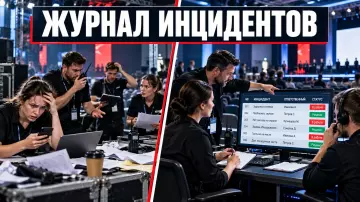
A practical framework for transferring participants between the airport, hotel and venue: data, waves, luggage, dispatch and backup.
The plane landed on time, the bus is ready, yet registration still begins without some of the participants. One person is looking for the greeter at a different exit, another is waiting for luggage, and a third has already been taken to the hotel even though the programme requires them to go straight to the venue. The vehicles are there, but there is no shared route.
At Aventura, we start the transport plan not with the number of buses. First we build a flow map: who arrives and when, when they will be ready to board, how much luggage they have, what assistance they need, where they are handed over and by what time they must be at the next point in the programme.
If you need to connect arrivals, transport, accommodation and the programme into a single plan, request a transfer and coordination quote. For an initial conversation, cities, dates, an approximate number of participants, a draft programme and a list of arrival points are enough.
What does participant transfer at an event include?
For us, the journey begins before the car is even dispatched. First, we check arrival details and meet the participant. Then we gather the group, supervise boarding and drive to the destination. We close the trip after confirmation from the receiving party; for each leg we assign a responsible person, a status and a fallback action.
It helps to view the route as a sequence of handovers:
flight or train -> greeter -> meeting point -> transport -> hotel or venue -> receiving coordinator
Each arrow here marks a change of responsibility. While the participant is in the terminal, their status is managed by the arrival coordinator. After boarding, the transport dispatcher takes over together with the vehicle coordinator. At the destination, the receiving party confirms that the group has reached the right area and can continue with the programme.
The journey does not end the moment the bus stops by the building. Participants may get off at the wrong entrance, end up in a security queue, fail to find the registration desk, or arrive before their rooms are ready. That is why the plan includes a final checkpoint: for example, "group handed over to the registration manager" or "participants received by the hotel coordinator, luggage placed".
The transport plan is linked to neighbouring processes, but it has its own responsible people and statuses. The hotel block and rooming list are responsible for accommodation. Participant registration manages the guest profile and access to the event. The transfer team uses only the data it needs and returns a confirmed arrival status.
If an event covers several cities, hotels or venues, logistics becomes a separate task with its own responsible person. In such a project, MICE and corporate tourism link the journey, accommodation and programme, while the transport plan remains a standalone part of the work.
Master matrix of transport waves
The team works in a single table with flights, buses, contacts and current changes. This is the master matrix. Each row relates to a participant or group, and a transport wave combines compatible rows. One person is responsible for updating it; they notify those whose task changes about the change.
The table below is our minimum working template. There is no mandatory form for it.
The table brings together the key points of the section: Field, What we record, Why the dispatcher needs it. Use it as a quick reference when preparing an event.
| Field | What we record | Why the dispatcher needs it |
|---|---|---|
| Participant or group ID | a permanent internal identifier | avoid confusing people with the same surnames and avoid creating duplicates |
| Arrival | flight or train, date, terminal or station | check the official status and send the greeter |
| Time statuses | scheduled, estimated, actual time, boarding readiness | do not treat the aircraft landing as the moment of meeting |
| Point A and point B | primary and backup meeting point | keep the route when the exit changes or communication is lost |
| Passengers | the number of confirmed people and their current status | assign a wave and see exceptions |
| Baggage | regular items, oversized items, equipment | check the vehicle's baggage configuration |
| Accessibility | required assistance and boarding parameters | select a continuous accessible route |
| Vehicle | type, assignment, confirmed configuration | do not substitute the class name for the actual capacity |
| Responsible persons | greeter, boarding coordinator, dispatcher, host party | understand who makes the decision at each stage |
| Dependency on the programme | the next point and the latest arrival time | assess the impact of a delay on the event |
| Backup | the trigger flag and the first action | do not discuss the backup plan from scratch at the moment of failure |
| Completion status | departed, arrived, handed over, requires review | close the stage and pass the fact to the next team |
The matrix has one primary version. A copy for the driver, greeter or hotel may contain fewer fields, but it must include the drop-off time and destination. A chat message by itself does not change the status. A change is closed when the primary table has been updated, the executors have received the new task and confirmed it.
It is useful to separate the plan and the current statuses. The plan answers the questions "how it should be": wave, vehicle, point, responsible persons, backup. The current part shows the estimated arrival, passenger readiness, boarding, departure, arrival and handover.
We do not add information to the shared matrix that the transport team does not need. A passport number, the contents of medical documents or details of a VIP protocol do not help the driver complete the trip. For closed routes and special needs, a separate view with restricted access is created.
What data should be collected before the quote?
First, we build a detailed flow map: arrival points, time windows and final addresses. Separately, we record luggage, required assistance and acceptable waiting time. Then we link each wave to the next point in the programme. This way transport has to be rearranged less often after tickets are purchased and the final schedule is issued.
For an airport or railway station, we check the terminal, the meeting point and the route to boarding. We also clarify the bus parking spot and a backup point. At the hotel and the venue, we look at the approach, the drop-off point and the available entrance. We keep the contact of the receiving coordinator next to the route.
Next, we collect passenger data. The minimum set depends on the project, but the usual order is as follows:
- Assign an internal record ID and a data owner.
- Specify the mode of transport, flight or train number, date and arrival point.
- Separate the planned time, estimated time, actual arrival and readiness for pickup.
- Record the final point of a specific leg of the route.
- Collect the number and type of luggage items, and separately note equipment and oversized items.
- Describe the required assistance neutrally, without unnecessary medical information.
- Specify the permitted channel of communication with the participant or their assistant.
- Set the confirmation status and the time of the last update.
Arrival time cannot automatically be treated as the time of boarding the car. After landing, a participant may wait to disembark, go through passport control, collect luggage or use an escort service. That is why the dispatcher needs a separate status ready for pickup. It is set by the greeter after contacting the participant; a formula in the spreadsheet will not determine this.
Luggage is collected based on the actual profile of the group. A single line "with a suitcase" is not enough if the participants include cases, stand materials, musical instruments, product samples or mobility aids. The project team does not set aviation rules. The participant checks battery, carry-on and oversized restrictions with the carrier.
Separately, we determine which data is confirmed and which is still a request. A required car, early check-in, airport assistance, a separate entrance or a space for a wheelchair should not look like a ready service until the responsible party responds. In the matrix, the statuses "requested", "confirmed" and "declined with an alternative" are useful.
If you need to check the transport scheme before signing the final request, send us a draft list of waves. We will compare arrivals, luggage, drop-off points and the programme, and list any disputed assumptions separately.
How to calculate vehicles and waves without universal standards?
We base the calculation on peak demand and the actual capacity of each confirmed vehicle. For each wave, we check the available passenger seats, the luggage configuration, and the number of seats after installing child seats and accommodating an escort. The working capacity is the lowest of these values. The vehicle's registered seat count alone is not suitable for the calculation.
First, we group passengers by compatible routes. Similar aircraft landing times do not yet make people part of the same wave. For international and domestic arrivals, the exit time may differ. Participants may be travelling to different hotels.
A speaker sometimes needs to go straight to the venue, while the main group goes to check in first. Oversized luggage or boarding assistance also change the cycle.
For each wave, we check:
- Whether the airport, railway station and terminal match.
- How close the estimated boarding readiness times are.
- Whether the destination is the same.
- Whether the luggage profile is compatible.
- Whether the vehicle is suitable in terms of availability.
- Whether the group can make it to the next point in the programme on time.
- What waiting time has been agreed for this category of participants.
- Where a passenger who misses the departure will go.
The full vehicle cycle is longer than the route shown in the navigator. The calculation includes the approach, site access and boarding. After the trip, we allow time for unloading, handing over the group and returning to the next point. If a vehicle makes several runs, each new departure depends on the completion of the previous cycle.
Useful capacity can be written as:
useful capacity = minimum(passenger seats, luggage configuration, seats after installing child seats and accommodating an escort)
The seats for the coordinator and escort are deducted in advance. The luggage capacity is confirmed by the supplier based on the described profile. A photo of the bus is not suitable for the calculation. If the number of passenger seats changes to secure a stroller, the calculation is based on the actual configuration of the trip.
We choose the movement model based on the structure of the flow:
The table summarises the key points of the section: Model, When it fits, Main risk. Use it as a quick reference when preparing an event.
| Model | When it fits | Main risk | Departure condition |
|---|---|---|---|
| Fixed schedule | dense flow with clear windows | some passengers miss their wave | approved departure time |
| Sequential shuttle | regular arrivals in small groups | the vehicle accumulates delay across cycles | agreed load or maximum waiting time |
| Mixed scheme | a large main group and separate early or late flights | resource conflict between the main flow and exceptions | a large bus follows the main plan, small vehicles cover the exceptions |
It is better not to build exceptions into the main flow at the cost of making others wait.
There is no universal reserve percentage. It depends on the cost of delay, the availability of a replacement, the length of the route, the density of the programme and the number of independent flows. In one project, a spare vehicle is more useful.
In another, an agreement on a replacement and a separate driver on standby is enough. We describe the decision before the event and confirm it with the contractor.
We include logistics and transfers in the overall event production plan. This way, the vehicle calculation is cross-checked with registration, accommodation, the venue timing and return departures.
Airport and railway station pickups
We send the participant a short instruction in advance, and give the coordinator a primary and a backup scenario. Before the arrival day, we confirm the meeting point and how the coordinator will be identified. Then we check the communication channel and the flight status. Separately, we record the route to boarding and the action to take if the participant does not arrive at the appointed time.
In the instruction to the participant, we include only what helps them take the next step: where we meet, what the coordinator or the sign looks like, which contact to use to report coming out, where to go if the exit changes, and what to do without mobile internet. An overly long email gets lost on the road, so the operational part should fit into a short message.
The greeter checks the statuses:
expected- the official status has not changed, the coordinator is preparing for the pickup;arrived- the plane or train has arrived, but the passenger is not ready yet;in progress- the participant has reported their current stage;collecting baggage- the greeter understands the reason for the wait;ready for pickup- the participant is heading to the meeting point;met- contact has been confirmed;boarding- the group has been handed over to the car coordinator;participant not found- the agreed verification procedure has been launched;reassigned- the participant has received a new wave or an individual route.
Primary and backup meeting points are needed even in a familiar terminal. The exit may change, part of the area may be closed, and a large group can find it hard to gather at a popular spot. The coordinator knows in advance when to move people to point B and how to inform the dispatcher.
If the participant does not get in touch, the greeter first checks the official flight or train status and the message log. Then they call or write via the permitted channel. After the agreed waiting period, the dispatcher decides whether to keep the assignment, transfer the passenger, or close the status as "participant not found". A decision made independently by the driver creates conflicting versions here.
Delayed baggage is best kept separate from the passenger flow. The participant files a report about uncollected baggage with the lost and found service before leaving the baggage claim area and follows the carrier's instructions. The main group continues the route unless the programme or the person's condition requires otherwise. The coordinator records who accompanies the paperwork and who will then update the status.
How do you hand over a group at a hotel and at a venue?
We close a trip only after confirmation from the hotel or venue coordinator. They meet the wave, receive passenger and baggage details, show the next route, and notify the dispatcher when finished. If the entrance, rooms, or check-in are not ready, the team follows a pre-agreed scenario.
At the hotel, we check the driveway and drop-off point in advance. Then we walk the route with suitcases to the front desk or luggage storage. For an early wave, we agree on a separate scenario and the contact person responsible.
The fact of booking does not mean that rooms are ready before standard check-in time. The group can leave luggage, check in, go for a meal, or head straight to the venue.
At the venue, what matters is the driveway, parking, permitted drop-off time, accessible entrance, and distance to check-in. The catalog of event venues helps start the selection, but the transport scheme is checked against the actual property. A beautiful hall does not answer the question of where the bus will stop and how a participant with a suitcase will get inside.
The receiving coordinator gets the expected number of people, wave ID, estimated time, deviations, and special actions. They do not need the entire master manifest. After arrival, they confirm the actual number, exceptions, and the group's readiness to move on. If someone stayed on the bus, left on their own, or was directed to another area, this is reflected in the status.
For an event at multiple properties, the same logic applies. In the article about organizing a forum at two venues, we examine in detail the full cycle of moving between venues. We consider an airport transfer complete after the participant is handed over to the next team, when they can continue the program.
Control room, statuses and decision log
We consolidate all operational changes into a single control room so the team works from one shared version of events. Here you can see the official arrival status, passenger readiness, vehicles, coordinators, host points and the impact of deviations on the programme. Drivers and greeters report facts, while the transport logistics lead chooses the scenario and schedules the next check.
Roles can be distributed among different people or combined in a small team, but the functions must remain:
- the transport logistics lead owns the plan and makes decisions;
- the manifest operator updates the master table;
- the arrival coordinator maintains contact with passengers;
- the vehicle dispatcher manages dispatch and substitutions;
- the boarding coordinator checks people and luggage;
- the host party confirms readiness and handover;
- the non-standard routes coordinator handles exceptions.
We build the operational status using a short formula:
fact -> impact -> decision -> owner -> next check
For example, a message like "the flight is delayed" is of no help to the dispatcher. What is needed is an entry: "estimated arrival has changed; wave A is affected; the main vehicle departs without two passengers; passengers reassigned to wave B; the coordinator confirms contact after actual arrival". There are no invented minutes here, but there is an action.
In the log we record the time and source of the message, the previous and new status, the decision taken and the person responsible. Next to it we put the time of the next check. This way the next shift sees the outcome and the reason for the reassignment.
We divide communication channels by task. The general operational channel keeps wave statuses and decisions. Drivers receive dispatch, route, dispatcher contact and a minimal checklist for verification.
VIP and accessibility data go into a closed channel. For the participant we prepare short messages about the meeting point, wave change and arrival.
A backup communication channel is also needed. This could be an offline copy of the minimal manifest, pre-saved phone numbers, radio communication on site or a rule to report via the coordinator. The backup is tested in action. A file that no one has opened without the internet does not count as a working fallback scenario.
What to do in case of delay, no-show and lost baggage?
When something deviates, we protect the main flow and the programme, and move the exception into a pre-defined scenario. The decision relies on the confirmed status, available waves and the latest time for the next point. Every action gets an owner, a message to the participant and a re-check time. The dispatcher separately records the impact on the receiving party.
We build the decision matrix before the event:
- The estimated time has changed, the programme stays. We update the time, check the vehicle assignment and notify the receiving party.
- A passenger cannot make their wave. We reassign them to the next compatible wave and confirm the new instruction.
- A flight has separated from the main flow. The main bus departs, and a backup route is assigned to those delayed.
- Baggage has not been delivered. The participant files a search through the official service, and the dispatcher handles escort and onward travel.
- The vehicle has not arrived or is faulty. The dispatcher activates a confirmed replacement, and the coordinator keeps the group at a safe point.
- The destination point is not ready. Departure is delayed by decision of the transport logistics manager, or the group is moved to an agreed intermediate point.
- A participant cannot be found. We check the official status, make contact via an approved channel, apply the agreed no-show rule and record the decision.
- The next point of the programme is unreachable. The participant is directed to a late entry, straight to the venue, or to another agreed route.
The status "participant not found" must not be confused with refusal to take part in the event. The person may have arrived independently, moved to another vehicle, failed to check in with the coordinator or lost contact. An empty seat on the bus does not yet confirm a no-show; the team first checks the participant's status. A universal transport no-show percentage is also not carried over from other events.
If a flight is delayed, the carrier organises services under the Federal Aviation Regulations and the applicable carrier and airport procedures. The transport team solves a different task: keeping the event route on track. We do not promise airline services and do not replace official information channels. We enter the confirmed status and our team's action in the manifest.
A backup must answer six questions:
- Which verifiable fact triggers the scenario?
- Who makes the decision?
- Which first action is taken without additional approval?
- Who needs to be notified?
- Which vehicle, point or wave is used?
- When does the team check the situation again?
The phrase "we'll find another bus" does not answer any of these questions. A confirmed backup may be more modest, but it exists in a real contract, contacts and schedule.
Accessibility, VIP and non-standard baggage
For such trips, we create separate routes within the overall transport plan. We collect only the information necessary for the operation, confirm the service in advance with the airport, railway station and transport provider, verify the handover point and restrict access to sensitive information. We do not disclose the reason for the special scenario to the wider team.
Before collecting data, the client determines the operator, purpose, minimum set of information, legal basis, storage and destruction period, access scope and procedure for transferring to contractors. If the answers reveal health status or other special categories of personal data, the form and basis of processing are checked in advance by the person responsible for personal data or a lawyer. If necessary, separate written consent is obtained. Once the purpose is achieved, working manifests are deleted unless further storage is required by law or contract.
For a participant with reduced mobility, we check the entire route:
- the point for calling assistance and handover to the greeter;
- the path between the terminal and the vehicle;
- boarding and securing the mobility aid;
- the companion's seat;
- the accessible entrance of the hotel and venue;
- handover to the next coordinator.
A lift on the bus does not solve the problem if the vehicle cannot pull up to the required point or if there is a staircase further along with no alternative.
The workflow looks like this:
- Determine the purpose and legal basis of processing; if necessary, obtain separate consent for the information needed to organise assistance.
- Confirm the service with the airline, airport or railway station.
- Record the handover point and the person responsible for it.
- Obtain the parameters of the mobility aid if they affect transport.
- Confirm the actual configuration of the vehicle.
- Pass on to the contractor only the data for their section.
- Verify completion of the handover at the next point.
We do not include a diagnosis in the general manifest without necessity and a separate legal basis. The operations team needs a neutral wording: assistance required when boarding, transport with a low entrance required, passenger uses a wheelchair, travelling with a companion, additional time required for handover. Access to details is given only to those who need them to organise the service.
The VIP scenario is built around closed access and continuity of the route. It may include a dedicated contact, vehicle, greeter and handover point. Such status does not give the right to violate traffic rules or use unconfirmed access. The route is agreed with the owners of the terminal, hotel, venue and security service.
We handle non-standard baggage as a separate profile. First we collect dimensions and weight, then clarify the loading method and vehicle restrictions. Trunks, samples, musical instruments, stand materials and large equipment may fill the baggage compartment before the seats run out. The participant checks the rules on dangerous items and batteries with the carrier.
During loading and unloading, we appoint a person responsible for counting the items. They verify the quantity, separate personal baggage from group equipment and check the empty compartment after unloading. This simple procedure reduces the risk that a case or suitcase is left in a vehicle that has already departed on its next trip.
End-to-end walkthrough and brief for the quote
During the walkthrough, the team follows the participant journey from the meeting point to handover to the receiving coordinator. It checks the actual meeting point, the route to boarding, headcount verification, luggage placement, the approach to the hotel or venue, and trip completion. After the walkthrough, a single version of the plan remains, along with a list of fixes and the people responsible for them.
We run the check in the same configuration that will be used at the event. If the bus cannot pull up to the terminal, this is identified before the group arrives. If the walk from drop-off to the entrance takes longer than the navigation app suggested, the adjustment goes into the schedule. If the venue has several gates, the driver and the coordinator receive the same name and diagram.
Minimum walkthrough scenario:
- Identify the primary and backup meeting points.
- Check communication and the method for identifying the coordinator.
- Walk the group's route with standard and non-standard luggage.
- Check the waiting and boarding area.
- Confirm the approach and maneuvering of the assigned vehicle class.
- Walk the drop-off point and the accessible route to the entrance.
- Hand over a test group to the receiving party.
- Simulate a delayed flight, loss of communication, and a passenger without a current record.
- Check the return departure and post-programme pick-up points.
- Update the master matrix based on the results.
For the quote and the first brief, the client does not need a perfect list of tickets. It is enough to provide the initial framework:
- city and dates;
- airports, railway stations, hotels, and venues;
- draft programme;
- expected arrival and departure waves;
- group composition and participant roles;
- estimated luggage and equipment;
- accessibility needs;
- VIP categories without unnecessary personal details;
- venue restrictions;
- desired format for dispatch and reporting.
Once the tickets are received, the matrix is refined. It must include update deadlines and the people responsible on both the client and organizer sides. If data changes across several departments, we determine in advance who has the authority to confirm a new trip, cancel a vehicle, or change the destination point.
Before releasing the final version, we run a final check:
- every wave has an owner and a receiving party;
- arrival times are separated from boarding readiness;
- usable capacity is confirmed by people, luggage, and accessibility;
- the main flow is separated from exceptions;
- points A and B have been checked;
- the backup has a trigger condition;
- return departures are arranged before the event begins;
- contractors receive only the data they need;
- changes are entered into the master table;
- the programme knows the actual group arrivals.
Transport must be part of the overall event plan. At Aventura, we link it to registration, accommodation, the venue, and the timing. That way, the dispatcher manages participants' readiness to continue the programme and uses vehicles as a resource for that task.
Frequently Asked Questions
For us, the journey begins before the car is dispatched. First, we verify arrival details and meet the participant. Then we gather the group, supervise boarding and drive to the destination. We close the trip only after confirmation from the receiving party; for each leg we assign a responsible person, a status and a backup action.
The team works in a single table with flights, buses, contacts and current changes. This is the master matrix. Each row refers to a participant or a group, and a transport wave combines compatible rows. One person is responsible for updates; they notify everyone whose task is affected by a change.
First, we build a detailed flow map: arrival points, time windows and final addresses. Separately, we record luggage, required assistance and acceptable waiting time. Then we link each wave to the next point in the programme. This way, transport rarely has to be rearranged after tickets are purchased and the final schedule is issued.
We base the calculation on peak demand and the actual capacity of each confirmed vehicle. For each wave, we check available passenger seats, the luggage configuration and the number of seats after installing child seats and accommodating an escort. The working capacity is the lowest of these values. The nominal seat count alone is not suitable for the calculation.
We send the participant a short instruction in advance, and give the coordinator a primary and a backup scenario. Before the arrival day, we confirm the meeting point and how the coordinator will be identified. Then we check the communication channel and the flight status. Separately, we record the route to boarding and the action to take if the participant does not show up at the appointed time.
We close the trip only after confirmation from the hotel or venue coordinator. They meet the wave, receive information about passengers and luggage, show the next route and notify the dispatcher when it is complete. If the entrance, rooms or check-in are not ready, the team follows a pre-agreed scenario.
If you need a single plan for meetings, shuttles, luggage, accommodation and return departures, discuss your project and request a quote. We will start with a flow map and separately flag the data that still needs confirmation.
Sources
- Order of the Ministry of Transport of Russia No. 161: rules for the carriage of passengers and baggage
- Order of the Ministry of Transport of Russia No. 368: accessibility of airports and aircraft
- Federal Law No. 152-FZ "On Personal Data", Articles 5, 9, 10 and 18.1
- Federal Aviation Regulations: general rules for the carriage of passengers and baggage
- Domodedovo: for passengers with reduced mobility
- Pulkovo: for passengers with special needs
- Directorate of Railway Stations: services for passengers
- IATA: Passenger Baggage Rules
- ACI World: Accessibility
Contents
Was this article helpful?