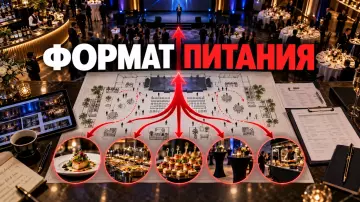
Brand participation in a festival: a practical breakdown of event selection, sponsorship package rights, brand zone, data, full budget, and KPIs.
Brand participation in a festival gives a company a ready-made audience and context, but a package with many logos does not make the project useful by itself. First, connect the brand's objective with the audience, rights, and guest action. Then calculate production, data, and contact follow-up.
What to decide before choosing a festival?
Before requesting a sponsorship package, define the brand's objective, target audience, and useful guest action. This is more important than the partnership level. If the team cannot name the expected visitor step and how to verify it, it is too early to compare packages. Large overall traffic will not fix the gap between the festival context and the company's goal.
At Aventura, we start with a short statement: after contact with the brand, what exactly should the guest understand, try, compare, or discuss? The answer determines the zone format, team composition, and next step. Getting to know the product and having a substantive conversation with a client require different scenarios.
At the first meeting, agree on four points:
- Which business objective the participation supports.
- Who should notice the brand and why this audience matters.
- What the person does in the zone, not just sees.
- What follow-up is appropriate after the festival.
State the rejection conditions in advance. For example, the festival is not suitable if the package does not provide the required category, the program does not match the brand context, or the zone is outside the main route. Such a boundary protects the team from the decision "we participate because we've already started negotiations".
If the company needs a closed guest list and time for deep negotiations, a standalone B2B client event may be more precise than a festival package. A festival is useful when the brand needs contact with an already gathered community and can add clear value to that community.
Festival selection criteria
A festival is evaluated by how well its audience, program, route, and participation rules align with the brand's objectives. An attendance report is necessary but not sufficient. Request the counting methodology, guest profile, schedule, traffic flow map, and communication rights. This turns the event presentation into decision-making material rather than a set of promises.
Compare several levels of alignment:
The table summarizes the key points of this section: Criterion, What to request, Risk of a weak response. Use it as a quick reference when preparing for an event.
| Criterion | What to request | Risk of a weak response |
|---|---|---|
| Audience | data source, profile, share of target segment | general traffic is passed off as brand contact |
| Program | schedule, topics, peaks, adjacent activities | zone competes with the stage or remains without flow |
| Context | brand conduct rules, partner categories | integration appears random to the community |
| Route | site plan, entrances, transitions, visibility | the location is on the map but no one reaches it |
| Communications | website, app, map, navigation, host | logo is placed, but the path to the zone is not built |
| Data | who collects, on what basis, what is transferred | brand receives contacts without context and rules |
| Operations | installation, capacity, communications, storage, cleaning | costs and restrictions appear after the contract |
Supplement the audience portrait with a behavior map: where people spend time, which blocks attract queues, and how the flow moves between stages. Separately clarify what changes in case of rain or program disruption. Based on the answers, you can verify the zone location and team shifts.
Thematic alignment also requires verification. A brand can support the community with a useful service, content, product trials, or a platform for conversation. Mere proximity to a popular event does not create such a role. The clearer the brand's contribution, the easier it is to explain participation to the guest and evaluate the result.
What to check in the sponsorship package?
The sponsorship package should be read as a map of rights, obligations, and restrictions. For each item, record the location, timeframe, scope, production owner, approval process, and proof of fulfillment. Phrases like 'logo at the venue' or 'integration into the program' without these details cannot be properly evaluated, budgeted, or accepted after the event.
Transfer the package inventory into a working table:
The table summarizes the key points of the section: Right, What to clarify, How to accept the result. Use it as a quick reference when preparing the event.
| Right | What to clarify | How to accept the result |
|---|---|---|
| Partner status | exact name and permissible use | wording is in the contract and mockups |
| Area | usable size, facades, height, storage, service area | plan with references and access report |
| Pre-festival communications | format, channel, date, number of outputs | links, screenshots, and actual dates |
| On-site placement | size, location, duration, adjacency | photos, display log, or walkthrough at acceptance |
| Program | slot, stage, duration, equipment | approved schedule and technical rider |
| Post-event content | materials, deadlines, publication rights | delivered package and licenses |
| Data | operator, fields, consent, transfer format | processing scheme and basis log |
| Exclusivity | category, exceptions, related products | category map in the contract annex |
Separately check category exclusivity. The word 'exclusive' alone is not enough. Describe the product category, sub-brands, related products, mandatory venue suppliers, and already concluded partnerships. Specify whether the restriction applies to digital channels, broadcasting, stages, and adjacent areas.
Content rights require the same attention. Agree on the use of logos, photos of attendees, music, performances, materials from artists, and program recordings. Set a response deadline for mockups and the number of iterations. Otherwise, a delay in approval becomes an urgent rework at the brand's expense.
The package should describe changes. What happens if the stage slot is moved, the zone location is changed, or the announced channel disappears? An equivalent replacement should solve the same task. An additional post does not always make up for a lost right to demonstrate or speak.
Map of Rights and Responsibilities
The working table links the package promises to the actual owners of the work. In one row, the right, condition, executor, approver, deadline, and verification method must meet. The document is needed before the final estimate: it shows where the organizer provides inventory, where the brand produces material, and where a separate contractor or venue service is required.
Build the table according to the principle:
right → condition → who provides → who produces → who approves → who pays → how we check → what we do in case of change.
This record quickly identifies gaps. For example, the package gives a place for suspension, but does not include the structure, load calculation, installation, and power. The right to send a mailing may not include text preparation, base segmentation, and delivery report. A stage slot may require separate equipment and rehearsal.
Distribute roles within the brand: marketing holds the task and content, procurement checks the scope of work and commercial terms, legal handles rights and data, and the technical team is responsible for production and operation. One producer consolidates the decision calendar so that disputes do not carry over to installation.
We also publish breakdowns of client and brand formats in the Telegram channel.
How to turn a package into a contact scenario?
The package's rules should lead the guest from the general flow to a useful action and a clear continuation. First, choose one verb for the mechanics: try, compare, assemble, check, discuss, or receive. Decor will come after the scenario. Then add an input signal, a short explanation, the result for the person, and the role of the brand employee.
The working chain looks like this:
- The guest notices a clear signal along the general route.
- Quickly understands what can be done.
- Goes through the mechanics without a long instruction.
- Gets a useful result, not just a souvenir.
- If necessary, discusses the task with a specialist.
- Chooses the appropriate next step themselves.
Test the mechanics before production. Make a simple prototype, give it to people who haven't read the brief, and see where they stop. Detailed instructions are in the article about how to test interactivity before production.
Don't force one scenario to solve everything at once. The quick flow can introduce the idea and guide further. A separate conversation zone is needed for questions. Staff should understand when to help, when to hand the guest over to an expert, and when not to ask for contact.
Handing out by itself rarely explains the role of the brand. If the gift is not connected to the action or content, the team will see high expense and a weak signal of result. A souvenir is useful when it continues the idea of the zone or helps the person return to the material after the festival.
Brand Zone in the Guest Route
The zone is designed as part of the festival route, not as a separate island. The entrance, queue, activity, conversation, and exit must fit within the available area and not block the main thoroughfare. The plan accounts for post-program peaks, bad weather, equipment failure, and different ways of participation. Visibility without safe throughput creates a problem.
Start with a site plan. Mark entrances, stages, catering, sanitary areas, emergency exits, accessible routes, and noisy points. Then map the expected flow of the zone. The queue should not occupy the transit path, block the view, or disturb neighbors.
Throughput is tested. Measure the time for orientation, activity, result delivery, and conversation. Run normal and peak modes. Define the moment when the team shortens the scenario, opens an additional point, or temporarily restricts entry.
Accessibility runs through the entire route:
- clear navigation and information about wait times;
- the ability to perform the activity sitting down and without precise physical gestures;
- a text or visual duplicate of important audio;
- a calm alternative to loud and bright scenarios;
- space for an accompanying person and mobility aids;
- an accessible form and way to get the result after leaving.
Prepare a technical backup along with the main solution. Describe operation without the internet, the big screen, CRM, or a single employee. Cables and switching remain outside the guest route. A designated specialist conducts an inspection before opening and after equipment relocation.
The path from the first cue to the next step can be cross-referenced with the article “Exhibition Stand as a Funnel”. The new article covers festival selection and rights. Stand mechanics help to detail zoning and contact handover.
What data can be collected?
Collect only the data needed for the stated follow-up contact. Specify the operator, purpose, list of fields, data actions, recipients, retention period, and withdrawal method. Scanning a badge, entering a prize draw, or receiving material does not imply consent to any future promotional mailings.
Before launching the QR form, agree on the data flow. Check the domain, analytics, CRM system, cloud, backups, and export. For data of Russian citizens, comply with Federal Law No. 152-FZ, including purpose specificity, proportionality of fields, provable consent, and localization rules.
Separate user actions. Receiving the promised file can be one purpose. Marketing communication is another. If your team needs a phone number to schedule a meeting, explain that directly. Don't ask for date of birth, job title, or address just because the field is already in the form template.
Keep the context with the contact: interest, question, promised material, and agreed next step. This set is more useful than a list of QR scans. Restrict access for promo staff, and prohibit exporting to personal devices in the work policy.
Photos and videos require a separate review. Event filming, public distribution of images, music, and speaker materials may be governed by different rules. For children and sensitive data, use a separate procedure and legal check.
Full-cycle budget
A full budget starts with the package fee but does not end there. Include rights, concept, production, venue services, staff, logistics, operations, data, post-event content, and dismantling. Proposals can only be compared on an equal scope of work. Otherwise, a low package price conceals mandatory purchases and urgent work.
Break the calculation into blocks:
The table summarizes the key points of the section: Block, What to include, Common omission. Use it as a quick reference when preparing an event.
| Block | What to include | Common omission |
|---|---|---|
| Rights | fee, status, media, program, data | mandatory surcharges for services |
| Concept | script, design, content, approvals | adaptations after package changes |
| Production | structure, furniture, graphics, equipment | test assembly and repairs |
| Venue | catering, internet, rigging, cleaning, storage | exclusive suppliers and off-hours rates |
| Team | production management, staff, training, shifts | reserve for staff replacement |
| Logistics | delivery, access, container storage, dismantling | waiting time and return trip |
| Data | form, CRM, documents, access control | support and data deletion |
| Content | filming, editing, versions, rights | paid usage and approval timelines |
| Reserve | weather, breakdowns, reprinting, urgent delivery | changes to the festival program |
Ask the same questions for each line: Is it included in the fee, is purchase from a specific supplier mandatory, is there a deadline, minimum volume, deposit, tax, and dismantling? Request the technical manual before signing the contract. It often affects the cost more than a polished package presentation.
We ask the client to provide the package, zone plan, dates, product restrictions, and a list of desired mechanics. Then we can put together a comparable budget and see which rights support the objective and which only increase the production scope.
How to choose KPIs without false attribution?
Divide KPIs into three layers: fulfilled rights, zone performance, and business outcome after the festival. For each metric, define the source, owner, period, and the decision the team will make. Overall traffic, QR scans, and impressions answer different questions. None of these indicators automatically confirms a contact, lead, or change in brand attitude.
Before the event, record the objective and the baseline. Separately agree on what counts as entering the zone and a substantive conversation, which contact to pass to sales, and which attribution window fits the deal cycle. Without these rules, the report cannot be compared with the plan.
On site, measure observable actions:
- fulfilled rights and actual working time;
- flow past the zone, entry, and scenario completion;
- waiting time, refusal, and technical failure;
- substantive conversation and agreed next step;
- request for an available alternative and the quality of the team's response.
After the festival, check the speed of the promised follow-up contact, material deliverability, accepted meetings, and movement through your own funnel. For brand objectives, a separate before-and-after research methodology is needed. Do not substitute it with the number of publications or views.
Build the report according to the formula: result, measurement method, data source, period, and limitations. In the report, first show the fulfillment of the package, then the zone performance, and only then the contact results. The overall framework can be supplemented with an article on how to build a KPI matrix for an event.
Do not attribute the entire subsequent sale to the zone. The festival can create the first contact, clarify interest, or bring a meeting closer. The commercial result also depends on the product, price, manager's work, other channels, and cycle length.
Decision on participation
The decision is made after checking the task, audience, rights, full budget and measurement. Use three statuses: participate, reassemble or refuse. The first means that the package gives the necessary rights and the team can implement them. Reassembly is needed when the inventory can be changed, and refusal protects the budget if the key gap is not closed.
Before signing, check:
- The task and target segment are formulated without generic words.
- The brand's contribution to the guest experience is clear to the team.
- Each key right is described and verifiable.
- Category, exclusions and adjacent partners are disclosed.
- Venue, traffic, accessibility and backup plan are agreed.
- Roles of the brand, venue and managing party are assigned.
- Data collection and content rights are checked.
- The estimate includes the entire life cycle.
- KPIs separate package execution from business results.
- Changes, postponement and cancellation have a working procedure.
If the package passes this list, the team can move on to the technical specification, approval calendar and production. If not, it is better to reassemble the rights before starting design. Late clarity almost always means rework, urgent procurement or a weak report.
Frequently Asked Questions
Before requesting a sponsorship package, define the brand's task, target audience and the guest's useful action. This is more important than the level of partnership. If the team cannot name the expected step of the visitor and the way to verify it, it is too early to compare packages. Large overall traffic will not fix the gap between the festival context and the company's task.
The festival is evaluated by the match of audience, program, route and participation rules with the brand's task. The attendance report is needed, but it is not enough. Request the counting methodology, guest profile, schedule, traffic map and communication rights. This turns the event presentation into material for decision-making, not a set of promises.
The sponsorship package should be read as a map of rights, responsibilities and restrictions. For each item, record the location, term, volume, production owner, approval procedure and proof of execution. Phrases like 'logo at the venue' or 'program integration' without these fields cannot be properly evaluated, budgeted or accepted after the event.
The working table links the package's promises with the real owners of the work. In one row, the right, condition, executor, approver, deadline and verification method should meet. The document is needed before the final estimate: it shows where the organizer provides inventory, where the brand produces material, and where a separate contractor or venue service is required.
The package rights should lead the guest from the general flow to a useful action and a clear continuation. First, choose one verb for the mechanic: try, compare, assemble, check, discuss or receive. Decor will appear after the scenario. Then add an entry signal, a short explanation, the result for the person and the role of the brand employee.
The zone is designed as part of the festival route, not a separate island. Entrance, queue, action, conversation and exit should fit into the available area and not block the general passage. The plan takes into account peaks after the program, bad weather, equipment failure and different ways of participation. Visibility without safe throughput creates a problem.
Sources
- HSE: crowd flow and bottleneck management at events
- HSE: electrical safety for temporary infrastructure
- W3C WAI: accessibility of events and presentations
- Federal Law No. 152-FZ, Article 5: Data Processing Principles
- Federal Law No. 152-FZ, Article 9: Consent to Processing
- Federal Law No. 152-FZ, Article 18: Obligations When Collecting Data
- NIST: Privacy Framework and Data Lifecycle
- Excel London: venue services for participants
Contents
Was this article helpful?