We break down the Compliance Day program: from the business objective and station scenarios to knowledge checks, accessibility, and handling employee questions.
Compliance Day for employees helps translate company rules into clear working decisions. Its purpose is not limited to a festive date or a long lecture. Participants analyze situations from their work, find a safe course of action, and understand where to turn with a question. Organizers need a unified scenario so that training, dialogue, and the business program work together.
At Aventura, we start with business risks and the behavior the company wants to reinforce. Then we build the participant route, tasks, expert roles, and a technical plan. This order helps turn a complex topic into a meaningful corporate event without competition for competition's sake.
Submit a request - we'll discuss your task
We'll clarify the event format and suggest the next step.
Why Does a Company Need a Dedicated Compliance Day?
A separate day is needed when a regular newsletter or mandatory course is not enough to discuss ambiguous situations. The event connects training, employee questions, and management's position. Participants not only learn the rule but also try to apply it to a gift from a partner, a conflict of interest, working with data, or communicating with a competitor.
Organizations are required to develop and adopt anti-corruption measures. Article 13.3 of Federal Law No. 273-FZ lists, among possible measures, responsible units, standards of fair conduct, conflict-of-interest prevention, and cooperation with law enforcement agencies. The law itself does not require holding a corporate event specifically. Compliance Day can become one of the ways to explain the existing rules and check how clear they are to people.
The occasion may be the launch of a new policy, team integration after a reorganization, recurring questions on the hotline, or the need to bring employees from different functions together in one conversation. A calendar date can also support communication. The National Compliance Association marks Compliance Officer Day on September 26, but it is better to tie the program to the company's objectives, not just to the date.
Для такого проекта подходит логика for a business event: есть содержательная цель, модерация, эксперты, маршрут участника и измеримый итог. Entertainment elements help hold attention, but they do not replace precision of wording.
A Result You Can Verify
Compliance Day must have a concrete result for the participant and the process owner. The employee understands how to recognize a risk, where to find the rule, and through which channel to ask a question. The compliance function receives a map of unclear topics, and managers see which actions require additional explanation or a process change.
We set goals in terms of behavior, not impressions. The phrase "raise awareness" is too general. It is more useful to define what the participant will be able to do after the program:
- Отличить деловой подарок от ситуации, требующей согласования.
- Заметить личную заинтересованность и сообщить о возможном конфликте интересов.
- Выбрать безопасный способ работы с документами и персональными данными.
- Найти внутреннюю политику и канал для консультации.
- Explain your decision using a short practical example.
These actions become the basis for tasks and the final assessment. If the company uses its own terms, roles, and approval routes, they need to be built into the scenario verbatim after review by the policy owner. We do not replace legal interpretation with game text.
Metrics are also chosen in advance. You can compare the number of correct decisions before and after the program, the share of completed routes, the topics of questions, and the assessment of how clear the materials are. The number of smiles in photos does not show whether an employee has learned to act more safely.
How to Build the Program Content?
Content is assembled from real risk areas, current policies, and frequently asked questions, but is cleaned of personal and confidential details. The working group includes compliance, legal, HR, internal communications, and the event owner. Experts are responsible for accuracy, and the event producer translates the material into clear scenes and tasks.
At the first briefing, we request:
- list of topics and mandatory wording;
- current policies and instructions available to employees;
- typical mistakes without names, amounts, or recognizable circumstances;
- internal channels for consultation and reporting violations;
- participant groups and differences in their work situations;
- restrictions on photos, video, recording, and discussion of materials;
- requirements for knowledge checks and storage of results.
Then we build a matrix "risk - solution - source of the rule - task format - expert". It keeps the scenario from drifting into abstract reasoning. Each station gets a verifiable answer and a person who confirmed it.
In our experience, it is useful to divide the program into general context and role-based practice. The head of procurement, the sales manager, and the HR specialist need different situations. At the same time, the company's common language should remain unified.
Stations Instead of a Lecture Marathon
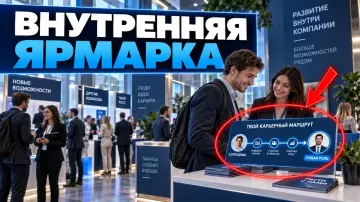
Stations give the participant a short task, a choice of action, and quick feedback. The route can be built around gifts, conflicts of interest, personal data, interactions with competitors, procurement, and a reporting channel. Each point should test one skill. Complex exceptions are better left to the expert rather than hidden in the small print of the card.
The table summarizes the key points of the section: Station format, What the participant does, What the team checks. Use it as a quick guide when preparing the event.
| Station format | What the participant does | What the team checks | Format risk |
|---|---|---|---|
| Situation analysis | chooses an action from several options and explains the decision | risk recognition and choice logic | a controversial wording turns the task into a guessing game |
| Approval route | assembles the correct sequence of steps | knowledge of roles, deadlines, and the channel | the scheme is outdated or differs between departments |
| Red flags | identifies dangerous signs in a document or conversation | attention to detail and knowing when to stop | too obvious hints do not reflect workplace reality |
| Ask the Expert | anonymously submits a question and receives an answer in a general session | availability of consultation and openness of dialogue | the question discloses personal or case data |
| Team Decision | the group discusses a situation with multiple interests | argumentation and allocation of responsibility | the loudest participant wins, not the most accurate solution |
| Mini-Quiz | answers short questions after the route | retained understanding of key rules | the test checks memory of wording, not action |
Game mechanics must not promise a legally correct solution for every situation. In the assignment, it is important to outline the boundaries: what data is known, which rule applies, and when consultation is needed. If different decisions are possible, the moderator says so directly and shows a safe next step.
For large participant flows, stations are duplicated or staggered in time. For a distributed team, some tasks can be moved to a digital format. In a hybrid scenario, in-person and remote participants must have equal access to the content, the question, and feedback.
How to Build a Participant Route?
The route connects registration, the introductory block, practice, a conversation with experts, and the final step. Participants must understand where to go, how long the task lasts, and what will happen to their answer. The organizer calculates the throughput capacity of each station and decides in advance what to do about a queue or a late arrival.
The working sequence looks like this:
- A short opening by a manager explains why the topic is connected to the company's work.
- The moderator presents the rules of participation and the boundaries for discussing specific cases.
- Participants go through several stations by role or chosen route.
- The expert block reviews recurring questions without revealing the authors.
- Teams complete a final task or a short knowledge check.
- Everyone receives a link to the policies, contacts, and the next step.
В organizing conferences we use the same production discipline: unified timing, speaker cards, technical run-throughs, and communication between the hall and the control room. For Compliance Day, this is supplemented by rules for access to materials and approval of each content block by the policy owner.
Navigation is checked on the venue plan. Flows must not intersect at the entrance, cloakroom, catering area, and popular stations. Closed discussions must not be placed next to noisy activity or an open passage.
The Role of Leaders and Experts
Leadership sets the purpose of the event, while experts are responsible for accuracy and feedback. A long welcome speech does not replace participation. It is more important for employees to hear what behavior the company supports, where the boundary of responsibility lies, and whether they can safely ask an uncomfortable question.
We assign roles before writing the final script:
- a senior executive opens the day and connects compliance to business decisions;
- the compliance officer approves the content and leads complex reviews;
- a lawyer verifies the wording if the situation concerns law or contract;
- HR explains the learning path and how to work with results;
- the moderator manages time, questions, and the order of answers;
- the venue coordinator monitors flows and station readiness;
- the technical team is responsible for sound, screens, voting, and backup.
Experts need a shared brief. It records the permissible depth of an answer, a way to stop discussion of a real case, and a phrase for moving the question into a closed consultation. This protects both the employee and the company from public examination of confidential circumstances.
This protects both the employee and the company from a public examination of confidential circumstances.
How to Handle Questions Safely?
The expert goes through the tasks through a participant's eyes, checks the answers, and flags places where an ordinary person might understand a term differently.
The organizer explains in advance which questions will be discussed publicly, what will go to a private consultation, and which channel is intended for reporting a possible violation.
These data flows may have different legal bases, access rights, and retention periods.
- A question enters a closed queue.
- The moderator removes names, counterparty names, and identifiable details.
- The expert decides whether a general answer can be given.
- A specific case is transferred to the approved internal channel.
- Recurring topics are added to the explanation database after review.
Анонимность интерфейса не равна анонимности всей системы. Anonymity of the interface is not the same as anonymity of the entire system.. If the platform stores technical identifiers, this must be taken into account in the notice and access settings.
Accessibility and a Calm Environment
Доступный день комплаенса учитывает разные способы восприятия информации, мобильность и потребность в паузах. An accessible compliance day takes into account different ways of perceiving information, mobility, and the need for breaks.. Registration allows participants to communicate any necessary accommodations.
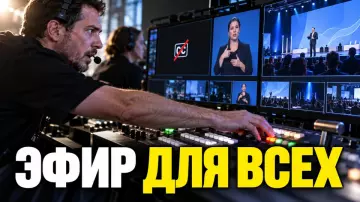
Materials are available in a convenient digital format, speech is delivered via microphone, videos have subtitles, and the route around the venue is clear to a person with limited mobility.
Practical points for the technical brief:
- step-free path from the entrance to the hall and stations;
- readable navigation with good contrast;
- microphones for speakers and questions from the audience;
- subtitles or a text alternative for video;
- electronic materials with headings and text for images;
- a quiet zone or an opportunity to take a pause;
- extra time for transitions between points;
- coordinator contact for requesting assistance.
If the program uses rapid movement and a loud timer, an alternative way to participate is needed. A person should be able to complete a meaningful task without mandatory running, public speaking, or sensory overload.
What to Check During a Technical Rehearsal?
A rehearsal checks not the beauty of the slides, but the functionality of the entire chain. The team walks the participant's path, launches the stations, tests expert responses, and simulates a failure. Sound, access to digital materials, protection of screens from accidental display of data, and readiness of backup formats are reviewed separately.
The run-through checklist includes:
- Registration and issuing the route to each group.
- Clarity of the instruction without the author's explanation.
- Duration of the task and feedback.
- Accuracy of the reference answer and references to an internal rule.
- Station throughput and queue location.
- Operation of the anonymous question queue.
- Sound, presentations, subtitles, and backup media.
- Actions in case of connection loss, service failure, or expert delay.
- Эвакуационные пути и доступ к выходам.
- Evacuation routes and access to exits.
Final distribution of contacts and materials. For large programs, a full-fledged, где контент, площадка, подрядчики и техническое производство сводятся в один штаб. The compliance department retains control over the content and approves versions of materials.
At the rehearsal, a person with the authority to stop the launch of a station is appointed. They record the issue, the owner, and the deadline for correction. A verbal agreement without a record rarely survives a busy installation day.
Assessment Without a Violator Ranking
The assessment should show which rules are clear and which require improvement. It should not turn into a public ranking of employees or departments. The team determines in advance what data it collects, who sees the result, and what decisions can be made based on it.
Four layers of assessment are useful:
The table summarizes the key points of the section: Layer, Question, Example result. Use it as a quick reference when preparing the event.
| Layer | Question | Table. Assessment without offender ranking |
|---|---|---|
| Participation | Sample result | whether people reached the key tasks |
| Understanding | share of completed routes by groups without personal ranking | whether participants recognized the risk and the next step |
| distribution of answers by topic before and after the debrief | какие вопросы остались неясными | which questions remained unclear |
| map of topics for further clarification and training | что мешает действовать по правилу | what prevents following the rule |
A weak result on a task does not mean intent or violation. It shows that the wording, instruction, or process should be reviewed. This principle should be communicated to participants before testing begins.
After the event, the compliance department issues FAQs, updates materials, and schedules targeted sessions for groups with special context. Then Compliance Day becomes part of the system rather than a one-off event.
Budget and Brief for the Agency
The estimate depends on the number of participants, complexity of content, number of stations, composition of experts, venue, and technology. To compare proposals, the client sends the same brief to all contractors and asks them to separate mandatory work, options, and assumptions. The line item "interactive program" without team composition and equipment does not provide a basis for decision-making.
The brief includes:
- list of complex approval routes and revision owners
- goal and verifiable result;
- audience, cities, languages, and participation format;
- list of risks and material readiness;
- number of stations and desired throughput;
- roles of internal experts and approval procedure;
- venue, access restrictions, and confidentiality regime;
- registration, question collection, and knowledge checks;
- photos, videos, and publication rules;
- technical backup and change procedure;
- post-event reporting format.
The estimate separately shows concept development, editing of tasks, design of materials, production of decorations, equipment, venue, personnel, logistics, and reporting. For each variable, the basis for recalculation is recorded. This way the client understands what will change if the number of participants grows or a station is added.
Frequently asked questions
A separate day is needed when a regular newsletter or mandatory course is not enough to discuss ambiguous situations. The event connects training, employee questions, and management's position. Participants not only learn the rule but also try to apply it to a gift from a partner, a conflict of interest, working with data, or communicating with a competitor.
Compliance Day must have a concrete result for the participant and the process owner. The employee understands how to recognize a risk, where to find the rule, and through which channel to ask a question. The compliance function receives a map of unclear topics, and managers see which actions require additional explanation or a process change.
Content is assembled from real risk areas, current policies, and frequently asked questions, but is cleaned of personal and confidential details. The working group includes compliance, legal, HR, internal communications, and the event owner. Experts are responsible for accuracy, and the event producer translates the material into clear scenes and tasks.
Stations give the participant a short task, a choice of action, and quick feedback. The route can be built around gifts, conflicts of interest, personal data, interactions with competitors, procurement, and a reporting channel. Each point should test one skill. Complex exceptions are better left to the expert rather than hidden in the small print of the card.
The route connects registration, the introductory block, practice, a conversation with experts, and the final step. Participants must understand where to go, how long the task lasts, and what will happen to their answer. The organizer calculates the throughput capacity of each station and decides in advance what to do about a queue or a late arrival.
Leadership sets the purpose of the event, while experts are responsible for accuracy and feedback. A long welcome speech does not replace participation. It is more important for employees to hear what behavior the company supports, where the boundary of responsibility lies, and whether they can safely ask an uncomfortable question.
At Aventura, we can put together a Compliance Day as a business corporate event: from brief and scenario to technical implementation and on-site coordination. Запросите смету через форму, if you'd like to discuss the audience, objectives, and possible format.
Sources
- Federal Law No. 273-FZ of December 25, 2008 "On Combating Corruption", Article 13.3
- Federal Law No. 152-FZ of July 27, 2006 "On Personal Data"
- W3C: Making Events Accessible
- W3C: Accessibility of Remote Meetings
- W3C: Making Audio and Video Media Accessible
- EMERCOM of Russia: the term "evacuation"
- National Compliance Association: Compliance Officer Day
Contents
Was this article helpful?