A practical event insurance checklist: what to read in the policy, how to compare risks, exclusions and documents in case of an incident.
The term "event insurance" sounds like a single product, but by itself it says nothing about coverage. One contract may protect equipment, another - liability for harm to third parties, a third - certain expenses in case of cancellation. Sometimes these blocks are combined, sometimes arranged separately. The exact boundaries are specified in the documents.
This material is not legal advice. The conditions are determined by the specific policy, application, insurer's rules, special conditions and appendices. The insurer decides what coverage it is ready to offer and on what terms. A lawyer evaluates the contract, applicable law and consequences for a specific project.
At Aventura, we view the insurance block as part of the overall event risk map. First, the team describes the stages, property, people, contractors and possible reasons for stoppage. Then this data can be compared with contractual liability, reserves and the proposed coverage. A policy does not replace safety, technical inspection and a crisis plan.
Leave a request - we'll discuss your task
We'll clarify the event format and suggest the next step.
What to insure: the event or a specific interest?
The subject of insurance is a specific property interest or liability that is permitted by law and accepted by the insurer. First, determine whose money, property or liability requires protection. This answer defines the parties to the contract, the list of risks, the insured amount, the evidence and the beneficiary of the payout. A generic product name does not reveal these details.
A project may have several interests. The client bears costs under contracts and may depend on the date of the event. The owner of the equipment is interested in keeping the equipment safe. The venue protects its own property and sets requirements for the tenant's liability. The organiser is responsible for its own obligations and actions within the framework of contracts and the law.
These interests cannot automatically be combined under one general wording. Insurance of property, liability for causing harm, contractual liability and business risk are regulated differently. The contract must make clear which block applies, who is insured and in whose favour it is concluded.
Start with a project map by phases:
- List installation, tests, rehearsal, guest arrival, the programme, departure, dismantling and removal.
- For each phase, specify people, property, transport, temporary structures and critical services.
- Write down which party is responsible for the object or action under the main contract.
- Note possible damage: damage to property, harm to a person, work stoppage, cancellation or additional costs.
- Specify what reserve already exists and what risk the team wants to transfer to the insurer.
Such a map does not confirm coverage. It helps formulate the request and identify gaps. The general logic of decision-makers and reserves can be taken from the event crisis management plan, and the insurance terms should then be checked separately.
Coverage map: property, liability and cancellation
Property, liability and the financial consequences of cancellation should be compared as separate blocks. Damage to a rented screen, injury to a guest and cancellation due to venue unavailability trigger different contractual mechanisms. Each block needs its own subject, event, exclusions, limit, deductible, period of validity and set of documents.
It is useful to put the team's expectations into a table before requesting a quote:
The table summarises the key points of the section: Block, What the team wants to protect, What to check in the contract. Use it as a quick reference when preparing an event.
| Block | What the team wants to protect | What to check in the contract | Common expectation mistake |
|---|---|---|---|
| Property | own or rented equipment, decor, inventory | list of items, owner, valuation, territory, transportation, installation and storage | assuming all equipment at the venue is automatically included |
| Third-party liability | harm to life, health or someone else's property | whose liability is insured, the circle of injured parties, defence costs, exclusions | treating contractual penalties as part of ordinary liability for harm |
| Business risk | the policyholder's own losses under agreed circumstances | the exact event, composition of the loss, calculation, period and beneficiary | expecting any lost revenue to be reimbursed |
| Cancellation or postponement | agreed non-refundable or additional expenses | definitions of cancellation and postponement, causes, waiting period, refunds and saved expenses | assuming bad weather or a contractor's refusal is covered without an explicit condition |
| Accident | life and health of specified persons | list of insured persons, period, territory and covered events | confusing this block with the organiser's liability |
When working with equipment, an inventory is needed. It states the owner, model, serial number, quantity, condition, value and basis of valuation. Transportation, loading, temporary storage, installation and dismantling are checked separately. If the project uses rented sound equipment, the composition of the equipment and the handover procedure must match in the rental agreement, the acceptance reports and the insurance documents.
Third-party liability also requires a precise boundary. It is necessary to establish whether the client, the organiser, temporary staff and other parties are included, if the project requires it. A separate issue is property under the policyholder's control. Standard third-party property damage coverage may contain a specific exclusion for rented or accepted items.
Cancellation, postponement, interruption and inability to access cannot be treated as synonyms. In the article on the event weather plan, we distinguish between a change of format, the suspension of a single block, postponement and full cancellation. In an insurance contract, these states must also have precise definitions and causes that trigger the review of a claim.
Which documents should be read together with the policy?
A property insurance policy must be read together with the policyholder's application, the rules of the specified edition, special conditions, appendices and inventories. For other blocks, the entire set referenced by the specific contract is checked. The scope of coverage is determined not by an advertising description or a short proposal letter. What matters are the agreed documents, the cross-references between them, the acknowledgements of receipt of the rules, and the accuracy of the information the policyholder provided before signing.
Ask for the full set to be collected in one folder:
- The draft contract or policy with all pages.
- The application, questionnaire and written responses to the insurer.
- The insurance rules of exactly the edition referenced by the policy.
- Special conditions, clauses and endorsements.
- The list of insured persons and beneficiaries.
- The property inventory with valuation and identifiers.
- The list of venues, territories, routes and periods, if they are restricted.
- The calculation of the premium, limits, sublimits and deductibles.
- The notification procedure and the list of documents required in the event of a claim.
Cross-check the documents against each other. The name of the risk in the proposal must match the wording in the policy and the rules. If the short letter promises "cancellation coverage" but the contract lists only specific causes, the contractual list will be the working boundary. An oral explanation is best turned into an agreed condition or a written response from an authorised party.
Check the dates and versions. Insurance cover may begin after payment of the premium or the first instalment, unless the parties have established a different procedure. The signing date does not always equal the start of coverage. Separately compare the start of cover with installation, delivery of equipment, rehearsal and dismantling.
The same document discipline applies to the venue. The results of a technical audit of the venue help confirm the address, zones, installation conditions and restrictions of the property. But this data will only enter the insurance scope once the team passes it to the insurer and sees the corresponding conditions in the documents.
Leave a request — let's discuss your task
We'll clarify the format of the event and suggest the next step.
Exclusions, limits and deductibles define the boundaries of payment
The list of risks is only the beginning of the review. The real boundaries are set by definitions, exclusions, limits, sublimits, deductibles and the method of calculation. An event may fit a general everyday description but not meet the contractual definition. Or a risk may be included, yet a particular expense may be excluded or capped by a specific amount.
Read the exclusions alongside each risk, not as a separate list at the end. For an open-air venue, specific weather events, official warnings, the condition of temporary structures and compliance with instructions may matter. For cancellation — circumstances known before the contract, the policyholder's own decision, insufficient demand, financial problems of a party or the absence of a required permit.
Check four levels of limitation:
- The overall limit under the contract.
- The limit per event or claim.
- The sublimit for a specific risk, expense or type of property.
- The deductible, which remains with the policyholder.
Clarify how the deductible applies: once per event, separately for each object, risk or period. Check whether expert and legal defence costs are included within the limit or accounted for separately. If the contract uses an aggregate limit, find out whether previous payments reduce the available remainder.
Examine causation separately. For example, the venue became inaccessible after an event, but the event itself is not covered. Or equipment damage led to a programme stoppage, but the financial consequences are covered only under a separate condition. Ask the insurer to show the chain in the language of the contract: cause, insured event, covered expense and limitation.
Statutory general exclusions and contractual exclusions must also be distinguished. The law contains grounds for releasing the insurer in certain situations. The contract may establish additional boundaries within permissible limits. A lawyer should check their applicability, and the policyholder should understand the operational obligations on which the consideration of a claim depends.
Do not try to close every uncertainty by buying a product with a broader name. Sometimes the right solution lies in the main contract with the venue or contractor, a backup plan or a change of format. Insurance leaves part of the risk with the team, especially within the deductible and exclusions.
Who is covered and for what period?
Check how the contract defines the policyholder, insured persons, beneficiaries and the parties whose liability is included. In some structures, the law allows for an unnamed circle of injured parties or a default rule applies, so a lawyer should review the wording. Also clarify the territory and the period of validity. For an event lasting one calendar day, protection may be needed both before and after: during delivery, installation, testing, rehearsal, dismantling, removal and temporary storage of property.
The composition of project participants changes. There is the client, the organiser, the venue, technical contractors, catering, security, temporary staff, performers and equipment owners. One party's policy does not become shared protection for the entire chain. If the contract requires including an additional person or confirming that a contractor has coverage, this condition must be fulfilled in the exact form required.
Check each block:
- whose property is listed in the inventory;
- whose liability is insured;
- who receives the payout;
- whether coverage applies to temporary staff;
- whether contractors are included or must have their own contracts;
- how joint fault of several parties is treated;
- whether there are territorial restrictions;
- whether transportation and intermediate storage are included;
- when protection begins and ends;
- what happens if the date or venue changes.
If the venue is still being chosen, it is useful to compare the terms of different properties in advance via the venue catalogue, and then request the documents for a specific venue. The insurer may request the actual address, format, zones, routes and operational specifics. Be sure to provide the information it requested in writing, as well as any other known circumstances relevant to the risk assessment. The wording "event in Moscow" may be too general.
If the date is postponed, do not assume that the policy will continue automatically. A notification, an addendum, a premium recalculation or a new contract may be required. The same procedure should be checked when the number of participants, the programme, the territory, temporary structures or the composition of insured property change.
Event details must be disclosed in writing
Before the contract is signed, the policyholder must disclose known material circumstances, especially those the insurer has explicitly asked about in a questionnaire or written request. Information about the venue, programme, participants, equipment, temporary structures, special effects, alcohol, open format and past incidents must be provided if the question covers them or the circumstance objectively affects the risk assessment.
Do not try to guess which fact the insurer considers important. Request the questionnaire and answer to the point. If a question does not fit the project format, ask for clarification in writing. Keep a copy of the completed questionnaire together with the version of the appendices and the letters with which the team provided clarifications.
Typically, the following is collected to describe the event:
- address and type of venue;
- dates and times of all production phases;
- expected access format and audience composition;
- programme and physical activities;
- alcohol, pyrotechnics, stage fire, smoke and other special effects;
- stage, rigging, tents and other temporary structures;
- composition and value of equipment;
- security, medical support and access control;
- transportation and temporary storage;
- open areas and dependence on weather;
- key performers and critical contractors;
- known restrictions, warnings and project changes.
At Aventura, we collect this data not for the insurance questionnaire as a separate document. It is already needed for organising a business event, the technical plan and the allocation of responsibility. It is important that the version for the insurer does not contradict the version in the contracts, the venue layout and the contractor briefs.
After signing, monitor for increased risk. If the venue, date, number of guests, programme content, equipment or installation method change, check whether you are obliged to notify the insurer. The contract may deem such changes material and establish a communication channel. Silence is dangerous, even if the new version seems comparable to the old one to the team.
The internal procedure is simple: the owner of the change informs the project manager, who checks the affected contracts and insurance terms, and the authorised party sends the notification. The insurer's decision and updated documents are kept in the project's shared folder.
How do you verify the insured amount and the claim calculation?
The insured amount must correspond to the object of coverage and a clear valuation method. For property, check the value, depreciation, restoration or replacement, and the consequences of underinsurance. For business interruption risk, break down the composition of expected losses. The overall event budget does not automatically equal the insured amount and does not prove the size of the claim.
For property, reconcile the inventory with invoices, lease agreements, acts and the source of valuation. If the insured amount is lower than the insurable value, the contract or the law may provide for a proportional reduction of the payout. The team should see this mechanism before payment, not after damage occurs.
For cancellation or postponement expenses, create separate categories:
The table summarises the key points of the section: Category, What to confirm in advance, What to check in the calculation. Use it as a quick reference when preparing an event.
| Category | What to confirm in advance | What to check in the calculation |
|---|---|---|
| Non-refundable expenses | contract, payment schedule, cancellation terms, proof of payment | whether the amount is refundable and whether it is included in the coverage |
| Additional expenses | necessity, approval, connection to the event | limit, prior approval and deduction of ordinary expenses |
| Refunds to participants | grounds, register, payment documents | fees, actual refunds and sublimit |
| Replacement rental | unavailability of the main venue and the new contract | whether the alternative venue is included and whether an agreed choice is required |
| Expected income | calculation methodology and supporting data | which income, expenses and saved amounts are taken into account |
In the article on the corporate event budget, the budget is broken down into working blocks. The same discipline is useful for insurance verification, but the categories need to be aligned with the contract definitions. A budget line shows a planned expense. It does not automatically confirm an insured loss.
Clarify how the contract and the law treat refunds from the venue and contractors, saved expenses, compensation under other contracts and the residual value of property. Receiving multiple indemnities in excess of the actual loss is usually limited by applicable rules and the terms of the contract. The method of offset must be clear to the finance team and the lawyer.
Compare offers not only by premium. A lower price may come with a narrow list of events, a high deductible, a small sublimit or an inconvenient period. The final table should show coverage, exclusions, obligations and the calculation, not just one line for the cost.
The contract review process before payment
Contract review moves from the project to the documents, not from a ready-made policy to the team's guesswork. First describe the interests and risks, then request a proposal, disclose the information and compare the terms. After the legal review, assemble the final package, check the insurer in the Bank of Russia register, and only then fulfil the conditions for coverage to begin.
The workflow can be structured as follows:
- Appoint an owner of the insurance matter on the client side.
- Build a map of phases, property, liability, possible cancellation and reserves.
- Review the main contracts with the venue and contractors so that someone else's liability is not mixed with your own.
- Prepare accurate information and appendices for the request for proposal.
- Obtain the policy, rules, application, special conditions, inventories and calculation.
- Bring the risks, exclusions, limits, deductibles, periods and documents together in a comparison table.
- Send the package to the lawyer and the finance function for review.
- Check the insurer in the current Bank of Russia register as of the contract date.
- Resolve discrepancies in writing and obtain the final version of each document.
- Pay the premium in the established manner and confirm the date protection begins.
- Give the team a notification channel and brief instructions in case of an event.
- Keep an immutable copy of the signed package and proof that the information was sent.
The comparison table must use the wording of the documents. Do not write "weather is included" if the policy names specific phenomena and conditions. Do not write "the equipment is insured" if some of the machinery is missing from the inventory. Each short line should lead to a precise clause of the contract.
Check the signatories' authority and the company details. Make sure the appendices are listed in the contract, the pages are available, and the version of the rules matches the reference in the policy. If the insurer issued a new version after approval, compare it with the previous one, not just the first page and the price.
The final memo for the team should not retell the entire contract. It is enough to include the insurer's contact details, the policy number, the period, the list of first actions, the conditions for moving or repairing damaged property, and where the documents are kept. Such restrictions should be included only when they follow from the contract or the insurer's instructions and do not interfere with people's safety and reducing the damage. The full text remains with the process owner and the lawyer.
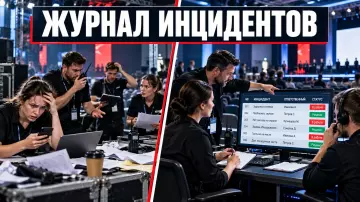
What to Do in the Event of an Incident?
In the event of an incident, the first priority is to protect people and call the necessary services, then notify the insurer using the method and within the timeframe specified in the contract. The team takes reasonable measures to mitigate damage and preserves evidence. If it is safe and does not interfere with urgent measures, damaged property is left without repair or disposal until it has been documented as required by the contract or agreed with the insurer. The procedure depends on the event, the policy terms and the instructions of the competent services.
Prepare a short process in advance:
- Stop the dangerous action and ensure people's safety.
- Call emergency or specialist services if the situation requires it.
- Inform the decision-maker and the person responsible for the insurance contract.
- Notify the insurer via the designated channel.
- Keep the reference number, letter, screenshot of the portal or other confirmation of receipt.
- Record the general view, details, time, place and condition of the property.
- Take available measures to mitigate damage and record expenses.
- Clarify whether the damaged items can be moved, repaired or disposed of.
- Obtain documents from the venue, services and contractors.
- Keep a single timeline of decisions and communications.
Notifying only the venue manager, contractor or intermediary may not satisfy the policy condition. Use the channel named in the contract. If the situation is urgent, safety takes priority, but after the first actions the documentary chain must be restored as quickly as possible.
Loss mitigation measures must be reasonable and available. For example, the team may stop a leak, move undamaged property out of the danger zone or restrict access. Repair, dismantling and disposal may destroy evidence. If the situation allows, clarify the procedure with the insurer and keep photos before, during and after. This coordination must not delay the safety of people or urgent loss mitigation measures.
For overall management, use the event crisis plan. It defines roles, channels and a decision log. The insurance instruction supplements it: it adds the policy details, notification deadlines, list of evidence and rules for interacting with the insurer.
If the event involves a fire, contacting the police, medical assistance, an emergency service or a decision by a government authority, clarify which document is provided for by that authority's procedure and is available to the applicant. The specific set is determined by the circumstances and the contract. For example, for a fire, the Ministry of Emergency Situations describes a separate procedure for obtaining information about its occurrence.
Evidence and requirements for the liable party
The evidence file must show what happened, why the event is covered, and how the damage was calculated. This requires a timeline, photos, reports, contracts, an inventory, payments, and messages. After payment, the right to claim against the liable party may pass to the insurer, so you must not waive claims or lose documents without checking.
The minimum archive usually includes:
- an accurate timeline of the event and the team's actions;
- photos and videos of the general view and each damaged item;
- source files and information about the time of shooting;
- a site plan and the location of the event;
- an internal report, security and technical service logs;
- contacts of witnesses and written explanations;
- contracts, technical specifications, access and acceptance reports;
- a property inventory, serial numbers, and proof of value;
- invoices, payments, repair estimates, and documents on returns;
- official information from competent authorities;
- correspondence with the insurer and confirmations of sending documents.
For equipment, it is useful to create an inventory before the event, rather than reconstructing it afterwards. A photograph should show the item and its condition, and the handover report should show the completeness and the party that accepted the property. The serial number links the physical item to the contract, invoice, and insurance appendix.
Financial documents should also be prepared in advance. Keep versions of the budget, contracts, invoices, payments, and refund terms. If loss of income or additional expenses are claimed, you will need the data provided for in the contract, as well as accounting for saved amounts and received compensations.
After payment, the insurer may acquire the right to claim against the liable party within the amount paid. The policyholder must provide the documents and information necessary for such a claim. Before entering into a settlement agreement, waiving claims, or admitting liability, check the consequences with a lawyer and under the policy terms: loss of the right to claim or of the necessary documents may affect the payment.
A complete archive does not guarantee payment. The decision depends on the contract, the facts, the law, and the insurer's assessment, and disputed issues are resolved in accordance with the established procedure. The team maintains a verifiable picture of the event and fulfills its obligations. Legal qualification is carried out by authorized specialists.
Frequently Asked Questions
The subject of insurance is a specific property interest or liability that is permitted by law and accepted by the insurer. First, determine whose money, property or liability requires protection. This answer defines the parties to the contract, the list of risks, the sum insured, the evidence and the beneficiary of the payout. A generic product name does not reveal these details.
Property, liability and the financial consequences of cancellation should be compared as separate blocks. Damage to a rented screen, injury to a guest and cancellation due to the venue being unavailable trigger different contractual mechanisms. Each block requires its own subject, event, exclusions, limit, deductible, period of validity and set of documents.
A property insurance policy should be read together with the policyholder's application, the rules of the specified edition, special conditions, appendices and inventories. For other blocks, the entire set referenced by the specific contract is checked. The content of coverage is not determined by an advertising description or a short proposal letter. What matters is the agreed documents, the cross-references between them, the acknowledgements of receipt of the rules and the accuracy of the information the policyholder provided before signing.
The list of risks only marks the beginning of the review. The real boundaries are set by the definitions, exclusions, limits, sublimits, deductible and the method of calculation. An event may fit a general everyday description but not meet the contractual definition. Or a risk may be included, yet a particular expense may be excluded or capped by a special amount.
Check how the contract defines the policyholder, the insured persons, the beneficiaries and the parties whose liability is included. In some structures, the law permits an unnamed group of injured parties or a default rule applies, so the wording should be reviewed by a lawyer. Also clarify the territory and the period of validity. For a single-day event, protection may be needed earlier and later: during delivery, installation, testing, rehearsal, dismantling, removal and temporary storage of property.
Before the contract, the policyholder must disclose the known material circumstances, especially those the insurer directly asked about in the questionnaire or a written request. Information about the venue, programme, participants, equipment, temporary structures, special effects, alcohol, open format and past incidents is provided if the question covers it or the circumstance objectively affects the risk assessment.
Leave a request — let's discuss your task
We'll clarify the event format and suggest the next step.
Sources
- Russian Law No. 4015-1, Article 3: forms of insurance and rules of voluntary insurance
- Russian Law No. 4015-1, Article 9: insured risk and insured event
- Civil Code of the Russian Federation, Chapter 48 “Insurance”: types of contracts, terms, information about the risk, time limits, notification, loss mitigation and subrogation
- Ruling of the Plenum of the Supreme Court of the Russian Federation No. 19 of 25 June 2024: voluntary property insurance
- Bank of Russia: insurance market register
- EMERCOM of Russia: procedure for obtaining information about the fact of a fire
- International example, not a rule of Russian law - FCA: structure of information about an insurance product
Contents
Was this article helpful?