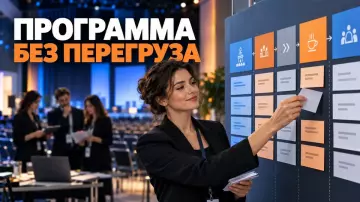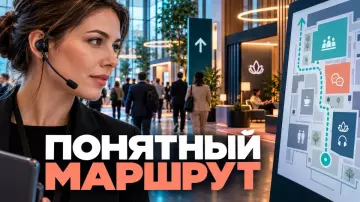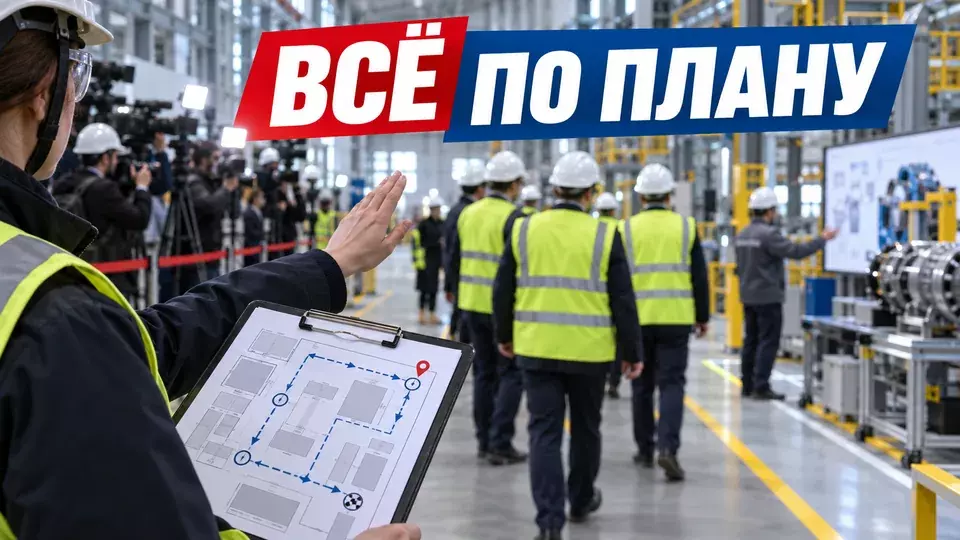
A working blueprint for a regional head's visit to an operating plant: a single route, service roles, a production showcase, a press approach, a rehearsal and a Plan B.
A governor's visit to a plant is built around one management task and one approved route. The guest's status affects protocol and publicity, but the site's rules still apply: production determines which areas are accessible, occupational health and safety sets the safe movement procedure, security sets the access regime, and press offices set the approved wording.
At Aventura we start this kind of preparation with the official group's route from arrival to departure. We then build working discussions, protocol positions, a production showcase, a press approach and contingency decisions into it. That way the team sees the event as a whole and isn't editing five different programmes on the final evening.
Send us a request - let's discuss your task
We'll clarify the event format and suggest the next step.
What to define before developing the programme?
In short: Before detailed timing, the company's management and the host side confirm the purpose of the visit, the expected outcome, the boundaries of publicity and the topics on which a decision is required. We receive these inputs in writing, check them against the site's capabilities and only then build the route through the agreed zones. This way every stop serves the overall objective of the meeting.
The phrase "show the governor the plant" does not define a programme. It does not explain why a particular workshop was chosen, what issue is discussed at the stop or what should happen after the visit. A working objective links the tour to a decision: present a new line and discuss infrastructure, demonstrate localisation and agree on the next stage of support, introduce the team and secure an instruction on workforce training.
At the kick-off meeting we put together a visit card. It is enough to answer seven questions:
- Who acts as the host of the meeting on the company's side.
- What outcome management wants to achieve after the delegation leaves.
- Which topics can be discussed publicly and which remain internal.
- Which areas are permitted for the official group and cameras.
- Whether negotiations, a statement, a signing or communication with employees are needed.
- Who confirms programme changes on the part of the region and the company.
- Which document, instruction or meeting will continue the work after the visit.
If the task is broader than one official and includes partners, experts or a foreign group, a separate article on hosting a business delegation at an enterprise is useful. In a gubernatorial visit we keep a narrower focus: the regional head's route, the handover between escorts and the junction between the working part and the press.
One coordinator owns the route, departments own the decisions
One coordinator maintains the current route and informs the team of any changes. Protocol, production, press office and security make decisions within their own areas. The coordinator does not override their authority: they consolidate the agreed data into a single scenario, check the interfaces between departments and make sure everyone on site uses the same version of the programme.
Without a single coordinator, departments start changing their own sections independently. The press office adds a camera stop. Production removes it because of a shift operation, protocol cuts the time, and the technical team keeps preparing the previous version. On site this leads to waiting at the door, disputes among escorts and a sudden change of backdrop for a statement.
We lock down roles before the minute-by-minute programme:
The table summarises the key points of this section: Area, Who confirms the decision, What goes into the master scenario. Use it as a quick reference when preparing your event.
| Area | Who confirms the decision | What goes into the master scenario |
|---|---|---|
| goal and management theme | company management and the host party | expected outcome, key question, next step |
| official protocol | authorised representatives of the parties | greeters, forms of address, positions, escorting |
| production route | production, occupational health and safety, site security | permitted areas, restrictions, PPE, right to stop |
| government relations (GR) | management and the relevant team | working topics, background notes, issues to resolve |
| public relations (PR) | press offices of the parties | public talking points, media list, filming, press materials |
| organisation | programme director and coordinators | single scenario, transitions, readiness of stops, contingency |
For projects of this type we use the business event management approach: a single command centre, a decision log and a transition scenario. We check whether the programme can be delivered within the given time and without conflicts between departments. Access clearance, order of precedence and public statements are approved by the authorised representatives of the client and the host party.
The route passport records every stop
The route passport describes the purpose of each stop, the speaker, the timing, the group's position and the permitted shot. It also notes the risk, the condition for moving on and the backup. This is the main working document for production, protocol, the press office and coordinators. Teams use it to check a single version of the visit and to see in advance where the decisions of different services must align.
A route map on its own is of little help. The team needs to understand what happens at each point and who authorises moving on. That is why we create a row for every stop, including the greeting, the issue of personal protective equipment, the meeting room, the press approach and the departure.
The table brings together the key points of the section: Passport field, What we record. Use it as a quick reference when preparing the event.
| Passport field | What we record |
|---|---|
| purpose of the point | which message or decision the stop should convey |
| responsible speaker | who speaks and where their remit ends |
| group composition | who is present, where the escorts and the press are |
| duration | the working window with a limit beyond which the programme is shortened |
| safety | access conditions, PPE, group position, stop signal |
| filming | permitted angle, restrictions, mandatory shot |
| transition | who leads, who brings up the rear, who confirms that the next point is ready |
| backup | what to replace the segment with if it is unavailable |
A good route tells a single story. For example: the product and the market, then production expertise, the people, the investment result and the question that requires the region's involvement. Trying to show the entire plant increases the number of transitions and blurs the management theme.
Leave a request - let's discuss your task
We'll clarify the event format and suggest the next step.
How do you separate the working, press and closed parts?
Working principle: The team separates working discussions, public footage and closed topics in advance. For each part, participants, timing and entry point are defined. Cameras move only along the agreed route, and internal conversations take place outside the press area. This separation protects the production rhythm, simplifies journalist support and saves the time of the official group.
The working part includes a production demonstration, a conversation with management and questions for the region. Follow-up actions are also recorded here. The press stream receives approved footage, open talking points and a separate place for questions. The closed part covers documents, screens, negotiations and restricted-access areas.
These parts can take place side by side if different time windows and precise instructions are set for them. Journalists take the agreed position in advance. The official group passes through the approved section, then meets the press in a prepared area. The photographer does not have to chase the delegation through the production floor. The plant manager continues the working conversation without a microphone switched on nearby.
We covered the detailed mechanics of media access, shooting maps and handling requests in the article about a press tour to a production facility. Here, the press remains a separate stream around the visit, and the route is built primarily for the official group and the purpose of the meeting.
Production demonstration, access clearance and protective equipment
Important: The production demonstration is approved based on the actual risks of the site and the company's rules. A guest's status does not replace site access clearance. The company's services determine escort arrangements, personal protective equipment (PPE), available locations and conditions for stopping the group. The organising team builds these decisions into the scenario and does not change them for the sake of a more striking shot.
The occupational safety specialist and the production representative walk the future route before the attractive shots are approved. First they check vehicle movement, flooring, stairs and narrow spots. Then they choose a safe position where the group can hear the speaker and does not block the evacuation passage. If a stop interferes with operations or creates a risk, it is moved to a viewing area or replaced with a product demonstration, a mock-up or a video.
The set of PPE depends on the hazards of the specific area and local rules. The format of the visit alone does not determine the kit. The company chooses helmets, goggles, vests, hearing protection or special footwear if they are needed in that area. It also prepares the sizes, the issue procedure and a member of staff to check the fit. We allocate space and time for this procedure.
For a one-time visitor, one cannot automatically promise the same amount of training that is provided for a new employee. The format of the brief instruction and clearance is confirmed by the company taking the route into account. A clear guest memo usually needs to cover movement boundaries, prohibitions, the escort's signals and actions when the situation changes.
We separately check the accessibility of the entire route: drop-off, entrance, cloakroom, restroom, changes in height, space in the press area and the possibility of using PPE. If a technological area is inaccessible without additional risk, it is better to provide an equivalent overview from a permitted area.
Protocol card without universal rules
A protocol card stores only confirmed data about an official and their participation in the programme. It includes the name, position and form of address, as well as greeters, an escort and positions along the route. The topic of a comment and public appearances are noted separately. The order of events, forms of address and the composition of the group are confirmed by the protocol representatives of the parties.
Regional regulations show the general logic of preparation: the programme, route, lists of participants, accommodation, speech materials and media work are collected in advance. Specific deadlines and procedures differ between regions and visit formats, so someone else's regulation cannot be presented as a universal instruction.
We create a separate card for each key official and company speaker. The same spelling of the name and position is used by the host, captions, press release, nameplates and photo captions. If the data changes, the person responsible for protocol passes a single confirmed wording to all teams.
The card also notes the handover of the guest between escorts. On a long route, this detail reduces the risk that at the next door no one knows who opens the point, introduces the speaker and gives the signal to move.
How to prepare a press approach?
Press services conduct a press approach in a separate agreed location. They choose one main topic, limit the number of speakers and check the sound in advance. Before the visit, the parties confirm the open talking points, the order of questions and filming restrictions. Another mandatory item is the person responsible who, after the event, will collect journalists' deferred requests and pass on the agreed answers.
A conversation "on the go" at the exit from the workshop rarely gives a good result. It is noisy there, and cameras block the passage. Documents, screens and employees who were not planned to be filmed easily get into the frame. A separate place for the press helps to keep the frame, sound and time.
For a short official statement, the format of organising a briefing is suitable. We check the position of the speakers, camera approach, microphones, light, background and exit route in advance. A decorative press wall is not mandatory: an approved production background can better support the topic if it is safe and does not disclose closed information.
The working card of a press approach contains:
- The main topic and several confirmed talking points.
- Speakers with divided areas of competence.
- A moderator who takes and, if necessary, repeats the question.
- Topics requiring redirection or verification after the visit.
- A completion signal and the next route of the official group.
- The deadline for issuing photos, quotes, background information and answers to deferred questions.
Journalist accreditation and admission to an industrial site are related, but they solve different tasks. A preliminary list of media helps to organise entry. It does not give free access to any areas of the enterprise and does not cancel filming rules.
If the client needs their own package of footage, we prepare a technical assignment in advance for photo and video coverage of the event. It is important to include mandatory scenes, permitted angles, captions and the path for approving files before publication.
Staff briefing and route rehearsal
Employees are told their actual role, the boundaries of communication and how to call the coordinator. The rehearsal follows the guest's actual path from arrival to departure. The team separately checks access, the production demonstration, negotiations and the press approach. After a significant change, we walk the modified section again so that the new solution does not cause a failure at the neighbouring stage.
It is not worth giving employees memorised lines. A staged conversation is easily recognised and creates unnecessary tension. It is better to state the topic of possible communication, set the acceptable boundaries and explain whom to approach if a question goes beyond their remit.
Before the visit we hold a tabletop review based on the current version of the scenario, then a physical walkthrough. First we measure the transitions and check the doors. Then we position the group, the cameras and the demonstration. Before the final run-through we add the issuing of PPE and confirmation of the next stop. One coordinator walks in the role of the official guest so that the team sees the path from their position.
The full approach to the run-through is described in the material on the technical rehearsal of an event. For a visit by the head of a region, the usual checks are supplemented by the handover between escorts, protocol positions, the right to stop the route and switching to a shortened version.
The rehearsal ends with a list of remarks with those responsible and deadlines. The wording "check everything" does not help. A workable note sounds more precise: "move the director's comment from the noisy area to the meeting room; the press service is responsible; recheck after the microphone is set up".
Three versions of the programme and Plan B
We prepare three versions of the programme: the main one, a shortened one and a backup one. Each keeps the main theme of the meeting and a clear finale. We appoint a coordinator in advance who can switch the scenario after the decision of the authorised services. Thanks to this, the team receives a ready-made version in full and does not cross out individual stops before the delegation arrives.
The table summarises the key points of the section: Version, When we use it, What we keep. Use it as a quick reference when preparing the event.
| Version | When we use it | What we keep |
|---|---|---|
| main | all sections and speakers are ready | a full production showcase, a working discussion and an agreed finale |
| shortened | the visit time has been reduced | the main production message, a question to the region and a press approach, if it is confirmed |
| backup | a section or an external venue is unavailable | the theme of the meeting through an approved video, a product sample, a mock-up or a conversation with an engineer |
Plan B is activated when time is reduced, a section is closed or a speaker is delayed. It is also needed in case of bad weather at an external venue and a change in the composition of the delegation. The team knows in advance which document to update and whom to inform about the decision. The host and the press service receive an agreed neutral text. The reasons are not explained by guesswork.
We also determine the moment of the last route check. After that, changes go through the programme manager and receive a version number. This way, the checkpoint, escorts, press area and transport do not end up with different files under the same name.
The command centre manages changes on the day of the visit
On the day of the visit, we keep the current scenario, the status of stops and decisions on changes in the command centre. Protocol, production and security make decisions within their own areas. The programme manager turns these into short commands for the coordinators. If a site is not ready or conditions have changed, the official group receives an already agreed next step.
Before arrival, we check the route point by point. Production reports on the readiness of the site, security on clearance. The press service confirms the list of media and materials, protocol confirms the composition of the group and positions. Coordinators first check PPE, microphones and documents. Then they move on to water, transport and backup rooms. If a stop is not ready, the group does not go there.
Long substantive questions are not discussed in the working channel. Messages answer three questions: where the group is, whether the next stop is ready and whether a decision from the programme manager is required. Confidential data, security details and restricted movement plans must not end up in the general scenario or a public article.
Every transition has a lead and a sweep. The lead receives confirmation of readiness and sets the pace. The sweep keeps the group together, guides the press along the permitted route and clears the passage of equipment. The enterprise appoints a representative in advance who can stop the group's movement if conditions at the production site change.
What to close out after the delegation departs?
After the visit, the team records action items, owners of next steps and media requests. Materials that need approval before publication are collected separately. We conduct a technical debrief separately from the work on agreements. This way, notes on the route, communications and support are not lost among management tasks.
In the first working hours, the PR service collects deferred questions, verifies names, titles and quotes, then passes confirmed materials to journalists. If an in-depth conversation with the media is needed, it is better to prepare it separately following the logic of a company press conference, rather than trying to extend a short press approach through endless correspondence between different departments.
The government relations team and management formalize agreements in the format adopted by the client. For each item, an owner, a deadline and a method of confirmation are assigned. Wording from verbal conversations is verified before external publication.
After departure, we note delays and communication failures. We separately check PPE stock and places where the press intersected with the production flow. These observations are needed for the next visit. They remain in the internal debrief and do not turn into a public report on the facility's vulnerabilities.
Frequently Asked Questions
The phrase "show the governor the plant" does not define a programme. It does not explain why a particular workshop was chosen, what issue is being discussed at the stop, or what should happen after the visit. A workable objective links the tour to a decision: present a new line and discuss infrastructure, demonstrate localisation and agree on the next stage of support, introduce the team and secure a directive on workforce training.
One coordinator maintains the current route and informs the team of changes. The protocol team, production, press office and security make decisions within their own areas. The coordinator does not override their authority: they consolidate the agreed data into a single scenario, check the interfaces between departments and ensure that a single version of the programme is used on site.
The route passport describes the purpose of each stop, the speaker, the time, the group's position and the permitted shot. It also notes the risk, the transition condition and the backup. This is the main working document for production, the protocol team, the press office and coordinators. It is used by the teams to verify a single version of the visit and to see in advance where the decisions of different departments must align.
The working part includes the production tour, a conversation with management and questions to the region. Follow-up actions are also recorded here. The press pool receives permitted shots, approved talking points and a separate place for questions. The closed part covers documents, screens, negotiations and areas with restricted access.
The occupational safety specialist and the production representative walk the future route before the attractive shots are approved. First they check the movement of machinery, the flooring, the stairs and the bottlenecks. Then they choose a safe position where the group can hear the speaker and does not block the evacuation passage. If a stop interferes with an operation or creates a risk, it is moved to a viewing point or replaced with a product demonstration, a model or a video.
The protocol card contains only confirmed data about the official and their participation in the programme. It includes the name, position and form of announcement, as well as the greeters, the escort and the positions along the route. The topic of the comment and public episodes are noted separately. The order of events, forms of address and composition of the group are confirmed by the protocol representatives of the parties.
If the visit is already on the calendar, at Aventura we can bring the objective, route, departmental roles, press approach, rehearsal and backup versions together into a single scenario. Request a quote via the form to discuss the venue, the programme content and the boundaries of our responsibility.
Sources
- Ivanovo Region: Governor's Decree No. 5-ug “On Approval of the Regulations of the Government of the Ivanovo Region”
- Yaroslavl Region: procedure for preparing events involving the governor
- Labor Code of the Russian Federation: employer's occupational safety and health obligations
- EMERCOM of Russia: Order of the Ministry of Labor of Russia No. 767n on uniform standard norms for issuing personal protective equipment
- Government of the Russian Federation: Resolution No. 2464 on the procedure for occupational safety training
- Law of the Russian Federation “On Mass Media”: Article 48 on accreditation
- Civil Code of the Russian Federation: Article 152.1 on the protection of a citizen's image
- Federal Law No. 98-FZ “On Commercial Secrets”: Article 10 on the protection of confidentiality
- Federal Law No. 181-FZ: Article 15 on the accessibility of facilities for persons with disabilities
Contents
Was this article helpful?