
Preparation and conduct of any event is a lengthy and painstaking work. When organizing, it is important to take into account a large number of nuances and coordinate the work of many services.
Safety measures are an important aspect of an event, so they should be given special attention. Ensuring safety at the venue requires comprehensive and integrated measures at every stage of the event.Any event, regardless of its scale and number of participants, is a potentially dangerous zone and requires special attention from all participants. Therefore, the organizers' responsibilities include thinking through all force majeure situations, warning about and preventing possible risks and threats.
Risk assessment
-
First, it is necessary to identify potential threats: assess the venue and the level of the event, the expected number and status of guests, the impact of weather conditions and other factors.
-
Second, it is necessary to analyze the likelihood of dangerous situations and their consequences. This will help determine which safety measures will be most effective. Based on this, you can begin developing a safety plan that will include measures to prevent and respond to threats: medical assistance, evacuation routes, fire extinguishing equipment, control of entrances and exits, installation of access control equipment, involvement of security personnel, and so on.
-
Third, it is important to train event staff in the minimum set of actions in an emergency and ways to prevent it. In addition, it is necessary to ensure communication with event participants and provide them with information about safety measures and evacuation procedures, so as to control the evacuation of people from the venue and prevent panic among participants.
Venue Safety
By type of location, all events are divided into two large groups: indoor and outdoor. Each type has its own characteristics and potential threats.
Indoor venues are restaurants, conference halls, assembly halls and similar premises where the number of guests is usually limited. Often participants attend such events by invitation or ticket, so it is difficult for outsiders to enter. The main danger of such events lies precisely in the enclosed space. For example, in case of fire, it is important to provide for evacuation of people and avoid panic and crowding.
Outdoor (street) venues – stadiums, squares, parks, etc. Here, due to the mass character and uncontrolled number of visitors, the danger of offenses increases. It is also important to control the emotional state of people, since a large crowd can turn into an uncontrollable mob (for example, mass fights of fans at a stadium).
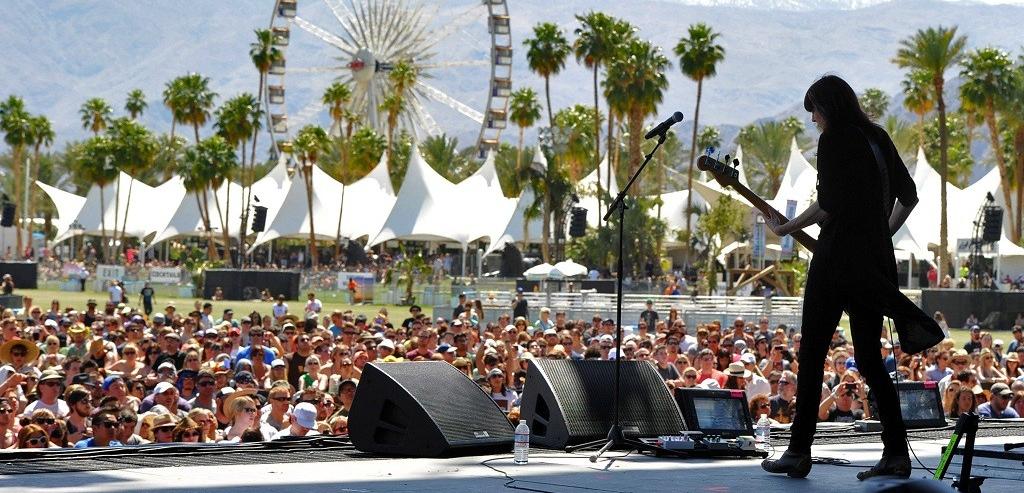
Any accident at the event venue must be anticipated. For this purpose, a whole range of actions is taken to ensure the protection of the venue:
Separately check stairs and elevators; they must be in good working order and intact. Inspect the main engineering systems and equipment.
When installing apparatus and equipment, make sure that all cables are placed away from people. If this is not possible, cover the communication with special protection – 'cable caps'.
The open area should also be well studied for pits, stones, protruding rebar, stumps, and other hazards. If necessary, remove grass, branches, and debris. If there is no fence, warning tape can serve as a barrier. Also, the area should be treated against ticks.
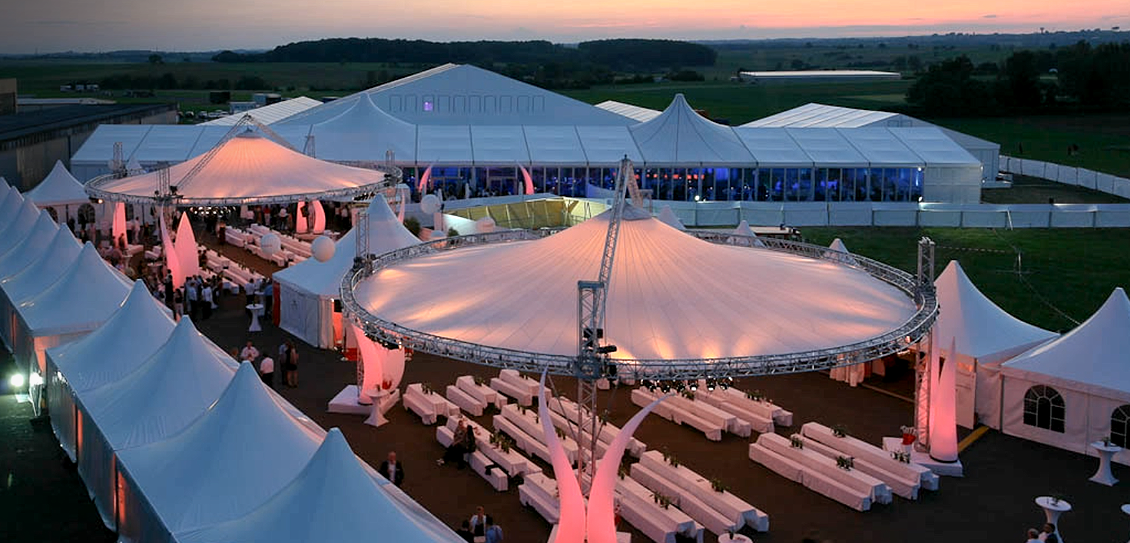
Consider shelter in case of rain. At an open-air venue, such shelter is usually provided by tents.
The parking area and cloakroom must also be guarded.
For a trip to nature – open area, water, forest, campfire – a separate analysis: safety at a corporate event in nature.
Security and Checkpoints
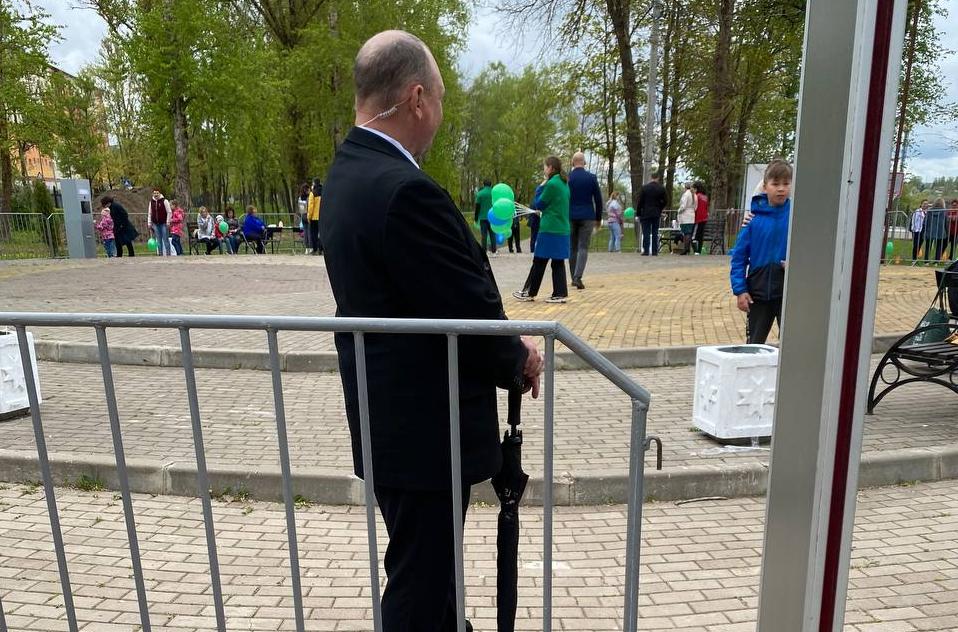
Security for a mass event can be provided by private security company (PSC) officers or MVD officers. To properly organize their work, it is necessary to take into account the event's characteristics: type of event, whether the venue is open or closed, whether entry is free for all or by tickets/invitations, size of the location, approximate number of participants, presence of vulnerable areas of the territory, and so on.
Often, the chosen venue already has its own security service. But it may not be enough for proper protection of a mass event. For example, for an event of 50 people, 1-2 security officers are sufficient, while an event with 1,500 guests should have at least 30 security guards. However, one should also take into account the format of the event, the venue location, and a number of other factors. Therefore, it is better to be safe and contact the services of departmental and non-departmental security, which will help correctly calculate the required number of security posts.
The main functions of security officers include the following:
-
Studying the event plan, the venue territory, analyzing the number of participants, possible threats, and distributing security guards;
-
Advance inspection of the venue;
-
Organizing checkpoints;
-
Checking guests' personal belongings (in case of mass attendance);
-
Observation, control, and prevention of dangerous situations;
-
Detaining violators;
-
Controlling the number of participants at the location, coordinating the flow at the exit to avoid crowding;
-
Assisting in evacuation in case of an emergency;
-
Final inspection of the territory to ensure that all guests have left (perhaps someone fainted, got bruised, injured a leg and needs help), and collecting and handing over lost items.
If there are guests with personal bodyguards, it is important to discuss the interaction of all parties' security in advance.

Information Security at an Event
The main goal of event security is not only to respond promptly to threats, but also to prevent them from arising. Demonstrate all the security measures at your disposal: specialized equipment, cameras, metal detectors, security personnel, and so on. This will help deter potential troublemakers.
Also, at the entrance to the venue, you can ask guests for a passport or other ID to compare this information with the list of registered or invited attendees. This will protect the event from people entering through identity theft.
In addition, you should not publish information about a private event for public viewing. Let it be available only to the guests of the event to avoid security problems for both individuals and the entire meeting as a whole.
Fire Safety
Before holding an event, the organizer's team or event agency must undergo fire safety training. They must be able to use fire extinguishing equipment, know evacuation rules, and the basics of first aid for victims. The venue must be equipped with fire extinguishers, crowbars, axes, buckets, or boxes of sand.
If the location plans to install decorations, a stage, press walls, corners, and other items, they must be accompanied by appropriate certificates confirming their fire-safe composition. At the same time, they must not block emergency exits or impede evacuation, and must be kept at a distance from heating lighting devices.
Fire safety rules establish that the safe size of the venue and number of guests is calculated based on 0.75 m2 per person. Denser occupancy creates certain risks and impedes evacuation.
Special attention should be paid to the use of pyrotechnics. Fireworks and salutes must have the appropriate documentation, and they must be used strictly for their intended technical purpose. At an event, only legal entities with a license for this activity may handle them.
Other measures to ensure safety during an event
When organizing a large-scale event such as a concert, sports competition, city day, and so on, it is important to arrange for ambulance crews to be on duty. They must be located close to the venue so that they can provide assistance to injured people at any moment.
Also, when holding an event, you should take into account the epidemiological situation in the region. In some cities, restrictions are periodically introduced due to a seasonal peak in illness or the increased spread of certain diseases. In this case, you should review the current directives on the website of the local administration.
It is also important to check contractors who provide their services when organizing an event. These include venue owners, public catering establishments or catering services, as well as agencies that provide equipment, decorations, technical equipment and various personnel. Their activities must be certified, and when requesting any service, a contract must be concluded.
When engaging contractors, in particular catering services, make sure that their work complies with sanitary safety standards.
Action plan in case of an emergency
Before the event, carefully think through the action plan that participants and staff will follow in the event of an emergency. It should include:
-
Notification and communication: make sure that the sound signal, radio communication, loudspeakers, SMS notifications or other methods work;
-
Evacuation: place movement signs, a floor plan, markings for emergency exits and designations of assembly points in different areas of the event;
-
Responsibility: identify the persons responsible for safety, check that security staff are performing correctly and that medical personnel are ready;
-
Medical assistance: ensure that medical personnel are present and indicate first aid locations.
-
Crisis: define crisis management procedures, including collecting and analyzing information, decision-making and coordinating the actions of all responsible persons;
-
Training: provide for advance training of staff to guarantee safety.

Event safety is the top priority for the organizer or event agency. First of all, it guarantees protection of participants from injuries, accidents and other threats, and pre-planned safety measures prevent not only moral but also material damage. A successful event is not only reliable protection but also comfort for participants.
A well-organized security system helps create an atmosphere of trust and calm among guests, which contributes to a positive perception of the event as a whole. In addition, the result of the event directly affects the reputation of the event agency. Emergencies, unreliable contractors, poor preparation by the organizer and other problems can seriously damage the organization's status and lead to loss of trust on the part of clients, partners and the public.
Was this article helpful?