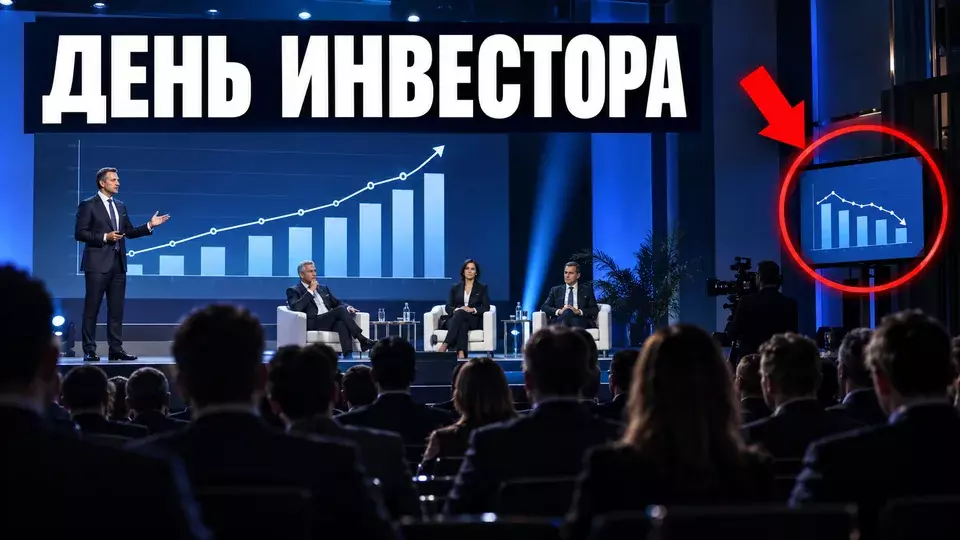
How to prepare an investor day: put together the program, speakers, questions, venue, broadcast, and rehearsal into one working scenario.
A company's investor day is a business meeting where management explains results, strategy, and plans, and the audience gets the opportunity to ask questions. The benefit of the format does not depend on the length of the presentation. You need agreed-upon key messages, a clear program, a prepared conversation with the audience, and equally good access for in-person and online participants.
At Aventura, we assemble such a project at the intersection of content and event production. The company team is responsible for the accuracy of the information. We turn the approved material into a scenario, prepare the venue and broadcast, rehearse speakers, set up registration, and coordinate the event day.
Leave a request - let's discuss the task
We will clarify the event format and suggest the next step.
What does Investor Day accomplish?
Investor Day helps a company gather its key messages into one coherent meeting, connect them with a common thread, and give the audience direct access to management. This format allows for detailed discussion: management explains the rationale behind decisions, demonstrates the links between different business areas, and calmly addresses questions that don't fit into a short press release.
The format is part of the overall investor relations calendar. The Moscow Exchange website has dedicated pages for such events and an investor calendar for 2026. The meeting complements reporting, presentations, and follow-up materials.
Before we start, we define one key outcome for the audience. For example: understanding the company's priorities, seeing the connection between metrics and operational decisions, or getting answers to pre-agreed topics. If there are multiple outcomes, the program is divided into thematic sections.
In terms of scale, Investor Day is close to a business event, but the requirements for precision of wording are higher than usual. The stage should not create new promises. Every slide, caption, moderator question, and speaker answer undergoes substantive review within the company.
Roles and boundaries of responsibility
The company approves facts and public statements. We are responsible for the program, script, venue, broadcast, and participant journey. This division of responsibility is established in advance: management retains control over content, while our team transforms the approved material into a meeting that is easy to watch, listen to, and discuss.
We assign roles before working on the script:
- the client approves the goal, audience, and final program decisions;
- management formulates key messages and answers questions within their area;
- the investor relations team gathers content and the communications calendar;
- the finance team verifies metrics and terminology;
- lawyers and disclosure officers approve public statements;
- the moderator manages the flow of conversation, time, and questions;
- the director integrates speeches, graphics, video, remote links, and broadcast;
- the technical team is responsible for sound, lighting, screens, recording, and backup;
- coordinators manage registration, speakers, the venue, and the online audience.
Article 30 of the law 'On the Securities Market' sets requirements for information disclosure by issuers. Investor Day does not replace mandatory procedures. We do not alter the financial meaning and use only approved materials on stage.
In the project working file, each statement and visual material has a designated owner. If a wording changes during rehearsal, it is sent back for approval. This keeps the stage, presentation, handouts, and website version synchronized.
How to build a program without overload?
We build the investor day program around the audience's questions. First we provide general context. Then management explains what has changed, how it assesses the situation, and which steps it considers priorities. After each major block we leave room for clarifications, so listeners can check the logic and connect individual presentations into a bigger picture.
One working option looks like this:
The table summarizes the key points of the section: Block, Objective, Who participates. Use it as a quick reference when preparing the event.
| Block | Objective | Who participates | What the audience gets |
|---|---|---|---|
| Opening | set the frame of the conversation | leader and moderator | the meeting's goal and program map |
| Period results | explain dynamics without reading the report from the stage | financial executive | key takeaways and links to materials |
| Strategic directions | connect plans with company decisions | heads of areas | priority logic and constraints |
| Operational part | show how the strategy works in the business | function owners | clear examples of processes and projects |
| Q&A | address the audience's interest | leadership and moderator | direct answers within agreed boundaries |
| Wrap-up | summarize and outline next points of contact | leader | list of materials and upcoming communications |
We break long presentations into short meaningful segments. Each has a key point, a visual support, and a transition to the next speaker. The presentation does not repeat the speech verbatim: it shows structure, a diagram, a term, or a conclusion that is hard to grasp by ear.
Q&A should not be left to whatever time remains. It often gives the audience more value than another presentation. We determine in advance the length of the block, the order of questions, and the way to pass context to the speaker without a pause on air.
If there are many speakers and topics, we use the mechanics of a conference or forum, but do not create parallel sections without necessity. The investor must understand the big picture. Splitting into streams is justified only for different audience groups with independent tasks.
Broadcast Script and Direction
The director's script connects the content with real time, the stage, and the broadcast. It includes the start and end of each block, speaker entrances, slide numbers, graphics, video, microphones, questions, moderator actions, and a reserve. The document is read by all departments, so the wording is short and unambiguous.
We prepare the script after the program structure is approved. First, we mark the semantic transitions. Then we add technical commands and check that the viewer understands what is happening without internal explanations from the team.
A useful unit of the script is a specific episode, not the general title of the talk:
- The moderator announces the topic and the speaker.
- An approved caption appears on the screen.
- The speaker presents the main thesis.
- The graphics support the thesis but do not overlap the speech.
- The moderator notes the conclusion or asks a transition question.
- The director shifts attention to the next block.
For the hybrid format, we add a separate line for the online audience. The technical host monitors the chat, connections, and signal quality. The moderator receives questions from a single queue so that remote participants do not become second-class viewers.
We discussed the practice of preparing long programs in the article about the director's script for the event. For an investor day, strict version control is added to the usual directing: only approved graphics go on air.
What questions to prepare in advance?
Collecting questions in advance helps speakers answer accurately and calmly during the meeting. The team takes topics from registration, past communications, and an internal risk list. They then distribute them among speakers, verify the factual basis, and note which information can be discussed publicly and which will require a separate written response.
We divide questions into four groups:
- expected and fully disclosable;
- difficult, but acceptable after thorough preparation;
- requiring clarification or a written response after the meeting;
- questions the company cannot answer publicly.
The moderator knows this map in advance, but does not get a ready-made script. Their task is to ask the question clearly, ask to clarify a term, stop evasion from the topic, and honestly note if the answer will be published later.
For collecting questions via a form, we define the purpose and composition of the data. Article 5 of the personal data law links processing to a predetermined purpose and prohibits excessive data composition. The "name" or "company" field is added only when it is really needed for participation or response. The legal basis for processing and notification of the participant is checked by the company's responsible team.
On-site, questions are accepted from the audience, the app, or chat. A single editorial queue helps remove duplicates and pass a clear formulation to the speaker. It is not worth deleting an inconvenient question solely because of its tone: the moderator can separate emotion from substance and ask the content part.
Venue, streaming, and accessibility
The venue and the broadcast are selected based on the participation format and the audience's journey. For an in-person meeting, good visibility, clear speech, smooth registration, and spaces for networking are required. Online requires separate directing, a stable connection, a clear streaming page, and a working Q&A channel. In a hybrid event, two teams operate according to one scenario.
Before selecting a venue, we check:
- capacity and seating plan;
- acoustics, microphones, and screen visibility;
- separate areas for speakers, press, and technical team;
- accessibility of the entrance, stage, restrooms, and routes;
- primary and backup internet;
- ability to record without extraneous noise;
- equipment access conditions and setup time;
- evacuation procedures and staff actions.
W3C, in its guide to accessible events, advises considering participants' needs in advance, providing materials in accessible formats, using microphones, and describing important visual information. At an investor day, the speaker explains the meaning of a diagram, the moderator repeats the question into the microphone, and the team publishes materials as a separate file and prepares subtitles or a text version of the recording.
A remote participant needs a complete journey: invitation, login, sound check, program, slide viewing, question submission, and access to materials. A single wide shot from the back of the hall does not provide this. We design the stream as a standalone product within the event.
For a distributed audience, we use the mechanics of hybrid events. We run the stage and online in coordination, but different specialists are responsible for the hall and the stream, each with their own backup.
How to conduct the rehearsal and the day of the event?
The dress rehearsal replicates the actual program flow with the same files, microphones, connections, and access rights. The team sees slide changes, hears the sound, goes through the Q&A block, and checks backup actions. Such a run-through reveals in advance contradictions between the script, approved materials, and the technical plan.
We conduct the run-through in order:
- We open the registration page and the participant's email on the phone.
- We go through the check-in of an in-person guest and the connection of a remote participant.
- We check the final versions of presentations and credits.
- We launch each microphone, video, and remote feed.
- We rehearse entrances, transitions, and the Q&A block.
- We check how the director and moderator receive internal cues.
- We simulate lost internet, a non-working file, and a speaker's delay.
- We verify the recording, subtitles, and sound from the hall.
- We record revisions with owners and approval times.
- We lock file versions after final approval.
On the day of the event, the team works through a single communication channel and a decision log. Someone handles speakers, someone is responsible for guests, someone manages the broadcast. One person should not simultaneously greet management, approve graphics, and solve a sound problem.
After registration opens, the team monitors not only the timing. We check hall occupancy, audibility, questions, online connectivity, and the readiness of the next speaker. If a block is shortened, the director communicates the new time to all services, not just the stage.
We apply a similar production logic when preparing a company partner summit. The difference with an investor day is that any improvisation by a speaker can change the public meaning, so moderation and content readiness are especially important.
Post-meeting materials
After an investor day, the audience needs a neat set of materials, and the company needs a list of questions and commitments. We plan the publication before the event: we define the recording conditions in advance, prepare the page structure, assign responsibilities, and mark the files that need to be processed immediately after the broadcast. This reduces the gap between the meeting and continued communication.
The usual package includes:
- the full recording and individual meaningful segments;
- the presentation or an accessible version of key materials;
- text summaries without new unconfirmed statements;
- answers to questions that were not included in the broadcast;
- contacts for further communication;
- the date of the next planned milestone in the calendar.
We check the recording before publication. We remove technical pauses and private internal conversations from it. We check the subtitles against terms, names, and numbers. The page should open on a mobile device and provide direct access to materials without searching through a long feed.
For further use, a separate content plan after the conference helps. From one broadcast, you can create navigation by topics and short clips, but each piece of material goes through substantive approval again.
Frequently asked questions
An investor day helps the company bring key messages together into one coherent meeting, link them with a common logic, and give the audience direct access to management. This format is needed for a detailed conversation: management explains the reasoning behind decisions, shows the connection between business areas, and calmly addresses issues that don't fit into a short press release.
The company approves facts and public statements. We are responsible for the program, script, venue, broadcast, and participant journey. This division of responsibility is established in advance: management retains control over the content, and our team turns the approved material into a meeting that is easy to watch, listen to, and discuss.
We build the investor day program around the audience's questions. First, we provide general context. Then management explains what has changed, how they assess the situation, and which steps they consider priorities. After each major block, we leave room for clarifications so the listener can check the logic and link individual presentations into an overall picture.
The director's script connects the content with real time, stage, and broadcast. It includes the start and end of each block, speaker entrances, slide numbers, graphics, video, microphones, questions, moderator actions, and backup. The document is read by all services, so the wording in it is short and unambiguous.
Questions collected in advance help speakers answer accurately and calmly during the meeting. The team takes topics from registration, past communications, and an internal risk list. Then they distribute them among speakers, check the factual basis, and mark which information can be discussed publicly and which will require a separate written response.
We choose the venue and broadcast based on the participation format and audience journey. For an in-person meeting, you need good visibility, clear speech, smooth registration, and spaces for networking. Online requires separate direction, a stable connection, a clear broadcast page, and a working question channel. In hybrid, two teams follow one script.
If Investor Day is already on the calendar, we at Aventura can combine content, script, venue, broadcast, and audience engagement into one project. Request a quote via the form to discuss tasks, format, and preparation timelines.
Sources
- Moscow Exchange: Arenadata Group. Investor Day 2026
- Moscow Exchange: Investor Calendar 2026
- 39-FZ 'On the Securities Market', Article 30
- 152-FZ 'On Personal Data', Article 5
- W3C: Making Events Accessible
- W3C: Accessibility of Remote Meetings
Contents
Was this article helpful?