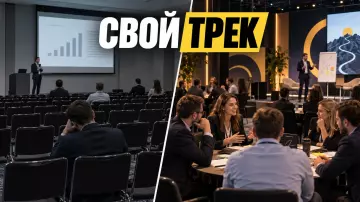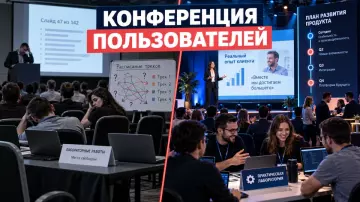
A practical framework for the internal trainers' forum: session submissions, training demos, feedback, hybrid participation, and follow-up after the event.
The internal trainers' forum is useful when a company already has people who train colleagues, but their practices live separately. In one network, trainers solve different tasks: they work with production teams, onboard newcomers, and develop managers. A common meeting helps to see working methods, align criteria, and agree on which practices trainers will apply going forward.
At Aventura, we design such a forum as a practical cycle. Before the event, the team collects real training situations. On site, trainers show short lesson fragments, receive feedback, and refine their approach. After the forum, materials go into a library, and program owners check application on the job.
Submit a request – let's discuss your task
We'll clarify the event format and suggest the next step.
What does the internal trainer forum solve?
In short: The forum creates a common working point for the existing network of trainers. Participants analyze work tasks, demonstrate methods, compare approaches, and agree on the next step. The event does not replace the trainer training system, but makes practices visible, comparable, and suitable for further application in company programs.
The main difference between the forum and a regular conference is the participant's action. You can listen to a presentation attentively and not change your work. At a workshop, the trainer shows a fragment of a session, receives colleagues' observations, tries a new version, and records where they will apply it after the meeting.
The table summarizes the key points of the section: Feature, Regular conference, Internal trainer forum. Use it as a quick reference when preparing the event.
| Feature | Regular conference | Internal trainer forum |
|---|---|---|
| Main action | listen to presentations and ask questions | show training fragments and analyze practice |
| Program unit | presentation or panel discussion | practical session, case clinic, or laboratory |
| Feedback | general questions and impressions | observations based on pre-defined criteria |
| Result after the event | presentation materials | refined practice, card, or next step |
This format is suitable if the company needs to:
- exchange practices between functions and branches;
- align approaches to delivering internal programs;
- analyze recurring difficult situations;
- introduce trainers to new training modules;
- collect materials into a shared library;
- strengthen the permanent professional community.
The article on communities of practice in PubMed Central highlights mutual engagement, a common endeavor, and a shared set of methods and materials. In one of the studied cases, the discussion forum became mainly a distribution channel, and joint discussion almost did not arise. Therefore, participants need a shared activity: analyzing similar problems and preserving the result for further work.
The forum should also not mask another task. If the problem is related to a lack of authority, materials, time, or manager support, another training may not help. Therefore, before developing the program, we check whether the gap can be addressed through training. The first question of the brief is: "What action of trainers should change?"
For the event part, we use the logic of organizing forums and seminars: linking the task, participant journey, program, roles, and recording of results. The content owner in this case remains the company's learning and development team.
Forum outcomes and format boundaries
In short: The forum's outcome is best described through an observable action by the participant. A trainer delivers a segment, analyzes a case, refines material, or selects a practice to test in the workplace. Wording about inspiration is acceptable in communication, but it is not suitable for program management, evaluating results, and assigning responsibility after the event.
We start with one phrase: "After the forum, an internal trainer should...". A good continuation is something that can be seen or verified. For example, adapting an exercise for one's audience, delivering an updated segment, using a shared observation sheet, or submitting a ready-made micro-lesson to the library.
A weak formulation sounds like: "improve the quality of internal training". It lacks a boundary of the event's responsibility. The forum can help participants master an approach, receive feedback, and agree on application. It does not prove automatic change in all company programs.
It is useful to divide the outcomes into three levels:
- At the event. The trainer completed an assignment, demonstrated a practice, and received feedback.
- After the event. The trainer applied the chosen technique in a work program and documented the observation.
- At the network level. The program owner noticed recurring requests, updated materials, or planned support.
This framework protects against inflated promises. A positive rating on a questionnaire shows how the participant perceived the event. It is not equivalent to learning, let alone a change in workplace behavior.
In the OPM guide Evaluating Training: A Primer (September 2005), reaction, learning, workplace behavior, and organizational results are distinguished. Each level requires its own method of evaluation.
Before developing the program, we also define the boundaries of discussion. Real cases are useful, but they may contain personal data, sensitive indicators, or internal conflicts. In the application, the participant describes the situation to an allowable extent. The facilitator understands in advance what can be shown on the main stage and what requires a closed group or anonymization.
We apply a similar principle when preparing a talent pool forum: the main stage works with a common task, while individual solutions remain in a closed group or personal conversation. For a trainer forum, this means that colleagues discuss the method and observable behavior, rather than publicly giving a professional diagnosis to a person.
How to Collect Applications for Practical Sessions?
In short: Instead of freely collecting topics, ask trainers to bring a specific work situation and demonstrate how they work with it. A single card helps select practices that can be seen, safely analyzed, and discussed with colleagues. It also shows what material will remain after the session and where participants will try the approach in their work.
The usual form of “topic and brief description of the talk” almost always leads to broad presentations. The trainer promises to talk about engagement, a difficult audience, or game-based methods. But it is difficult for the program team to understand what exactly the participant will do and what colleagues will be able to learn.
In the application for a practice, we ask to fill out a working card:
- Which learning situation is being analyzed?
- Who is the audience and what should they do?
- Which fragment is the trainer ready to demonstrate?
- What is the difficulty or fork in the road?
- What will the session participants do?
- What material can be shared after the forum?
- What data needs to be hidden or replaced?
- What feedback does the author want to receive?
This form immediately separates practice from presentation. If the author cannot name the audience's action, the application needs refinement. If the session is based only on a success story, the program team asks to add a demonstration, material analysis, or a joint case solution.
It is better to publish the selection criteria together with the invitation. For each practical session, the program group checks four things: whether the learning task is clear, whether the method can be seen in action, what material the participant will receive, and where they can try the approach after the forum.
The selection is conducted by a small program group. It includes the network owner, a methodologist, and a representative of the event team. If necessary, a subject matter expert is involved.
The group does not evaluate the author's personality. It checks alignment with the forum's task, readiness of the fragment, safety of materials, and the ability to fit the mechanics into the chosen format.
After selection, the author receives not just an “accepted” response. They are given the format, duration, group size, available equipment, material requirements, and a question for feedback. If the application is good but still too broad, it can be narrowed down to one learning situation.
One-day forum program
In brief: A one-day program should alternate between general context, short demonstrations, small-group work, and recording decisions. Participants need a rhythm of 'saw - tried - discussed - chose the next step'. This order keeps the forum practical and leaves time for feedback, refining materials, and agreements after the event.
The program is built from the outcome of each block. At the opening, participants receive the overall task and rules. Then they watch training demonstrations and analyze difficulties in case clinics. After peer feedback, each person selects a change for their own practice, and the team records the overall next step.
A working structure for the day might look like this:
The table summarizes the key points of the section: Block, Participant action, Result. Use it as a quick reference when preparing the event.
| Block | Participant action | Result |
|---|---|---|
| Opening | understands the task, rules, and criteria | common language of the forum |
| Practice map | notes their experience and request | visible network themes |
| Practical sessions | observes short training segments | examples of methods |
| Demonstration debrief | gives feedback according to the sheet | observations without judging the person |
| Case clinics | works with a real difficult situation | action options |
| Practical laboratories | adapts the tool to their program | draft solution or material |
| Exchange between branches | compares context and constraints | conditions for transferring practice |
| Final | chooses an action after the forum | personal next step |
This table does not prescribe a universal schedule. The duration depends on the number of participants, number of practices, rooms, and connection format. It is important to leave time for transitions, questions, group setup, and recording results. In an overly packed program, practical work is the first to be cut.
Not every topic needs to be brought to the stage. The main hall is suitable for the framework, general demonstration, and conclusions. A smaller audience is more convenient for a case clinic. A separate area can work as a methodological workshop where participants revise an exercise, instruction, or handout.
Each session has a passport: goal, input data, group action, material, facilitator, and output. This passport helps connect the program with the space and equipment.
If participants need to work in teams, the room needs appropriate seating. If the trainer is demonstrating a digital tool, an access test is required. If the outcome is a practice card, the team prepares the template and collection method in advance.
It is useful to check the program as a route for a specific participant. They should understand where to go, what to prepare, and where to find the outcome. Pay special attention to transitions between the main hall and parallel groups. Material on how to connect the scenario, equipment, and people is in the article about technical rehearsal of the event.
Practical Session and Feedback
In short: It is best to structure a practical session as a short cycle: conduct a fragment, receive comments, and conduct it again. Feedback relates to the observed action of the facilitator, the group's reaction, and the conditions for transferring the technique. Participants discuss the instruction, questions, and the result of the exercise, maintaining respect for the person and their professional role.
Microlearning allows you to take a small fragment of a session and examine it separately. NIU describes the cycle 'conduct - receive feedback - conduct again': a participant demonstrates a short fragment, receives colleagues' observations, and tries again. For a forum, this is more convenient than a full training because the group sees a specific method and has time to discuss its application.
Before starting, the author states the context. He explains for which audience the fragment is intended, what action is expected, and what question he wants to test. Then he conducts a demonstration without a lengthy defense of the methodology. Observers record only what they heard and saw.
The observation sheet can include five points:
- whether the task is clearly formulated for the participants;
- whether the exercise matches the expected action;
- what the facilitator does when the group struggles;
- how they collect responses and summarize;
- what can be transferred to another context, and what depends on the original audience.
After the demonstration, the author speaks first. He notes what went according to plan and where there was a discrepancy. Then participants name an observation and its effect. The formula 'when X happened, the group did Y' is more useful than the phrase 'it wasn't very dynamic.'
The moderator stops advice without context. A technique that works with beginners may not suit experienced professionals. The question 'for what task is this suggestion' returns the conversation to the goal. After comments, the author selects one change and repeats the key fragment.
If the forum includes several practical sessions, the criteria should be consistent. This is not a popularity contest. Applause and audience voting can be used as an engagement element, but they do not replace methodological analysis. The facilitator explains in advance that feedback is needed to refine practice, not for public ranking of trainers.
Hybrid participation of branches
In short: The remote trainer must see the stage and perform the same content actions: demonstrate practice, work in a group, ask questions, and receive materials. A camera in the hall creates the broadcast. For full hybrid participation, a separate online route is needed with a coordinator, working communication, accessible tasks, and access to shared results.
For a branch network, we design two connected routes. The in-person participant moves between halls and works with people nearby. The remote participant logs in through the platform, sees materials, hears questions, joins a small group, and knows their coordinator. The results of both routes go into a shared database of materials and solutions.
Hybrid events require separate direction for remote participation. During the briefing, we check time zones, communication quality, corporate network restrictions, platform access, the number of remote speakers, and the backup connection method.
We separately check the practical session. The remote trainer must see the group and their reaction, and the in-person audience must hear them without delays that interfere with the exercise. If full interaction is impossible, it is better to change the mechanics in advance. For example, conduct a remote demonstration for a separate online group and then bring their findings back to the main hall.
W3C recommends considering the accessibility of the venue, the remote platform, materials, microphones, subtitles or transcripts, and alternative connection methods. For a forum, this means simple solutions: provide materials in advance, repeat questions into the microphone, check slide contrast, provide a text version of the task, and ask participants to inform you of specific accessibility requirements in advance.
The technical rehearsal takes place with real roles. The remote host connects in the same way they will use at the event. The team checks sound, presentation, timer, breakout rooms, return to the main broadcast, and backup communication. If the forum needs additional microphones, screens, or switching, we calculate the equipment list after the scenario is approved, not by the total number of guests.
Post-Forum Microlearning Library
In short: The library is useful if each material has a standalone task, a clear title, an owner, a version, and a next step. One long recording file preserves the event, but rarely helps a trainer quickly find the needed practice. Therefore, future cards, templates, videos, and instructions are defined before filming.
Before the forum, the team decides which materials should outlive the event. These can be practice cards, exercise templates, short videos, breakdowns of complex situations, answers to questions, and updated methodological documents. For each object, the author, editor, access rights, and storage location are known in advance.
We don't record everything the same way. A general discussion can remain a full recording. A demonstration segment is more convenient to format as a short micro-lesson with context, demonstration, and conclusion.
Microsoft PowerPoint allows you to record and re-record individual slides, and then export the presentation to video. This is one way to update training material in parts, without reassembling the entire long release.
A library material card may contain:
The table summarizes key points of the section: Field, What to record. Use it as a quick reference when preparing for the event.
| Field | What to record |
|---|---|
| Title | specific task or technique |
| Audience | whom the material suits |
| Context | where the method was tested by the author |
| Material | video, template, instruction, or example |
| Limitations | when the transfer requires adaptation |
| Owner | who is responsible for the content |
| Version | date and status of relevance |
| Next step | what to do after viewing |
The shooting plan is built around this matrix. Before the event, the company informs participants which sessions are being recorded, why the recording is needed, who will get access, and how long the materials will be stored. Necessary consents for filming and the use of image, voice, and presentation are obtained before recording. For those who decline, a route is provided that avoids appearing in published materials.
For a standalone micro-lesson, clean audio, a readable demonstration, and a complete thought are needed. The team of event photo and video shooting receives a list of future materials and criteria for source suitability instead of a general request to "shoot the forum".
We discussed a detailed approach to the release matrix, rights, and versions in the article about content after the conference. For an internal library, another question is added: who and when reviews the material. If the practice has changed, the old version should not remain the only accessible one.
After the materials are handed over, an editorial owner is needed. They check titles, tags, access, versions, and related documents. The author of the practice confirms the meaning. The training team decides whether the material is included in the recommended set or remains an example for discussion.
We publish practical notes about programs and production of business events in the Telegram channel of Aventura. New breakdowns are published in the channel, so the forum's service newsletter will not have to be used for regular publications.
Certificate of Participation and Trainer Admission
In short: The certificate can confirm participation, presentation, or completion of an internal module. It should not automatically be called professional certification. Trainer admission to a specific program remains a separate company decision: the owner describes in advance the criteria, tasks, method of assessment, validity period of the decision, and documented grounds for permission to conduct training.
At the forum, it is easy to mix participation, presentation, and internal admission to a program. Attendance confirms only participation, while a conducted demonstration or submitted material is a contribution to the forum. The right to conduct a specific program is formalized separately by the company. Each status requires its own grounds and wording.
If a certificate of participation is needed, it indicates the name of the event and the confirmed format of participation. If the document relates to an internal trainer training course, the learning team defines the program, tasks, and assessment method. The mere fact of speaking on stage does not mean passing this procedure.
In the WHO package for training trainers of rapid response teams, trainer training includes planning, organizing, conducting, and evaluating a program adapted to the country context. This reminds us that trainer preparation is broader than a single successful fragment. The forum can provide practice and observation, but the admission criteria are set by the owner of the corporate program.
Public recognition is better linked to contribution: the author provided useful material, conducted a workshop, or helped analyze a case. This supports knowledge sharing and does not create a false rating of professional suitability.
What to measure after the event?
In short: After the forum, measure satisfaction and completion of the chosen action. First check whether the participant understood the approach and completed the assignment. Then find out whether they applied the practice in their work program. Discuss organizational impact only where data is available and other possible causes of change have been accounted for.
A survey immediately after the event is useful, but its capabilities are limited. It shows perception of the program, format convenience, and intention to apply the practice. This data helps improve the next forum. It does not prove that the method has already become part of the work.
Before the event, the program owner selects several questions for follow-up verification:
- which practice the participant chose;
- where they plan to apply it;
- what material or support they need;
- what happened during the first attempt;
- what the trainer changed after observation;
- what common barrier requires a decision from the network owner.
In the OPM guide Evaluating Training: A Primer (September 2005), reaction, learning, on-the-job behavior, and organizational results are separated. For the forum, these levels can be linked to different types of evidence. The reaction is provided by the survey. Learning is shown by the completed assignment or revised fragment.
Behavior is visible in the work program, observation, or debriefing with a methodologist. Organizational results require separate analysis and should not be attributed to a single event without verification.
It is better to integrate post-forum work into the network's existing cycle. This could be a methodological meeting, mutual observation, a participant portal, or a debriefing with the program manager. A new separate report is not needed if the company already uses a suitable process.
A permanent community needs rules. Digital.gov suggests keeping the conversation on topic, maintaining respect, leaving space for others, and avoiding commercial endorsement. In an internal network, rules for handling confidential cases, material authorship, and feedback are added to this.
The final report should record four decisions: which practices the network will test, which materials it will edit, what common barrier needs to be removed, and who is responsible for the next step. Such a document helps continue the work and does not substitute overall participant satisfaction for behavior change.
Brief and budget: what the client should prepare
In short: For the initial estimate, you need the forum's goal, network composition, number of practice streams, connection cities, recording requirements, and readiness of materials. The budget depends on the number of guests, program parallelism, hybrid participation, preparation of practice sessions, and the post-event materials package. These inputs determine the team, venue, and equipment composition.
At Aventura, we start with a content and production brief. The client's team is responsible for the network's task, participants, and internal criteria. We translate this framework into the event structure, script, venue, technical specification, and on-site team work.
For the first conversation, prepare answers to the following questions:
- Who is part of the internal trainer network and what functions do they represent?
- What should participants do at the forum and after it?
- What real situations can be discussed safely?
- How many practice sessions and parallel groups are planned?
- Who selects applications and provides methodological feedback?
- Which branches will connect remotely?
- Do you need recording, micro-lessons, photos, and a library?
- What platforms and venues does the company already have?
- What accessibility requirements are known?
- Who approves the program, materials, and final budget?
After the brief, we compile several related documents: a results map, program, session passports, flow diagram, technical script, and materials matrix. Then we check which elements the company already provides and which need to be included in the project.
The main budget factors are the number of rooms, setup duration, technical team composition, streaming, recording, moderators, materials preparation, and application management. If the forum takes place in one hall without recording, fewer equipment and specialists will be needed. Several parallel workshops with branches and a library will require separate direction, coordinators, setup, and post-event materials preparation.
We do not add equipment based on a universal list. First, we confirm the participants' actions. Then we count microphones, screens, cameras, switching, and backup. If needed, equipment rental is included in the overall scheme with responsible parties and a technical rehearsal.
Frequently Asked Questions
The main difference between a forum and a regular conference is participant action. You can listen carefully to a talk and not change your work. In a workshop, a trainer demonstrates a segment of a session, receives observations from colleagues, tries a new version, and notes where they will apply it after the meeting.
We start with one phrase: 'After the forum, an internal trainer should...'. A good continuation can be seen or verified. For example, adapt an exercise for their audience, deliver an updated segment, use a common observation sheet, or submit a ready micro-lesson to the library.
The usual 'topic and brief description of the talk' form almost always leads to broad presentations. The trainer promises to talk about engagement, difficult audiences, or game-based methods. But it's hard for the program team to understand exactly what the participant will do and what colleagues will learn.
The program is built from the outcome of each block. At the opening, participants receive a common task and rules. Then they watch teaching demonstrations and analyze challenges in case clinics. After discussion with colleagues, each person chooses a change for their practice, and the team records a common next step.
Microlearning allows taking a small segment of a session and examining it separately. NIU describes the cycle 'deliver - get feedback - deliver again': a participant shows a short segment, receives observations from colleagues, and tries again. For a forum, this is more convenient than a full training because the group sees a specific method and has time to discuss its application.
For a branch network, we design two connected routes. An in-person participant moves between rooms and works with people nearby. A remote participant logs into the platform, sees materials, hears questions, joins a small group, and knows their coordinator. Results from both routes go into a common repository of materials and solutions.
Sources
- Northern Illinois University: Microteaching
- PMC: Thinking together: What makes Communities of Practice work?
- Digital.gov: Community Guidelines
- WHO HSLP: Block 3 - Training of Trainers Package
- W3C: Making Events Accessible
- Microsoft Support: Record your presentation
- U.S. Office of Personnel Management: Evaluating Training: A Primer (September 2005)
- GOV.UK Accessibility Blog: Accessible and inclusive online events
Contents
Was this article helpful?