
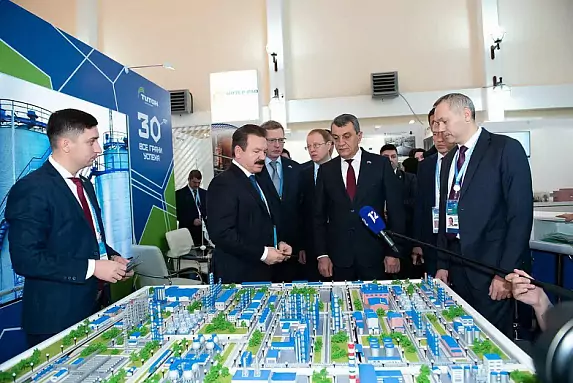
An exhibition is a powerful marketing tool for promoting business and demonstrating a company's products on a large scale, as well as a way to attract investors and gain new partners or clients.
At an event, you can also:
- study consumers and the target audience;
- maintain contact with clients or customers;
- hold a presentation of new goods or services;
- emphasize the company's status;
- build a positive image;
- attract new employees.
Types of exhibitions
Exhibitions are classified according to several criteria.
By industry
- industry-specific: they have one particular specialization, so companies from a single industry take part in them;
- cross-industry: they cover several different industries, so the participants are companies with a diverse range of products.
By geographic scope
- regional: they showcase various products from local companies and are held within a single region;
- international: they present the product ranges of a wide range of companies from several countries;
- national: they are held within one country and focus on its economy and the specifics of its business activity.
By target focus
- exhibitions that support the company's image: they emphasize corporate identity and target an established customer and partner base;
- trial exhibitions: they present a recently formed image to the public and focus on finding and attracting future clients and partners.

By purpose
Product exhibitions
The most popular type of exhibition event. At these, entrepreneurs present their product range, showcase new items, launch advertising campaigns, and can also announce a promotion.
At an exhibition, companies display product samples that every visitor can look at, and also offer accompanying printed materials: booklets, catalogs, brochures, magazines or even books about their business. The organization's managers attract visitors, talk about the products and advise on all matters.
Exhibitions of product groups
At such exhibitions, consumer demand research is conducted: buyers' reaction to a specific product segment, type or particular series is studied.
Thematic exhibitions
This format involves the participation of companies with similar areas of activity. Moreover, the format can vary widely: from a handmade craft fair to an exhibition of agricultural machinery. The event can be accompanied by master classes, competitions and other interactive activities. Exhibitions are held on holidays or weekends to attract more audience.
Key stages of organizing an exhibition
Defining goals
For an exhibition to be effective, it is necessary to determine which business objectives it will address. These may include attracting new customers, maintaining image and status, presenting new products, or a way to make a name for yourself if the company was founded recently.
Implementing the concept
The organization of an exhibition should be based on the core idea. Specialists create the event program, develop the design of the exhibition space and determine advertising media around it.
Marketing promotion
It is necessary to think through an advertising strategy to attract visitors and participants. Various options can be used to disseminate information: audio and video advertising, personal online and offline invitations, announcements on social networks, leaflet distribution and other methods.
If the exhibition's theme is aimed at a broad audience, advertising can be placed in high-traffic locations: shopping and entertainment centers, surface public transport and the metro, as well as on outdoor multimedia modules.
Preparation for the event
At this stage, the venue is selected, the range of participants and invited guests is determined, printed materials are produced and technical equipment is set up. The exhibition space is also decorated here by selecting furniture, arranging products and souvenirs, preparing multimedia and zoning the location.

Planning the Exhibition Budget
It is better to plan the exhibition budget in advance in order to objectively assess the tasks that must be accomplished during the event. We recommend not cutting costs when forming the exhibition budget, since it is aimed at attracting consumers and increasing demand.
First of all, the event must fully pay for itself and bring additional benefit to the company. It is important to determine the minimum number of sales at which the investment will be justified. This can be done by calculating the estimated budget, the average sale amount, and the payback indicators.
Expense items may also include participation fees and booth rental, the cost of producing exhibition stands and handouts, travel and accommodation expenses for staff, as well as additional costs for force majeure situations.
Choosing a Venue
When searching for a suitable venue, it is important to consider three factors: the size of the exhibition display, the number of participants, and the number of visitors.
Depending on the dimensions of the products and the furniture used to present the goods, a lot of free space may be required. The required maximum capacity indicators of the venue depend on the second and third parameters.
These criteria also affect the layout of participants' exhibition zones, the amount of free space for equipment, and even the emotions of event guests after their visit. The rented area must accommodate everything necessary while leaving space for staff and visitors to move around comfortably.
Staff Recruitment
The minimum number of staff and the skills required depend on the scale and format of the exhibition. Most often, exhibitions require the services of general workers, administrators, and cleaners.
- General workers handle the movement of equipment, assembly and disassembly of stands and other structures, setting up equipment, and other physical or technical duties.
- Administrators take on organizational activities such as greeting and advising visitors, as well as monitoring the event's progress and adherence to the plan.
- Cleaners maintain the cleanliness of the premises during the exhibition and clean the venue after the event.
Conducting the Exhibition and Results
For a successful exhibition, it is advisable to draw up a plan with an hourly schedule and all deadlines. It is especially important to specify in the program the detailed timing of additional events, such as performances, presentations, coffee breaks, and workshops. This will help notify visitors in advance and attract more people to them.
It is also necessary to think through the model of communication with exhibitors and guests of the exhibition. Administrators must promptly respond to various situations, answer questions, and resolve any issues.
Additionally, you can create a floor plan with the names and locations of company booths, restrooms, cloakrooms, cafes, and other areas.
When summing up the results of the event, evaluate the level of organization: analyze the work of the staff, collect feedback from participants and visitors, the problems that arose and how quickly they were resolved. In the future, this will help you avoid similar mistakes when planning events.

The Aventura team can help you
If you need high-quality, professional organization of an exhibition or any other business event, you can safely entrust it to us. The company Aventura has been organizing B2B events both in Russia and abroad for more than #AV_YEARS_GEN#. We work with various event formats and constantly introduce modern technologies and new methods into our organization. Having our own technical base and reliable partners allows us to hold exhibitions of any complexity and scale, never let our clients down, and guarantee honest cooperation and achievement of the desired result.
Was this article helpful?


