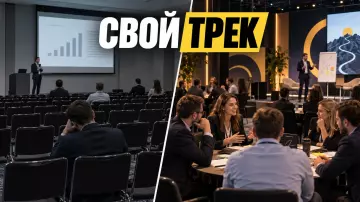
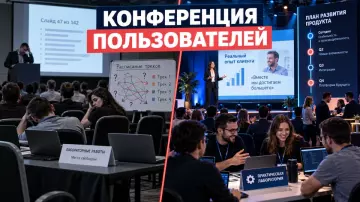
Hosting business and educational events is one of the most important parts of event marketing, as it affects the company's reputation in the professional environment and brand recognition in the wider audience. At the same time, conferences can rightfully be called the most labor-intensive and complex events, especially when it comes to the all-Russian or international level. Today we will talk about how to hold a top-notch conference and what unexpected surprises can await you in the organization process.
How to Start Preparing for a Conference
First of all, you need to determine the feasibility of the event and its objectives. When you choose a topic for presentations and subsequent discussion, correlate it not only with the interests of the planned audience, but also with professional trends in your business niche. Whichever industry the conference concerns, it implies deep analytical work: conducting research, preparing reports and forecasts, studying the experience of foreign colleagues. At the same time, theory should always be combined with practice: the most successful events are those where specialists exchange real experience. Therefore, when choosing a topic, also immediately study the pool of experts on it.
Thus, the conference must meet the demands for relevance of the problem and its own significance. Therefore, it is important to forecast the expected results of the event. For example, to approve a new company development strategy, find a suitable technological solution for launching a product, etc.
Of course, conferences also imply marketing goals: attracting investors and partners, expanding the client base, finding profitable advertisers. In addition, a conference can also help with HR tasks: increase employee loyalty, unlock the potential of colleagues who prepared presentations, and more. If you do not fully know what results to expect from the conference, Aventura team will help with goal setting: we will develop a holistic concept of the event taking into account your wishes and even suggest KPIs.

Cost Estimation and Ticket Price
The conference budget consists of expenses (according to the organization's estimate) and income that is possible from selling tickets to the event for the general public and cooperating with advertisers. Moreover, not only the viewer's seat but also the speaker's role can be paid. This is relevant for cases when potential clients are invited to the conference as viewers. For example, the audience is entrepreneurs, and the speakers are representatives of B2B business. You can also sell recordings of the speeches, access to abstracts and presentations, and a live online broadcast often serves as an additional option for monetizing the event.
When determining the cost of participation in the conference, try to realistically assess how many tickets you will sell given your level of advertising event promotion and what total amount will allow you to minimally cover expenses. At the same time, in order for expenses to actually decrease, you need to look for advertising partners and sponsors. But even if you haven't found them, don't rush to sell tickets at a very low price just to gather an audience: by doing so, you lower the status of the event and the percentage of truly useful guests. There can be discounts on tickets, but they must be personalized. Also remember that participants' access to early registration will help you get funds from them even at the stage of working with contractors.
The expense estimate for organizing a conference must, first, take into account every little thing, and second, indicate a possible margin for redirecting funds in case of unforeseen circumstances. You must identify the most important expense items for you, on which you do not plan to save (for example, the venue), and the secondary ones. You also need to estimate which expenses advertisers can cover, and be sure to include a "safety cushion" in the budget. It can be about 10% of the conference's cost.

How to find partners and speakers
Ideally, you should already have a database of contacts, the conference target audience, and speakers. But this is not always the case. At the same time, the choice of speakers is very important: they determine the status of both the event and your company. Try to look for speakers who already have public speaking experience: they will be able to emotionally engage the audience. In general, discussing the reports following the presentations is a crucial part of the conference, so try to find separate moderators to organize it.
You can invite speakers who will pay for their participation, as they will get advertising to the audience, as well as popular headliners — speakers whom you will pay to attract attention to the event through the participation of a well-known person who already has their own audience. Both are easiest to find on social media (specialized communities) and in the programs of other educational and business events. Look at whom your competitors invite to meetings, seminars, podcasts, and trainings. Then the task is simple: send invitations to those who interest you, with a description of the event, and discuss the terms if they respond positively: topic, finances, deadlines for submitting materials, speaking time.
If you also review the content of the speakers' abstracts and presentations, focus on the practical significance of the information and the speaker's personal observations. There should be fewer well-known facts and more mentions and case studies. If there is mutual desire and time, you can even hold several rehearsals, although many speakers prefer improvisation with some written key points.
When agreeing on the format of cooperation with the speakers, it is advisable to find out their rider in advance. This could be a MacBook, a whiteboard with a marker, drink preferences during the talk, etc. And if the speaker is from out of town, you may need to pay for travel and accommodation or at least book tickets and arrange a transfer upon arrival.

Scenario Development
Event Plan — the most important part of preparation, so it's better to trust the experts here. For example, the Aventura team develops conference programs taking into account not only the set tasks but also the company's corporate culture, specific business niche, and event trends. Together, all this allows turning a conference into a recognizable brand.Usually, the plan consists of a sequence of conference elements and their clear timing. It is also useful to indicate in the plan in which zone of the venue the action will take place, which persons are responsible for this part of the program, and what equipment, furniture, and props should be there.
What does a conference include?
- First, registration of spectators and speakers at the reception. They can already at this stage receive promotional products, merch, or branded souvenirs, as well as handouts: advertising materials, brochures with the program, a map for navigating the venue. In the same area or nearby, you can place a welcome buffet or a bar station.
- Second, one should not forget about the opening ceremony. The host and organizers of the conference not only announce the speakers and their topics but also thank sponsors and partners.
After that, the main part begins — reports and presentations. Speakers should be aware of where and after whom they are speaking. You can sequentially group speakers by thematic blocks or, if the venue allows, divide them territorially, by halls, with the possibility of simultaneous presentations. Special guest reports are usually organized in the common hall at the finale of the event or at the end of each day if the event is long. During their speeches, other activities are not scheduled: this way you can achieve maximum attention from the audience.
Please note that reports should be diluted from time to time with long breaks for lunch, and it is better to make a pause of 10-15 minutes between speakers in one block. During guests' rest, it is possible to organize a coffee break and buffet for informal communication or a show program from invited artists for entertainment. The event is also ended with a ceremonial closing and words of gratitude, and sometimes with stage performances. Usually, one-day conferences last up to 6 hours including all breaks.

Venue selection
The earlier you start organizing a conference, the more chances you have to find the perfect venue. We recommend looking at locations 3-4 months before the event. However, if you organize the event with an agency, you can worry less: a wide base of partners allows you to quickly find a venue and rent it for the client on favorable terms.
What is important for a venue?
Transport accessibility, including parking or the possibility to get there by public transport, minimal technical equipment (at least speakers, lighting, a projector and microphones) and compliance with fire and sanitary-hygienic requirements. The venue should accommodate all spectators, have a stage and comfortable furniture. If it has its own catering — even better. Also remember that you will need to zone the venue and brand it in accordance with materials from advertisers or your brand's corporate identity. It is important that it is immediately clear where the registration area, photo zone with banners and press walls, lounge, smoking area, etc. will be located.Practice shows that the above criteria are met by such locations as lofts, conference and banquet halls (including in hotels, business galleries and business centers), cinema halls, exhibition complexes and art spaces. Want to surprise your guests? Then think about motor ships, production halls, planetariums, etc.

Staff and Equipment Selection
The most important and useful person at a conference is the event manager. They will hire and coordinate the rest of the team, so it's better to choose a specialist from a professional agency. For example, Aventura's managers are ready to advise clients at any time on preparation issues and find a way out of difficult organizational situations, whether it's a sudden reduction in the client's budget or the cancellation of a planned venue. Also, at the event you will need a host, curators and venue administrators in each zone, waiters for the buffet, lighting and sound engineers, and hostesses. Sometimes you can invite volunteers to promptly assist guests. Cleaning staff, on-duty medical assistance, parking and cloakroom attendants should also be present.
The technical equipment for a conference is always more or less the same. This includes laptops, projectors, lapel microphones for speakers, screens, radio microphones for the audience, pointers, flipcharts, cameras, and speakers. It's better to check this equipment twice: on the day you get acquainted with the venue and on the eve of the event. If something is missing, you will need to deliver the equipment, connect it, and set it up. Also remember about air conditioning and heating systems so that the venue has a comfortable microclimate regardless of the time of year.
Additionally, it's worth paying attention to internet speed, the availability of charging stations for gadgets, and the functionality of photographers' and videographers' equipment. When a conference includes an entertainment part, be sure to devote time to stage equipment: a music concert, a laser show, and an immersive performance all require strict adherence to the technical rider, whether it's spotlights or moving decorations.

Conference Promotion
The simplest option is online advertising of the event. You can create a separate website and social media community where you will announce speakers and talk about thematic news or the progress of preparation for the event. Launch contextual and targeted advertising, negotiate with bloggers, influencers and even your speakers to talk about the event (for barter or for money). Also don't forget about event catalogs and aggregators and email newsletters (to partners, universities, colleagues, etc.).
In addition, additional advertising will be inviting non-obvious guests: representatives of government authorities and the media. You can also order announcements and press releases of the conference in specialized magazines and newspapers. You can also try outdoor advertising in the city (banners, posters, billboards). Contests and giveaways on the internet demonstrate good results: offer people bonuses at the conference, gifts from sponsors or discounted tickets in exchange for reviews, reposts and publications.
Event monitoring on the day of the event
First, all responsible persons, including technical specialists, must have a copy of the latest version of the script. This is necessary so that music and presentations are turned on on time, as well as lighting and microphone. Also, care should be taken for the safety of all participants, for example, check the operation of security and fire systems at the venue before the event begins.
In addition, you need to think about navigation for guests and speakers and resolving their pressing issues. Someone might get lost, be late, lose things in the hall, etc. You need to be prepared for more serious force majeure: illness of a speaker, mistakes on the part of contractors, etc. At the same time, shifting the timing of the event should be no more than 10 minutes. During the speakers' performances, you can show the speakers on signs or a screen how much time they still have on stage.

The “Aventura” team knows: even following all organizational recommendations does not guarantee 100% success of the conference. To protect yourself from stress, save time and effort and reduce the risk of errors to zero, contact professionals for event management. Our agency will gladly prepare a conference of any scale and complexity: we can handle hybrid, dealer, and cyclical formats.
Was this article helpful?