A practical framework for a pro bono marathon: nonprofit tasks, the brief, roles, the day's agenda, safe data handling, acceptance, and an implementation plan.
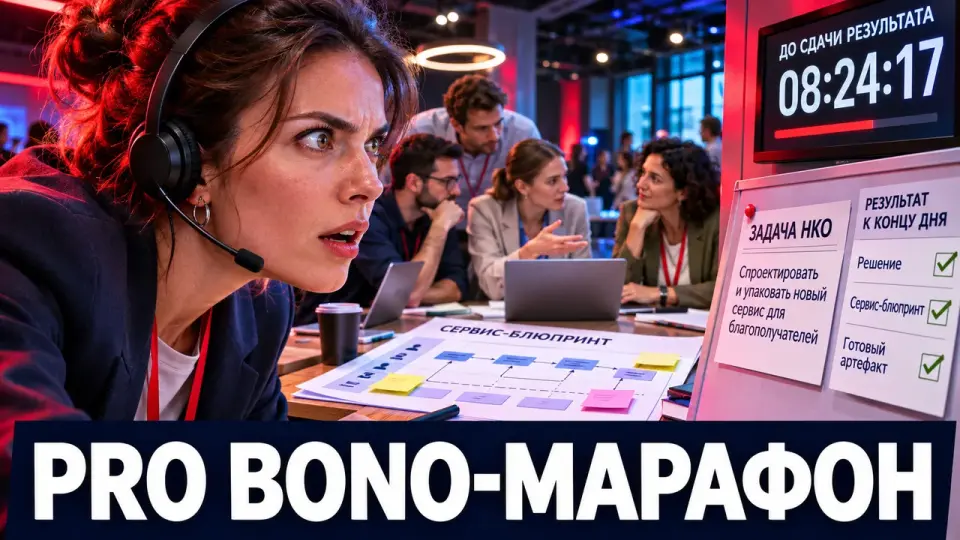
A pro bono marathon can easily be confused with a volunteer day or a corporate hackathon. The schedule includes teams, limited time, and a shared finale, but the meaning is different. Employees apply proven professional skills to a nonprofit's task, and the nonprofit receives a concrete working deliverable.
One day does not replace diagnostics, implementation, and professional accountability. Preparation begins earlier. The nonprofit and the client confirm the task, and the company allocates specialists and working time. At Aventura, we can take on the organization of the day: the agenda, venue, equipment, and team facilitation. The criteria for usefulness remain with the nonprofit, the client, and the relevant experts.
Leave a request — let's discuss your task
We'll clarify the event format and suggest the next step.
What is a pro bono marathon and how does it differ from a volunteering day?
In short: in this article we look at the pro bono marathon as a short professional project for NGOs. Employees apply their work competencies, the task is prepared before the event, and the finale is a working deliverable with acceptance criteria. For comparison: a volunteering day may not require professional specialization. A hackathon may include a competition, a prototype and a decision on a pilot.
The term pro bono means professional assistance provided free of charge to the recipient. A lawyer reviews a contract process, an analyst builds a performance metrics model, an HR specialist prepares a package for a specific role, a designer checks the accessibility of a layout. The employee works within a competency they have mastered, and the NGO receives a limited result that can be verified and used.
A 2017 Russian analytical report on pro bono describes the marathon as several hours or one day of joint work by specialists and NGOs. We use it to define the format, not as a source of current statistics. In our working model, one marathon helps bring one pre-selected scope of work to acceptance.
The boundary is visible in the closing question. For a corporate volunteering day, the closing question may be: “How will employees help a socially useful task?”. In a pro bono marathon, the wording is more specific: “What professional deliverable will the NGO accept by the end of the working day, and who will continue the work after handover?”
The format also overlaps only superficially with a corporate hackathon. Pro bono teams do not have to compete, and the NGO does not act as a jury. A representative of the organization accepts the work as the task owner, records comments and confirms the next step.
The table summarizes the key points of the section: Format, Basis for participation, Outcome of the day. Use it as a quick reference when preparing the event.
| Format | Basis for participation | Outcome of the day | Who accepts the result |
|---|---|---|---|
| volunteering day | socially useful work, sometimes unrelated to one's profession | a completed activity or volume of assistance | partner organization and coordinator |
| pro bono marathon | verified professional skills | an audit, plan, prototype, model, template or other agreed deliverable | the authorized task owner on the NGO side |
| corporate hackathon | team development and hypothesis testing | a prototype and a decision on the next stage | jury, product owner or sponsor |
The result starts with the NGO's task
In our working model, a suitable task describes one problem, one result, an owner on the NGO side and the conditions of use. The request "help with marketing" is too broad. An example of a workable version: "Build a communications plan for one donor segment, specify channels, templates and constraints, and hand the source file over to the responsible employee."
We start with a work assignment, or brief, and build the programme backwards from acceptance. First, the parties name the material that must remain with the NGO. Then they define the mandatory sections, the file format, the available data, the scope of work and the person with the authority to accept the result.
In our working model, one day can produce a process audit, a user journey map, a set of templates, a page prototype without publication, a financial model with explicit assumptions, or a remediation plan. The NGO confirms the specific scope. If the task requires a licensed specialist, complex development or decisions made on behalf of beneficiaries, a separate project with specialist professionals is needed.
We recommend including the following in the task card:
- the problem and the users of the result;
- the current state of the process;
- one final deliverable;
- acceptance criteria;
- available data and constraints;
- what is explicitly out of scope;
- the decision owner on the NGO side;
- resources for implementation after the day.
Not every worthwhile problem suits a marathon. If the NGO has no responsible employee, the necessary materials or the capacity to maintain the solution, a brilliant finale will not fix that weakness. It is better to narrow the task down to a consultation, a map of options or a preparatory audit.
How to select an NGO and prepare a workable brief
We recommend selecting tasks based on how ready the NGO and the company are for working together. The NGO confirms the task owner, the preparation time, access to materials and the feasibility of implementation. The company checks whether it has employees with the required competencies. Before participants are recruited, specialist partners assess the content, ethics and professional risks.
Carry out the selection in two steps. First, apply the mandatory filter. Then compare the tasks that passed using the same criteria. This order prevents high social significance from masking the absence of an owner, risky data work or the impossibility of implementation.
Do not include a task in the programme if:
- it is impossible to name a single verifiable result;
- the NGO has no one who answers questions and signs off on the work;
- the day requires open personal data of beneficiaries;
- employees would have to learn a new profession on a real NGO task;
- the outcome depends on a budget, licence or ongoing support that does not exist;
- the marathon has become the last hope of closing an urgent critical request;
- direct contact with children or vulnerable people is not covered by separate protection rules;
- the task replaces a permanent position at the NGO.
After the mandatory filter, we recommend comparing tasks using the same criteria. First, assess the benefit to the mission and how concrete the result is. Then check the materials, the team's competencies, data security and the feasibility of implementation. Assess accessibility and the method of measurement separately. In our working model, a zero on safety, owner, competencies or implementation stops a task regardless of the total score.
At Aventura, we can put together an application form, an interview calendar, a task card template and an approval procedure. The NGO confirms the final content of the work assignment, while legal, financial, medical, psychological and other specialist issues are checked by experts in the relevant field.
We publish useful breakdowns of work formats and event preparation in the Aventura Telegram channel. Subscribing does not replace a brief, but it helps you gather questions for the programme and the venue in advance.
Teams, roles and working rules
In our working model, the task determines the team composition. It includes the result owner from the NGO, the work group leader, specialists with confirmed competencies, a subject-matter reviewer and a facilitator. The company allocates working time. The organizer runs the process and the technical side, while substantive decisions remain with the NGO and subject-matter experts.
One task may require an analyst, an editor and a designer. Another requires a finance specialist, a process specialist and someone to put together an instruction. There is no one-size-fits-all composition. Before roles are assigned, participants state their real experience, availability during the preparation period and any potential conflict of interest.
The table summarizes the key points of this section: Role, What they are responsible for, What they do not do. Use it as a quick reference when preparing an event.
| Role | What they are responsible for | What they do not do |
|---|---|---|
| business sponsor | mandate, working time, budget and escalations | does not change acceptance criteria for the sake of an impressive presentation |
| program owner | calendar, partnerships, resources and the overall report | does not confirm task content on behalf of the NGO |
| NGO task owner | context, decisions, feedback, acceptance and implementation | does not hand over authority to a random participant on the day of the event |
| team leader | scope, work allocation, interim decisions and quality of handover | does not expand the task without approval |
| professional volunteers | work within their competence, documenting assumptions and limitations | do not pass off a draft as a finished, implemented product |
| subject-matter reviewer | independent review of law, finance, information technology (IT), communications or another area | does not replace the task owner |
| facilitator | pace, questions, agreements and process conflicts | does not decide for the NGO what result it needs |
| organizational and technical team | venue, equipment, navigation, communications, files, timing and the control center | does not confirm the professional correctness of the content |
We can link these roles when organizing a business event: put together the day's scenario, work zones, facilitation, equipment and coordination. The client and subject-matter partners remain responsible for selecting the NGO, employee competencies and task content.
In the program rules, establish voluntary participation: declining does not affect performance reviews and is not considered a lack of loyalty. Line managers agree working time in advance so that preparation does not spill into the evening hours.
Marathon programme: from opening to acceptance
Below is a sample working day with two checkpoint decisions. After the task is clarified, the team confirms that work can safely continue. After the review, the owner from the NGO decides whether the material is ready for handover. The opening stays short, and most of the time goes to research, build, review and instructions.
Preparation usually takes longer than the marathon itself. The parties hold interviews in advance, narrow the scope, prepare materials, assign specialists and check access. A 2021 HSE University study on NGO digitalisation shows that organisations may be held back by a lack of funding, digital skills and knowledge of the solutions market, as well as difficulties in working with IT specialists. That is why a technically attractive idea must pass a test for support after the event.
Sample programme for one working day:
- 09:00-09:30. Registration and access check. Participants receive working materials, connect to the storage and report any technical or organisational barriers.
- 09:30-09:50. General opening. The facilitator explains the goal, voluntary participation, code of conduct, data protection, filming restrictions and the escalation channel.
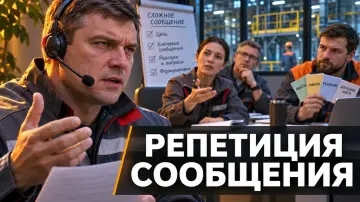
- 09:50-10:20. Brief confirmation in teams. The NGO names the problem, users, constraints, result owner and acceptance criteria.
- 10:20-11:20. Clarification and mini-research. The team separates facts from assumptions, notes missing data and checks the scope.
- 11:20-11:35. Checkpoint 1. The lead, the NGO and the subject expert decide whether work can continue. An unsafe or overly broad task is narrowed or replaced with a backup brief.
- 11:35-12:45. Solution concept. The team chooses one working option and records the build plan.
- 12:45-13:30. Break. Participants rest. A working lunch must not be a hidden mandatory slot.
- 13:30-15:15. Building the result. Specialists prepare an audit, model, prototype, set of templates or another agreed material.
- 15:15-15:35. Expert clinic. Reviewers check legal aspects, data, accessibility, feasibility and compliance with the brief.
- 15:35-16:30. Revision and instructions. The team fixes critical comments and describes the limitations and how to use the result.
- 16:30-17:10. Checkpoint 2. The NGO task owner accepts the material, accepts it with comments, or sends a specific part back for revision.
- 17:10-17:50. General demo. Teams show the solution process without confidential data. No overall ranking of different tasks is needed.
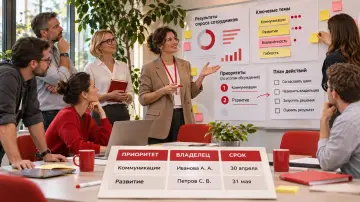
- 17:50-18:20. Handover and 30/60/90 plan. The parties appoint owners, deadlines, follow-up meetings and the support procedure.
- 18:20-18:30. Feedback. Participants evaluate the process, accessibility and safety, and the organisers record open questions.
If the finale is to become a stage showcase, separate acceptance from the corporate project demo day in advance. The NGO's working solution is accepted within the team against known criteria. The public demo shows only the permitted part and does not replace that decision.
How to keep up the pace and quality in a single day?
We recommend maintaining the pace through clear boundaries, a single result template and early checks. The facilitator monitors the process, the subject-matter expert reviews the content, and the editor maintains the current version. If data is missing at the first checkpoint, the team narrows the task and records the new scope of work.
In our working model, each group receives the same working package: a task card, acceptance criteria, a list of approved sources and data, a result template, a decision log and a handover form. The template does not dictate the content. It helps ensure that mandatory fields, constraints and open questions are not forgotten.
We recommend running a pilot pass before the marathon. A small group checks whether the files can be opened, the wording understood, the first operation performed and the result saved in the right place. This is a shortened version of the technical rehearsal of the event: after fixes, the team repeats the test and confirms the result through an actual check.
Throughout the day, the facilitator asks simple questions:
- what result is the team assembling right now;
- what has been confirmed by the NGO and what remains a hypothesis;
- which decision changed the scope;
- which block is hindering acceptance;
- who owns the next action.
The result editor or a designated participant maintains the master version. Drafts can live in working files, but a single set goes to review and handover. It contains the date, version, owner, list of assumptions and the comments that the team did not have time to close.
Venue, equipment and an accessible route
The venue must support focused work, consultations and the secure handover of materials. Teams need separate work zones and quiet places for conversations with NGOs. Connectivity, screens, power and navigation are checked before opening. Hybrid participants get the same access to documents and decisions as people in the room.
We first map the participant journey: entrance, registration, work zone, expert clinic, break, plenary session and exit. Then we check how files and decisions move. Where is the master version stored? Who grants access? Where does the team report an incident? How does the NGO receive the source files after acceptance?
For several parallel tracks, use the logic of organising conferences and working sessions, but the venue itself should not turn the marathon into a series of presentations. Teams need tables, catering, screens, power sockets, headsets for hybrid communication and the ability to quickly call in a relevant expert.
The World Wide Web Consortium (W3C) recommends checking physical and digital accessibility in advance: the entrance route, rooms, restrooms, stage, online platform, microphones, captions and accessible materials. We also recommend checking the accessibility of the final deliverable. A table without clear headings or a prototype that cannot be operated from a keyboard carries the barrier over from the event into the NGO's work.
The practical pre-opening check includes:
- an accessible route and clear navigation;
- requesting participation requirements in a confidential form;
- materials in an editable format;
- readable fonts, contrast and clear headings;
- captions or transcripts for remote participation, if needed;
- a quiet room, breaks and the ability to take medication;
- an alternative to working only with sticky notes or rapid verbal discussion;
- backup internet, a way to present and a communication channel with the control team.
Handover Without Losing Context
In our working model, the NGO receives the final file, editable source files, and instructions. The package also includes constraints, access rights, open questions, and a follow-up calendar. The handover is complete when an authorized employee opens the materials, understands the decisions made, and states the next step. Social impact is assessed after implementation.
By the end of the day, the team often has several presentations, chat notes, and working spreadsheets. Such a set cannot be considered a handover. The lead assembles a single package, removes duplicates, and verifies that the NGO has the necessary rights to the files.
In our working model, the minimum package includes:
- the final material and editable source files;
- a brief description of the task and solutions;
- assumptions and constraints;
- usage instructions;
- a list of licenses and third-party components;
- open questions that were not included in the scope;
- risks and owner actions;
- the agreed support procedure;
- a review calendar at 30, 60, and 90 days;
- confirmation of deletion of working copies of sensitive data.
The parties determine the rights to the materials before the marathon. The work assignment must specify who can modify, publish, and transfer layouts, code, texts, and data. Licenses for fonts, images, libraries, and external datasets are checked separately.
In our working model, the coordinator sends the clean package and the open questions log within two business days after the event. We recommend holding the next meeting in one to two weeks while the participants still remember the context. At that meeting, the team addresses the agreed set of questions but does not accept an endless new scope under the guise of corrections.
What should be measured after the marathon?
On the day of the marathon, you can confirm what result has been created and accepted. Use becomes visible later, and the impact on beneficiaries requires a separate evaluation horizon. That is why we recommend separating in the report the work of the teams, the materials handed over, implementation and possible long-term changes. These indicators are not added up into a single final figure.
Before the start, the parties record a baseline and the method of verification. For the evaluation structure, the six criteria of the Organisation for Economic Co-operation and Development (OECD) can be adapted: relevance, coherence, efficiency, effectiveness, impact and sustainability. The OECD recommendation relates to the evaluation of public policy, so here we use it as a methodological framework rather than as a standard for a pro bono marathon.
On the day itself, you can measure:
- the share of tasks that passed the security check;
- the share of materials accepted without critical comments;
- compliance with the agreed scope;
- accessibility and psychological safety of the process;
- the number of incidents and open risks;
- the quality of handover of files and instructions.
In our working model, after 30, 60 and 90 days the NGO confirms whether implementation has begun, whether the material is being used, which recommendations have been followed and what is preventing continuation. If there was a baseline before the start, the change in time, cost or quality of the process can be assessed. Without a baseline, describe the observed fact of use. Calculating the effect retrospectively would be unreliable.
The UN Volunteers programme suggests not limiting yourself to the number of hours and the monetary equivalent: the GIVE framework takes into account individual, community and economic value, as well as the environment that supports volunteering. This balance protects the report from the conclusion that "more hours equals more benefit".
Risks: voluntariness, data and material rights
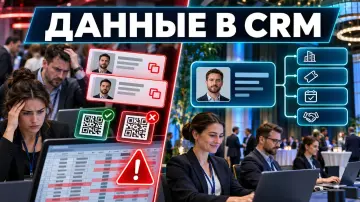
Key risks emerge before the event even takes place. Participation may be perceived as an obligation, the team may request unnecessary data, and the output may end up without an owner. We recommend restricting access, using anonymised or synthetic data, and giving the person in charge the authority to stop work if in doubt.
Federal Law No. 152-FZ sets out requirements for the processing and protection of personal data. The law requires defining the purpose and legal basis for processing, not collecting excessive data, restricting access, ensuring protection, observing retention periods, and deleting or anonymising data once the purpose has been achieved. The practical takeaway for the programme: an NDA does not replace these measures; the specific arrangement must be reviewed by a lawyer and personal data operators.
We recommend agreeing on the following safe process:
- The team describes what data is needed for the output.
- The NGO removes unnecessary identifiers and, where possible, prepares a synthetic dataset.
- Only the designated participants for a specific task are granted access.
- Files are stored in an agreed corporate repository. Personal clouds and chats are not used for work data.
- Uploading data to external services, including AI-based tools, is prohibited without a separate review.
- After handover, the owner revokes temporary rights and confirms that copies have been deleted.
- In the event of an incident, the team stops work, closes access and follows the agreed procedure.
Health data, biometric data and data on minors require a separate legal and organisational review. Financial and other high-risk information also requires enhanced access control based on a risk assessment. If the necessary measures cannot be ensured, we recommend working with a process, a template or an anonymised example.
Public communications also require boundaries. The NGO confirms in advance what may be photographed, which materials may be shown and who approves the text. Taking part in the marathon does not mean a person consents to their story being published. The company can honestly talk about the work material created and the next step, but must not attribute confirmed social impact to a single day.
Frequently asked questions
The term pro bono means professional assistance provided free of charge to the recipient. A lawyer reviews a contract process, an analyst builds a performance model, an HR specialist prepares a package for a specific role, a designer checks a layout for accessibility. The employee works within their established expertise, and the NGO receives a limited deliverable that can be verified and used.
In our working model, a suitable task describes one problem, one result, an owner on the NGO side and the conditions of use. A request like "help with marketing" is too broad. An example of a workable version: "Build a communication plan for one donor segment, specify channels, templates and constraints, and hand the source file over to the responsible employee."
We recommend selecting tasks based on the readiness of the NGO and the company to work together. The NGO confirms the task owner, the time for preparation, access to materials and the ability to implement the result. The company checks whether it has employees with the required expertise. Before participants are recruited, specialist partners assess the content, ethics and professional risks.
In our working model, the task determines the team composition. It includes the result owner from the NGO, the work group leader, specialists with confirmed expertise, a specialist reviewer and a facilitator. The company allocates working time. The organiser runs the process and the technical side, while substantive decisions remain with the NGO and the specialist experts.
Below is an example of a working day with two checkpoints. After the task is clarified, the team confirms that the work can safely continue. After the review, the owner from the NGO decides whether the material is ready for handover. The opening stays short, and most of the time goes into research, assembly, review and instructions.
We recommend maintaining pace through clear boundaries, a single result template and early reviews. The facilitator monitors the process, the specialist expert checks the content, and the editor maintains the current version. If data is missing by the first checkpoint, the team narrows the task and records the new scope of work.
Leave a request and we'll discuss your task
We'll clarify the event format and suggest the next step.
Sources
- “Pro Bono in Russia: Status and Prospects”, DOBRO.RF platform
- Pro Bono Project Guide 2026, Taproot Foundation
- Study of Digitalisation of NPOs, HSE University
- OECD Recommendation on Public Policy Evaluation
- State of the World's Volunteerism Report 2026, UN Volunteers
- Making Events Accessible, W3C Web Accessibility Initiative
- Federal Law No. 152-FZ “On Personal Data”, Ministry of Labour of Russia
- Data minimization definition, NIST
Contents
Was this article helpful?