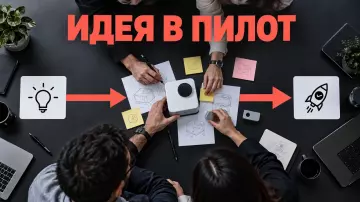
Mentor's Day helps bring employees' experience together into a format the team can understand. We break down the goals, program, roles, and communication before and after the event.
Why does a company need Mentor's Day?
In short: a company needs Mentor's Day when the experience of strong employees should become visible and accessible to colleagues. The event does not replace an onboarding or training system, but it creates a meeting point: mentors receive recognition, newcomers see real growth paths, and managers hear team questions without a long approval chain.
In 2026, mentoring remains in the focus of the HR agenda along with retention, efficiency, and employer brand. This is indicated by the results of a survey of HR executives and specialists published by HR Summit. For a corporate event, this means a simple shift: the program should address a work task rather than fill the calendar with entertainment.
On March 2, Russia celebrates Mentor's Day. For businesses, the date can be a convenient occasion to plan their own format in any suitable month. The conversation starts with the date, but value is created by the content: what employees can learn from each other and how the company will support this exchange after the meeting.
How do you define the goal of an event before choosing a venue?
In short: start by choosing one main outcome that the team should take away with them. For Mentors' Day, that could be launching a programme, recognising mentors who are already active, sharing practices between departments, or introducing new employees to the people they can turn to for help.
"Holding Mentors' Day" is too broad a statement for a budget and a scenario. A workable goal sounds more specific: for example, introducing newcomers to the mentors on production shifts, or gathering the practices of managers who help employees step into a new role.
Before you start, agree on four questions:
- Who is the main participant: mentors, new employees, line managers or a mixed audience.
- What action is expected after the event: signing up for the programme, choosing a mentor, exchanging contacts, collecting questions or launching a pilot.
- Which stories the company is ready to share publicly within the team without revealing client or production details.
- How the team will know the format was useful: by sign-ups, attendance, the quality of feedback or the number of follow-up meetings.
A brief like this helps separate a genuinely useful programme from a set of activities. The same approach is useful when organising a corporate event, while the task has not yet turned into a ready-made scenario.
What format should you choose for your team?
In short: the format depends on what matters more to the company — sharing practical experience, recognizing contributions, or collecting questions. A small in-person day works well for dialogue and demonstrations, while a hybrid format helps connect branches. A separate ceremony is appropriate only when recognition is tied to clear criteria.
Format by objective:
- Launching a mentorship program. An opening meeting with short stories and introductions. Before the event, prepare mentor profiles, participation rules, and a sign-up point.
- Sharing work techniques. Practical stations or workshops. You need station topics, facilitators, and a participant limit.
- Recognizing mentors. A ceremony with team stories. Agree on transparent criteria and wording for acknowledgements in advance.
- Connecting offices and locations. A hybrid studio with Q&A. Check the connection, screen materials, and the chat moderator's work.
A MICE market study published by MICE Russia describes a demand for more compact and economically clear events. That is why, for the first version of Mentor Day, it is wiser to put together one strong scenario for a few hours than to inflate the program into a full day without meaningful points.
Which blocks should you use to build the Mentor Day program?
In short: build the program around live practice, not around long reports. Participants need answers to three questions: who to go to with a task, what they can learn, and what will happen after today's meeting. Each block should lead to one of these answers.
A sample program for 2.5–3 hours:
- An opening of 10–15 minutes: a manager links the meeting to the team's real task and states what will happen after the event.
- Three short mentor stories: specific work situations where experience was useful.
- Practical stations: small groups discuss one process, tool, or typical question.
- A “mentor–newcomer” conversation: pre-collected questions, a facilitator, and the right to honestly say “this needs separate discussion.”
- Recognition: thanking mentors with a clear reason, not a random list of names.
- Next step: signing up for meetings, a pilot calendar, or publishing materials in the corporate channel.
For a large audience, it is useful to separate the content and ceremonial parts. The same logic applies to business events: first the task and audience, then the scenario, venue, and technical implementation.
Important: do not ask mentors to improvise in front of a camera or an audience without preparation. Discuss the topic, the boundaries of openness, and the format of the question they will answer with them in advance.
Submit a request — we'll discuss your task
We'll clarify the event format and suggest the next step.
In the Aventura Telegram channel, we break down corporate and business event formats — from the first idea to the day of the event.
How to prepare mentors and participants without unnecessary bureaucracy?
In short: preparation should remove uncertainty for both sides. A mentor needs a topic, time and a clear role. A participant needs a reason to come, a program and an easy way to ask a question. A single general announcement won't solve this.
Two to three weeks in advance, gather short interviews with the mentors. Ask what work case they are ready to discuss, what questions they hear most often and what format is convenient for them: a stage, a round table, a station or a pre-recorded session. Don't demand “inspiring stories” from people - a calm breakdown of a decision, a mistake and a conclusion is more useful.
Prepare separate messages for participants. Newcomers value introductions and the right to ask about basic things. Managers value organizational arrangements. Colleagues from other departments need topics they can apply in their own work. This segmentation reduces the risk of having people with completely different expectations in the room.
How to organize the space and equipment?
In short: the space should support conversation, not turn it into a lecture. For stories and Q&A, good sound and screen visibility are needed. For stations, short routes, clear navigation and a place where a small group doesn't disturb the neighboring one are needed.
First, map out the participant journey: registration, opening, moving between stations, a break, the final block. The diagram immediately reveals bottlenecks - a single registration desk, too long a walk to the auditorium or a queue for the only interactive activity.
Check the basic kit: microphones for mentors and the moderator, a screen with large captions, a timer for short talks, a backup way to show materials and a person responsible for questions from the room. If branches are taking part, do a technical rehearsal with each speaker, not just a general connection test.
The experience of preparing conferences and forums is useful here precisely for its discipline of timing, navigation and audience engagement. The scale may be smaller, but the requirements for a clear program remain.
What roles are needed on the day of the event?
In short: Mentor Day should have one person making decisions on the program and one person keeping the operational rhythm. Other roles are best named in advance so mentors don’t have to deal with technical and organizational issues between their sessions.
The minimum team includes the client from HR or internal communications, a program producer, a moderator, a mentor coordinator, a technical lead, and a venue coordinator. Hands-on stations need a point person for each group. They meet participants, keep time, and record questions that there wasn’t time to cover.
In the script, outline not only speaker sessions but also transitions: who meets the next group, who collects question cards, who confirms audio readiness, who posts materials after the event. This level of detail is especially important when a company invites employees from different cities or shifts.
How do you collect feedback and continue the work after the event?
In short: feedback is needed to choose the next step. Ask participants what they want to discuss next, whether they got a mentor’s contact, and which format suits them. It’s best to collect answers right after the program while the experience is still fresh.
A short questionnaire can consist of three questions: which block was most useful, which topic should be brought up at the next meeting, and whether the participant needs contact with a mentor. Don’t turn it into a ten-point rating of every speaker—this reduces the quality of answers and the desire to take part next time.
A few days later, send participants the materials, mentor contacts, and a calendar of next steps. If a program pilot was launched, name the process owner and the date of the next review. An internal event only makes sense when there is a clear continuation after it.
What mistakes most often devalue the format?
In short: most often the format loses meaning when a company mixes too many goals, leaves mentors without preparation, or ends the program without follow-up. These mistakes are corrected at the briefing and scripting stage, so they don't require complex production.
- Long reports instead of work stories. Participants hear general words but don't get practice they can discuss with a mentor.
- Awards without criteria. If the reason for gratitude is unclear, recognition looks random.
- The same message for everyone. A newcomer, a manager, and an experienced employee come with different questions.
- Stations without timing and a coordinator. As a result, some people don't have time to get to the right topic.
- A finale without a next action. Contacts, materials, and a calendar should be ready before the day of the event.
If the task needs to be put together with a venue, directing, technical production, and on-site work, the Aventura team can prepare a concept and estimate for your audience. Look at the agency's portfolio to see different event formats.
Frequently Asked Questions
In 2026, the topic of mentoring remains in the focus of the HR agenda along with retention, performance, and employer brand. This is evidenced by the results of a survey of HR managers and specialists published by HR Summit. For a corporate event, this means a simple shift: the program should answer a work task, not fill the calendar with entertainment.
The wording 'to hold a Mentor's Day' is too broad for an estimate and scenario. A working goal sounds more specific: for example, to introduce newcomers to mentors of production shifts or to collect practices of managers who help employees enter a new role.
A format for the task:
A version of the program for 2.5-3 hours:
Two or three weeks before, collect short interviews with mentors. Ask what work case they are ready to analyze, what questions they hear most often, and what format is convenient for them: a stage, a round table, a station, or a pre-recorded video. Don't demand 'inspiring stories' from people—a calm analysis of a decision, mistake, and conclusion is more useful.
First, draw the participant's path: registration, opening, transition between stations, break, final block. On the diagram, bottlenecks are immediately noticeable—one registration desk, too long a path to the audience, or a queue for the only interactive.
Sources
- HR trends 2026 - HR Summit
- MICE in Russia: 2025/2026 research - MICE Russia
- Business event trends - Event.ru
- How Russian business is rethinking corporate events - Event.ru
- Mentor's Day in Russia - First of September
Contents
Was this article helpful?