Off-site corporate event: where to go in Russia and abroad
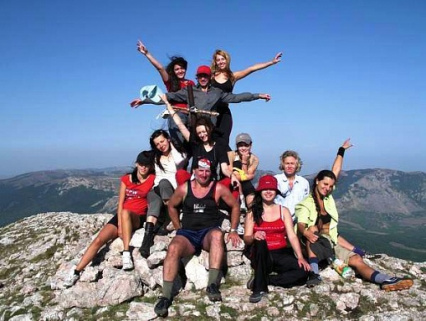
An off-site corporate event can be held in Russia or abroad, combining a business programme, team activities and leisure. The destination is chosen based on the purpose of the trip, group composition, season, transport accessibility and budget — not just attractive photos. Below we have gathered ten options and a practical organisation plan.
What an off-site corporate event is and why a company needs one
In short: An off-site corporate event is an event for employees outside the usual office or city. The programme may include team building, training, a strategy session, excursions and a festive evening.
Corporate trips serve different purposes. One team needs to introduce employees from several branches, another needs to hold an annual meeting, and a third wants to thank the team for a completed project. The entire structure of the trip depends on the objective: destination, duration, venue and the balance between work and leisure.
Off-site corporate events include team-building programmes, motivational tours, festivals, sports days, departmental meetups, training sessions and corporate celebrations. The business block may include a conference, negotiations, a product presentation, a forum or a partner meeting.
Trips with a complex business and tourism programme fall under the MICE category. Organising MICE events involves not only the scenario but also accommodation, transport, catering, participant registration, technical equipment and the group's schedule.
You should not try to fit a strategy session, a long excursion, a sports tournament and a banquet into one day. People need breaks, time to travel and the opportunity to prepare for the evening part. A good programme leaves participants with the energy to socialise, which is often the very reason a company organises a corporate trip.
Where to Go for an Off-Site Corporate Event in Russia
In short: For corporate retreats in Russia, consider the Altai, St Petersburg, Sochi, Kazan and Lake Baikal. Each destination has its own scenario: from a business conference to an outdoor itinerary.
First, decide what backdrop the event needs. A big city is convenient for a business programme and an evening reception, a nature region lends itself to active recreation, and a countryside complex helps you run several blocks without constant transfers.
Altai
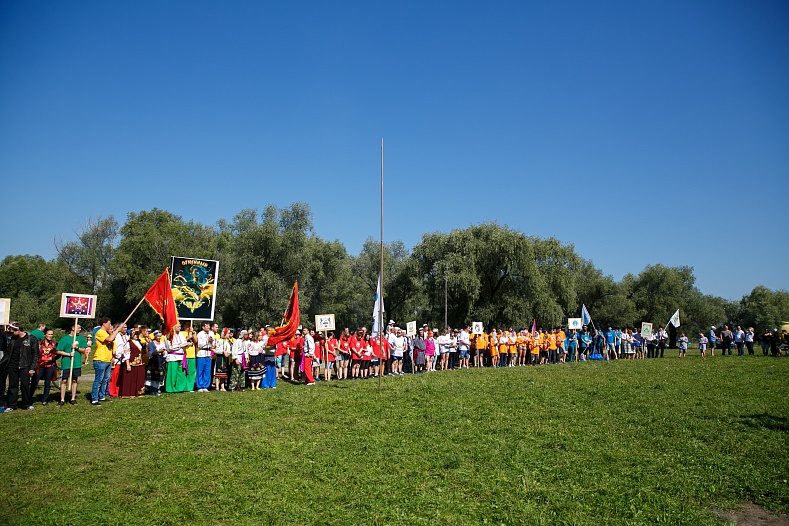
The Altai is chosen for mountain routes, relaxed recreation and work in small groups. The programme can include walks, a team quest, a local master class, a campfire gathering or an outdoor session. Before approving the route, it is important to assess the participants' fitness levels and provide an alternative in case of bad weather.
St Petersburg
St Petersburg lets you combine a conference, a cultural programme and a corporate evening. Possible formats include a boat trip, a city quest, a reception in a historic venue, a guided tour and a trip out of town. To keep the whole programme in one location, you can look into countryside venues in St Petersburg.
When planning, you need to take into account the distances between the hotel, the business venue and the evening event location. In the city centre, a short route on the map does not always mean a quick transfer for the group, especially with a tight schedule.
Sochi
Sochi is suitable for combining business meetings with a sea or mountain programme. Depending on the season, you can plan walks, sports activities, excursions and a dinner with a view of the coast. If participants are staying in different parts of the resort, transfers should be calculated before the venue is approved.
Kazan
Kazan appeals to companies that need urban infrastructure, national cuisine and a rich sightseeing component. Business sessions, gastronomic routes, team tasks around the city and sports programmes are all appropriate here. To keep the trip from turning into an ordinary sightseeing tour, cultural elements are tied to the overall theme of the event.
Lake Baikal
Lake Baikal is chosen for nature and expedition-style scenarios. In summer, the programme can be built around boat trips and routes along the shore; in winter, the set of activities depends on the weather and the condition of the selected trails. This destination requires especially careful attention to equipment, medical restrictions, transport and a backup plan.
Where to Go for a Corporate Event Abroad
In short: A corporate event abroad requires checking entry rules, flight routes, payments and insurance. Turkey, the UAE, Azerbaijan, Thailand and Georgia allow you to put together a variety of programmes, but the availability of a specific option must be confirmed before booking.
A corporate event abroad is usually more complex than a domestic trip. Besides the programme and venue, the organiser needs to check participants' documents, current entry conditions, payment options, baggage rules, connections and the requirements of the host side. These parameters can change, so they are checked as of the travel date.
Turkey
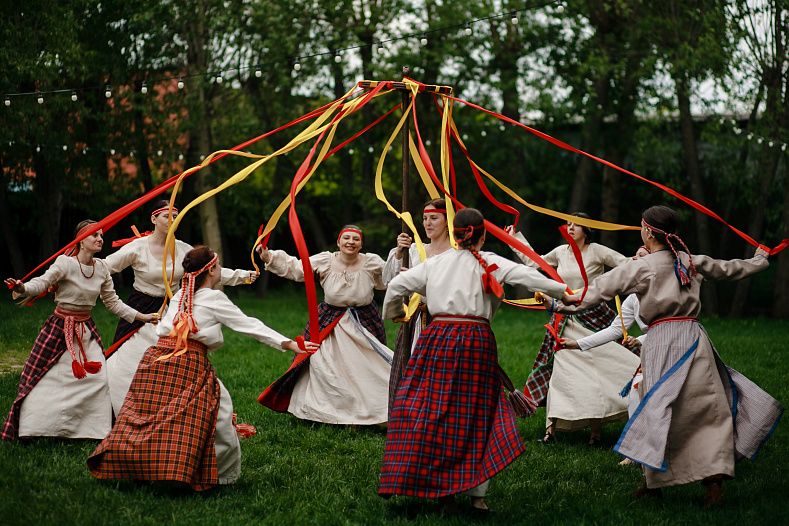
Istanbul can be considered for a business meeting, a gastronomic programme and a Bosphorus cruise. Antalya and other resort areas are suitable for events at a hotel, sports activities and a relaxed corporate retreat. When choosing a resort, you need to compare the season, transfer duration and availability of venues for a private group.
UAE
Dubai, Abu Dhabi and other emirates offer city hotels, conference spaces, beach venues and locations outside the city. Here you can hold a presentation, an executive meeting, a team programme or a gala dinner. Local transport and the venue's technical requirements are included in the budget in advance.
Azerbaijan
Baku is suitable for the business part, a city quest and getting acquainted with local cuisine. For a more relaxed programme, you can consider the country's nature and resort areas, if the logistics match the length of the trip. For a short trip, it is better not to overload the itinerary with long journeys.
Thailand
Bangkok is chosen for a city and business programme, while island and coastal areas are for relaxation and team activities. The scenario can include cooking master classes, water-based tasks and excursions. You should take into account the climate of the chosen region, the travel time and participants' adjustment after the flight.
Georgia
Tbilisi allows you to combine meetings, excursions and a gastronomic evening. Kakheti is suitable for a countryside route, Batumi for a seaside programme, and mountain areas for small, well-prepared groups. Before booking, the transport scheme, entry conditions and the possibility of holding the planned activities in a specific season are checked.
How to choose a destination for a corporate offsite
In short: Choose a destination after defining the goal, the participant profile and the mandatory parts of the programme. Then compare logistics, seasonality, infrastructure, risks and the full budget of each option.
Start with one sentence: what should change after the trip. For example, employees from different branches should get to know each other, managers should align plans, and the project team should recover after an intense period. This framing helps avoid arguing about cities on the level of personal preferences.
- Define the format. A strategy session needs quiet, meeting rooms and reliable equipment. For team building, the grounds, changing rooms, safety and a backup indoor area matter more.
- Build a group profile. Take into account departure cities, age composition, dietary restrictions, health conditions and the need for accessible facilities. Collect this data properly and only to the extent necessary for organising the event.
- Compare the journey. Assess the entire route from the meeting point to the hotel, not just the flight or train time. Several transfers can noticeably cut into the useful part of the programme.
- Check the season. Heat, rain, wind, snow and short daylight hours affect the scenario. Every outdoor block needs an indoor fallback or an equivalent replacement.
- Assess the infrastructure. Check the room inventory, catering, internet, power capacity, bus access and availability of medical care.
For a trip not far from the capital, it is useful to compare countryside venues in Moscow. This option reduces the transport portion while still allowing a change of scenery.
The final choice is best made by comparing several comparable concepts. Each should include a route, an approximate schedule, the accommodation format, the venue, programme options and a list of risks. Then the decision rests on the task and the budget, not on a single impressive detail.
Which format to choose for an off-site employee event
In short: The format depends on the outcome the company needs. Team building is suitable for getting teams acquainted, corporate recreation for recognising employees' achievements, and a working session for aligning decisions.
A team-building trip is built around joint activities. It could be a route with tasks, a sports programme, a creative lab or a business game. It is important that the mechanics do not humiliate participants, do not force them to disclose personal information and do not exclude people with health limitations.
For an active team, you could consider sports team building. The load is divided by levels, and the result is tied to the shared objective, not just to the victory of the best-prepared employees.
A motivational off-site involves more free time, high-quality service and a choice of activities. Employees can be offered several parallel routes: a guided tour, a relaxed master class or an active programme.
A corporate event outdoors is suitable for a summer celebration, a meeting of departments and a family day. When developing a corporate event outdoors, questions of canopies, sanitary areas, power supply, navigation and equipment delivery are resolved in advance.
A mixed format combines a business meeting and leisure. The working block is best placed in the first part of the programme, while participants are gathered and have not switched to informal socialising. A pause is left between the conference and the evening.
How to organise an off-site conference
In short: Off-site conferences require a single plan covering content, technical equipment, accommodation and participant movement. The venue is chosen after the brief is prepared, not just by hall capacity.
First, the architecture of the business programme is drawn up: plenary sessions, parallel breakout sessions, negotiations, breaks and the evening part. This then makes it clear how many rooms are needed and whether the event can be held in a single complex.
When organising a conference, the stage, sightlines from the hall, sound, screens, lighting, internet and recording capabilities are checked. If remote connection is planned, a separate technical scenario with connection tests is required.
Clear communication is prepared for participants: gathering time and place, registration rules, the programme, coordinator contacts, and dress code and luggage recommendations. Changes are best communicated through a single agreed channel, otherwise the group receives several versions of the schedule.
At the venue, the flows for registration, cloakroom, catering and hall entry are separated. Speakers are allocated a preparation area, and organisers are given access to up-to-date participant lists and the timing. The schedule includes time for setup, presentation checks and moving between sessions.
To select a space, you can use conference halls in Moscow. Before signing the contract, the venue is checked against the brief and the actual seating plan.
How the organisation of off-site corporate events works
In short: Organisation starts with a brief and ends with settling accounts with contractors. Between these stages come the concept, bookings, logistics, production, communication with participants and the team's work on site.
The brief records the goal, group composition, departure cities, preferred dates, accommodation format, mandatory elements and constraints. It is also important to determine who on the company side makes decisions and approves changes.
- Concept development. The organiser proposes destinations and explains how each of them addresses the company's objective.
- Preliminary logistics. Routes, arrival times, transfers and the possibility of gathering participants without long waiting are compared.
- Venue checks. Accommodation, catering, halls, grounds, equipment and restrictions on noise or installation are clarified.
- Scenario and schedule. Business, entertainment and free blocks are combined taking travel and rest into account.
- Selection of contractors. A team of hosts, technical specialists, instructors, photographers and coordinators is assembled.
- Communication with employees. Participants receive the programme, meeting rules and a list of necessary items.
- Delivery. Coordinators oversee transport, check-in, catering, timing and changes on site.
For group movement, a transport manifest is drawn up in advance, luggage is marked and persons responsible for departure points are appointed. If necessary, the project can include transfer arrangements.
The entertainment programme is selected after the overall concept is approved. In the artists catalogue you can choose hosts, music groups, DJs, speakers and variety performers.
An agency for corporate trips must see the project as a whole. When the hotel, transport, venue and programme are managed independently of one another, the risk of mismatches in timing and requirements increases.
What documents and risks to consider when travelling
In short: Before booking, check participants' documents, entry requirements, insurance, transport rules and contracts with suppliers. Every critical block needs a backup option and a responsible coordinator.
For a domestic trip, check that the details for tickets and accommodation are correct. For a trip abroad, additionally confirm document validity periods, entry and transit rules, requirements for underage participants if they are part of the group, and the conditions for transporting equipment.
Do not collect passport data in general correspondence or an open spreadsheet. The procedure for transferring and storing personal information should be agreed in advance with the company's responsible employees and with the suppliers who genuinely need this data.
The main risks include transport delays, bad weather, a participant falling ill, cancellation of outdoor activities, equipment breakdown and changes in group size. The working plan should list emergency contacts, backup rooms, the notification procedure and the authority of the person who makes decisions on site.
For a trip abroad, the cancellation and name-change terms in bookings are especially important. Also check which services are included in the venue's package, in which currency and in what order payments are made, who is responsible for local contractors, and whether the menu or transport can be changed at short notice.
Participants should receive not only a polished programme but also a practical briefing. It should specify meeting points, contacts, dress code, activity restrictions, check-in rules and what to do if they are late.
Budget: what determines the cost
In short: The cost of a corporate offsite depends on the destination, transport, accommodation, the programme content and the level of the venue. You should compare full budgets with the same list of services and contingency reserves.
The main expense item is usually related to moving the group. It is affected by the departure cities, the type of transport, the number of transfers, the amount of luggage and the distance to the venue. A route with a cheap ticket may turn out to be unprofitable because of a long overland journey.
Accommodation is calculated taking into account room categories, the rooming plan, meals, early check-in and late check-out. If the business and evening parts take place at the hotel, you should separately check the rental of halls, equipment and the terms of service for the group.
The programme budget is affected by:
- rental of venues and exclusive buyout of the space for the company;
- meals, coffee breaks, the banquet and special menus;
- the scenario, host, artists and instructors;
- the stage, sound, light, screens and technical staff;
- décor, signage and branded materials;
- excursions, master classes and sports activities;
- photo and video shooting;
- coordinators and on-site transport;
- insurance and backup solutions.
For a corporate offsite abroad, the settlement currency, local taxes and fees, services of the host team, communications, translation and transportation of equipment are additionally taken into account. These terms are clarified before the project is confirmed.
It is convenient to divide the budget into a mandatory part and options. Then, if the budget changes, you can remove a particular activity or décor without disrupting the logistics, safety and the main objective of the event. Saving money by not having a transport reserve, a technical check or a weather plan is risky.
Frequently Asked Questions
St Petersburg and Kazan work well for an urban programme, while Sochi is an option if you want to combine a business meeting with the sea or the mountains. Altai and Baikal are chosen for nature routes and small groups. The decision depends on the season, logistics and the physical fitness of the participants.
First you define the goal, the group composition and the budget, then you check entry rules and transport routes. Once the country is chosen, you book accommodation, the venue and local contractors, and prepare the programme and a participant briefing. All conditions should be re-checked before the trip.
Organisation includes developing the concept, selecting the destination, transport, accommodation, catering, venues and the programme. You also need participant registration, technical support, coordination of contractors, a backup plan and on-site group support.
Ask for a work plan, the team composition, the budget structure and the procedure for handling changes. The agency should combine transport, the hotel, the venue and the programme in a single schedule, and flag limitations and risks in advance.
A corporate off-site trip includes travel, accommodation and several connected programme blocks. It can last longer than an evening event and requires separate work on logistics, participant data, catering and safety.
The cost is affected by flights, transfers, accommodation, catering, venue hire, the programme and the services of the host team. Currency of payment, local fees, insurance, translation and a contingency reserve for changes are also taken into account.
Contents
Was this article helpful?